
Share this post:
Quick summary: How are Dubai residents so rich?
How are Dubai residents so rich? The answer is a combination of international business, high-earning careers, entrepreneurship, investment income and a tax environment that can make it easier to retain earnings. Dubai also attracts wealthy people who have already built their fortunes elsewhere. However, not everyone living in Dubai is wealthy, and its luxury image does not reflect every resident's financial circumstances.
- International wealth: Dubai attracts business owners, investors, executives and established wealthy families from around the world.
- Personal income tax: The UAE generally does not levy personal income tax on employment earnings, although other taxes and individual tax obligations may apply.
- A diversified economy: Trade, financial services, transport, tourism, technology and property all contribute to Dubai's economy.
- Property ownership: Some residents build wealth through rental income, long-term ownership and property investment. Returns are never guaranteed.
- Different income levels: Dubai has wealthy households, middle-income professionals and lower-paid workers. Being a resident does not automatically mean being rich.
The key distinction: Dubai is both a place where some people create substantial wealth and a destination where existing wealth is brought, invested and spent. Understanding that difference gives property buyers a more realistic view of the emirate's economy and housing market.
Interested in Dubai's property market?
Understanding where Dubai's wealth comes from is a useful starting point. Our team can help you explore neighbourhoods, ownership rules and the practical costs of buying.
Are Dubai residents actually rich?
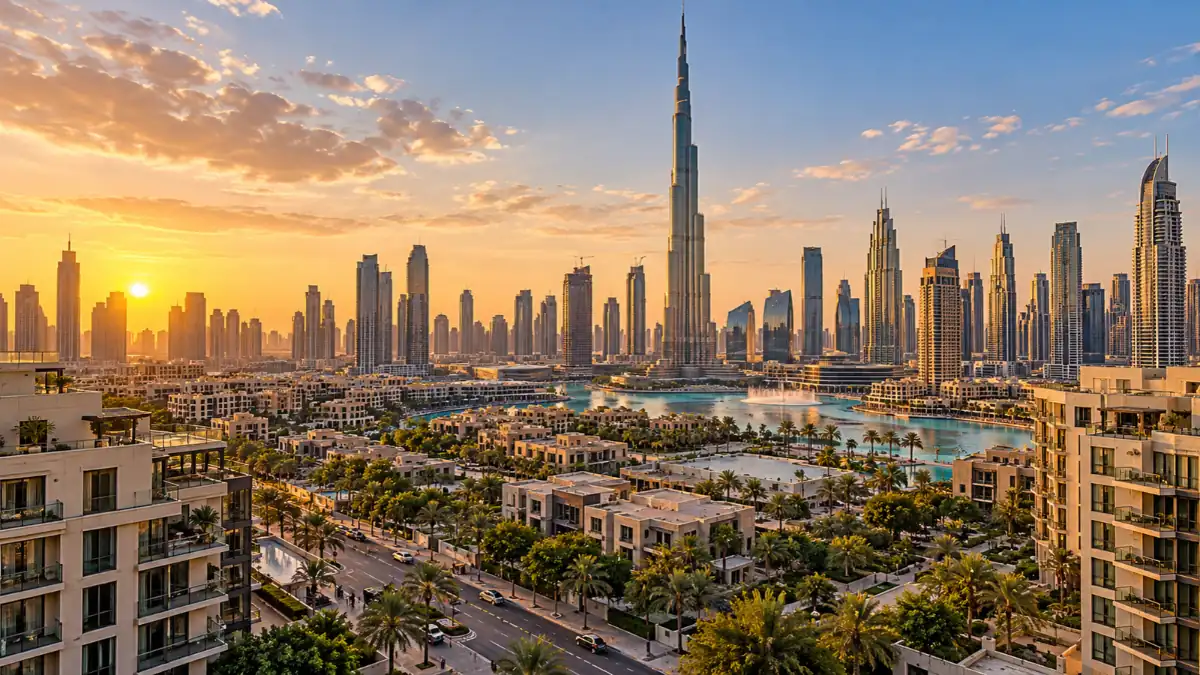
If you have visited Dubai, watched videos of its luxury apartments or seen expensive cars outside five-star hotels, you may have wondered why so many people appear wealthy.
The important point is that Dubai's visible wealth is not representative of every resident. Its population includes successful entrepreneurs, wealthy investors, highly paid professionals, ordinary working families and people in lower-paid occupations.
Some residents own several properties or international businesses. Others rent modest accommodation, share housing or send a substantial proportion of their earnings to family members abroad.
In other words, the emirate has a significant concentration of wealth, but wealth and residency are not the same thing.
How many people live in Dubai?
According to figures announced by Digital Dubai in July 2026, the emirate's population reached approximately 4.58 million at the end of 2025. The reported daytime population was higher because it included people temporarily present for work and tourism.
Population growth can support demand for accommodation, transport, schools, shops and other services. However, a larger population does not automatically mean everyone is earning more or becoming wealthier.
Why are so many people in Dubai rich? Seven real reasons
There is no single explanation for Dubai's concentration of wealthy residents. Instead, several economic and lifestyle factors work together to attract, create and retain wealth.
1. Dubai attracts wealthy people from around the world
One of the biggest reasons is that many successful individuals arrive in Dubai after they have already made money.
Business owners, investors and senior executives may relocate from Europe, Asia, Africa or elsewhere in the Middle East. They bring existing savings, business interests and investment capital with them.
Consequently, a wealthy household living in Dubai does not necessarily represent wealth originally created in Dubai. Some fortunes were built over decades in completely different countries.
2. The personal income tax environment is attractive
The UAE generally does not levy personal income tax on employment earnings. This can make Dubai financially attractive to professionals who earn substantial salaries.
For example, someone receiving a high salary may be able to retain a larger proportion of their employment income than they would in a country with substantial income taxation.
Nevertheless, Dubai is not entirely tax-free. VAT, corporate tax, property transaction fees and other charges can apply. Individuals may also have tax responsibilities outside the UAE, depending on their circumstances.
The UAE Government's official taxation guidance explains the main types of tax operating in the country.
3. Business ownership creates substantial wealth
A successful business can generate wealth that goes well beyond an ordinary salary. Dubai has developed infrastructure and commercial environments that appeal to international companies, entrepreneurs and investors.
Its geographic position is particularly useful for businesses operating between European, Asian and African markets. International connections, logistics facilities and specialist business districts help support that activity.
Furthermore, business owners may earn money from several sources, including company profits, dividends, investment returns and eventual business sales.
However, entrepreneurship brings risk. Operating costs, competition, licensing requirements and corporate taxes still need careful consideration.
4. Financial services bring high-earning professionals
Dubai is an established regional centre for financial services, wealth management and professional business activity.
The Dubai International Financial Centre (DIFC) reported 8,844 active registered companies in 2025, along with a workforce of approximately 50,200.
These organisations include businesses operating in finance, professional services, technology and related fields. Some provide substantial remuneration packages for experienced specialists and senior management.
This contributes to demand for quality housing near commercial districts, particularly in locations such as DIFC, Downtown Dubai and Business Bay.
5. Real estate can generate investment income
Dubai's property market is another important part of its wealth story. Investors can potentially receive rental income, while owners may benefit if the value of their properties increases over time.
International purchasers can also buy freehold property in designated areas, subject to the relevant ownership rules. This broadens participation beyond UAE citizens.
Yet property ownership should never be confused with guaranteed financial success. Purchase costs, service charges, maintenance, borrowing, vacancies and falling prices can reduce returns.
Our complete guide to Dubai property investment explains the opportunities, costs and risks in greater detail.
6. Tourism, international trade and logistics support the economy
Dubai has developed into a major international destination for tourism, business events, aviation, shipping and trade. These activities help support employment and business opportunities across numerous industries.
A successful hospitality business, for instance, may benefit from visitor spending. Meanwhile, logistics and trading firms can generate income through regional and international commerce.
The economic benefits are not shared equally, but the diversity of business activity helps explain why Dubai has attracted companies and professionals from different parts of the world.
7. Lifestyle and international connectivity attract established wealth
Financial considerations are only part of the appeal. Some wealthy families value Dubai's international schools, healthcare options, transport connections and broad range of residential communities.
Others are attracted by business opportunities, access to international flights and the availability of luxury housing. Long-term residency options may also be relevant, subject to eligibility and current rules.
These factors make Dubai attractive as a place to live, not simply a place to earn money.
Where does Dubai get its money?
It is common to assume that Dubai became rich entirely because of oil. Oil was certainly important to its early development, but the modern economy is much more varied.
Today, Dubai's economic activity includes several major sectors:
- Wholesale and retail trade: local and international commercial activity.
- Financial services: banking, insurance, investment and wealth management.
- Transport and logistics: aviation, shipping and supply chains.
- Real estate: property development, transactions, leasing and related services.
- Tourism and hospitality: accommodation, restaurants, leisure and events.
- Construction and manufacturing: supporting commercial and population growth.
- Technology and professional services: digital businesses, consulting and specialist employment.
This economic diversity matters because it reduces Dubai's direct dependence on a single source of income. Nevertheless, the emirate remains exposed to global economic conditions, international trade and changes in investor confidence.
When did Dubai become rich?
Dubai's transformation took place over several generations. Its development was gradual rather than the result of one event or a single discovery.
Before oil: Dubai as a trading centre
Dubai's commercial history began long before the discovery of oil. Trading, pearl diving and maritime connections supported its early economy.
Its location on the Gulf helped establish commercial relationships with merchants across the wider region. Over time, trade became a central feature of Dubai's development.
The 1960s and 1970s: oil and infrastructure
Oil was discovered in Dubai in 1966, with exports beginning in 1969. Revenue helped finance infrastructure and public investment at a critical stage of development.
Roads, ports, utilities and other facilities provided foundations for future business growth. The UAE was established in 1971, creating a wider national framework for development.
The 1980s and 1990s: diversification
Dubai invested in trade, aviation, logistics and tourism. The development of Jebel Ali and its associated commercial facilities helped strengthen Dubai's international position.
As transport and business infrastructure expanded, more international firms began operating in the emirate.
The 2000s onwards: property and global investment
The expansion of designated foreign-ownership property areas helped open Dubai's real estate market to international buyers.
Major developments, hotels and business districts increased its international visibility. However, Dubai also experienced significant property market difficulties during the global financial crisis, demonstrating that rapid growth does not eliminate economic risk.
Today, Dubai is recognised for a broad economic base, although its future development will still depend on sound regulation, investment and global economic conditions.
Considering property ownership in Dubai?
We can help you understand the differences between neighbourhoods, property types and realistic ownership costs before you make a decision.
Where do rich people live in Dubai?
Wealthy residents are found throughout Dubai, although certain neighbourhoods are particularly associated with expensive villas, waterfront homes and premium apartments.
Palm Jumeirah: waterfront luxury
Palm Jumeirah is known for exclusive villas, apartments and waterfront developments. Its location and limited supply of certain property types can make it attractive to high-net-worth purchasers.
Our Palm Jumeirah property guide covers ownership considerations and the local market.
Emirates Hills and established villa neighbourhoods
Emirates Hills is associated with large private villas and substantial residential plots. Other established villa communities, including The Meadows, also attract families seeking spacious housing and residential amenities.
However, prestige alone does not determine investment value. Maintenance, community charges and the available buyer market remain important.
Downtown Dubai: premium city apartments
Downtown Dubai attracts buyers interested in central locations, high-rise apartments and access to major leisure and commercial destinations.
It includes expensive properties, but prices and accommodation standards vary considerably between buildings. See our Downtown Dubai buying guide for a closer look.
Dubai Hills Estate: premium family living
Dubai Hills Estate offers villas, townhouses and apartments, along with green spaces and family-focused amenities. It appeals to different buyer budgets rather than only extremely wealthy households.
For more information, read our Dubai Hills Estate lifestyle and investment guide.
How much do Dubai residents get paid, and can you live there without being rich?
Yes, it is possible to live in Dubai without being wealthy. In fact, people working in different sectors have very different earnings and accommodation arrangements.
There is no single salary that accurately describes every Dubai resident. An international executive, schoolteacher, hospitality worker and business owner may have entirely different financial circumstances.
Salary is not the same as wealth
A person may earn a substantial monthly salary but have high housing, schooling and lifestyle costs. Equally, someone with a moderate salary and limited expenses may build savings over time.
Wealth generally refers to accumulated assets minus liabilities, rather than simply the amount received each month. Property equity, investments, savings and business interests may all contribute.
Why the cost of living matters
Dubai's costs can vary significantly depending on accommodation, location and household needs. Common expenses include:
- Rent or mortgage payments and housing charges.
- Utilities, cooling and internet services.
- Transport and vehicle expenses.
- School fees and childcare, where applicable.
- Healthcare and insurance arrangements.
- Food, leisure and everyday household spending.
Some employment packages include housing allowances, medical insurance or other benefits. However, these vary by employer and should never be assumed.
A realistic comparison should consider income after relevant taxes and the complete cost of living, not just the advertised salary.
Are Dubai citizens richer than expatriate residents?
UAE citizens may have access to certain government programmes and benefits that expatriate residents do not. Eligibility and entitlements depend on the relevant rules.
However, this does not mean every Emirati is rich or every expatriate is financially disadvantaged. Both populations include people with different assets, earnings and family circumstances.
How do Dubai residents build wealth through property?
Property can contribute to wealth in several ways, but success depends on purchase price, financing, expenses, local demand and the wider market.
Rental income
An owner may rent out a residential property and receive regular income. Nevertheless, gross rent is not the same as the money the owner keeps.
Service charges, maintenance, management, insurance, vacancies and financing can reduce the final return.
Capital appreciation
If a property rises in value, its owner may make a profit when selling. Yet prices can also stagnate or fall, particularly when market conditions change or new supply enters a location.
Long-term ownership and equity
Owners who reduce mortgage debt over time may increase their equity. This is the difference between the property's market value and the outstanding borrowing.
However, equity is not immediately available cash, and property ownership still involves running costs.
What does Dubai's property transaction activity tell us?
Dubai's official 2025 property market reporting recorded more than 270,000 real estate transactions worth approximately AED 917 billion.
The same reporting identified substantial investment participation, including many resident investors. These figures demonstrate market activity, but they do not mean the emirate's residents personally earned that transaction value.
The Dubai Government's 2025 real estate market report provides the official figures.
What can Dubai property buyers learn from the city's wealth?
Understanding the city's economy helps you ask more useful questions about property investment.
Rather than buying solely because an area appears wealthy, examine the people who are likely to rent or purchase a particular type of home.
Look at genuine housing demand
Different neighbourhoods serve different groups: professionals seeking apartments, families requiring larger homes and wealthy buyers purchasing prestige property for personal use.
For a broader comparison, explore our Dubai neighbourhoods and communities guide .
Separate gross yield from net return
Advertised rental yields can look impressive, but the true financial outcome depends on all ownership costs.
Illustrative rental return calculation
Suppose an investor purchases a property for AED 1,000,000 and receives AED 70,000 in annual rent.
- Purchase price: AED 1,000,000.
- Annual gross rent: AED 70,000.
- Gross rental yield: 7%.
- Illustrative annual running costs: AED 15,000.
- Income after those running costs: AED 55,000.
- Illustrative net operating yield: 5.5%.
Example only, not a market quotation or forecast. The calculation excludes purchase fees, financing, personal taxation and other potential costs. Actual net returns may differ substantially.
Check ownership and transaction rules
Foreign buyers can purchase freehold properties in designated areas, but they should confirm the property's legal status, registration requirements and applicable charges.
The Dubai Land Department's official ownership FAQs explain the distinction between ownership rights for UAE/GCC nationals and foreign purchasers.
Carry out due diligence before committing money
Whether purchasing an apartment, villa or off-plan property, we recommend examining:
- Your budget: Include the deposit, applicable transfer fees, mortgage costs and a contingency.
- Ownership: Confirm title, permitted ownership rights and any restrictions.
- Rental demand: Investigate comparable rents and likely tenant requirements.
- Ongoing costs: Check service charges, repairs and management expenses.
- Resale prospects: Assess comparable properties, supply and potential buyer demand.
- Independent advice: Obtain appropriate legal, financial and tax advice.
Our investor due diligence checklist explains the practical checks to make before paying a deposit.
Will Dubai always be rich?
Dubai has strong international connections, established infrastructure and a diversified business environment. These are important advantages, but no city can guarantee permanent economic growth.
Future prosperity will depend partly on international investment, employment, population growth, business competitiveness and the wider global economy.
For property buyers, possible challenges include changing interest rates, construction supply, affordability pressures and shifts in rental demand.
Therefore, it is better to evaluate a property using realistic financial assumptions rather than assuming that Dubai's past growth will continue indefinitely.
Conclusion: Understanding the real reasons behind Dubai's wealth
So, how are Dubai residents so rich? Some earn substantial incomes, others own successful businesses, and many have accumulated investments over a long period. Dubai also attracts people who arrived with existing wealth.
Its appeal comes from a combination of international trade, financial services, business opportunities, infrastructure, lifestyle and its tax environment. However, the emirate's luxury image should never be mistaken for the circumstances of every resident.
From a property perspective, the most useful lesson is straightforward: invest according to evidence, demand and affordability, not appearances. A prestigious address may suit one buyer, while a well-researched mid-market property may be more appropriate for another.
For wider answers about ownership, costs and investment, return to our main guide: Dubai Property Questions Answered: A Complete Guide for Buyers and Investors .
FAQs: How are Dubai residents so rich?
How are there so many rich people in Dubai?
Dubai attracts wealthy business owners, international investors and high-earning professionals. Some create wealth through businesses and investments in the emirate, while others bring fortunes built elsewhere. Its international connections, property market and tax environment contribute to that appeal.
Why is everyone in Dubai rich?
Not everyone in Dubai is rich. The emirate includes people across a wide range of incomes and occupations. Luxury tourism, expensive neighbourhoods and social media can create an exaggerated impression of universal wealth.
Where do rich people in Dubai get their money?
Sources include business ownership, salaries, investments, inheritance, international company profits and property income. Some wealthy residents accumulated their assets before moving to Dubai.
Why are Dubai citizens so rich?
Some Emirati citizens have substantial business, investment or family assets. Eligible UAE citizens may also receive particular government benefits. However, citizenship does not automatically mean someone is wealthy, and individual financial circumstances differ.
Can you live in Dubai without being rich?
Yes. Many people live and work in Dubai without being wealthy. Their accommodation, transport choices and spending depend on income and family circumstances. Housing is often a major expense, so a realistic household budget is essential.
What are the residents of Dubai called?
People living in Dubai are generally called Dubai residents or Dubai inhabitants. Emirati refers to a citizen of the United Arab Emirates. Many residents are expatriates who hold other nationalities.
How much do Dubai residents get paid?
Salaries differ widely according to occupation, sector, experience and employment package. There is no single representative salary for every resident. Benefits such as housing or medical insurance may also affect the value of an employment package.
Where do the richest people in Dubai live?
Prominent luxury residential locations include Emirates Hills, Palm Jumeirah, selected areas of Downtown Dubai and premium villa communities. However, wealthy residents live across many neighbourhoods, and no district is exclusive to one income group.
What percentage of Dubai residents are millionaires?
There is no single, consistently verified percentage covering every Dubai resident that should be assumed accurate. Wealth reports often use different definitions of millionaire status, residency and investable assets. These estimates should not be confused with official population statistics.
How many rich people are there in Dubai?
The answer depends on whether rich means having a high salary, owning substantial property assets or possessing at least one million US dollars in net or investable wealth. Different definitions produce different totals, and estimates change as people relocate and asset values fluctuate.
Did Dubai become rich because of oil?
Oil helped finance Dubai's early modern development, especially during the late 1960s and 1970s. However, trade, aviation, logistics, finance, tourism and real estate are now important parts of its diversified economy.
When did Dubai become a rich city?
Dubai's transformation accelerated after oil exports began in 1969. Infrastructure investment and commercial diversification continued through subsequent decades. Its development into a major global property and financial centre became especially visible from the 1990s onwards.
Is Dubai richer than other parts of the UAE?
Dubai is a major commercial and financial centre, but wealth comparisons depend on the measure used. Abu Dhabi, for example, has substantial hydrocarbon resources and sovereign investment assets. Comparing the emirates requires distinguishing GDP, government assets, household wealth and income per person.
Will Dubai always be rich?
No future level of prosperity is guaranteed. Dubai has important economic strengths, but it remains exposed to global conditions, investment cycles and changing demand. Property investors should consider potential downturns as well as growth opportunities.
Can buying property in Dubai make you rich?
Property can potentially generate rental income and capital gains, but it can also produce losses. The outcome depends on purchase price, expenses, borrowing, occupancy, market conditions and resale value. Buying property is not a guaranteed route to wealth.
Still have questions about buying in Dubai?
Tell us what you are considering. We can help you identify the ownership questions, local costs and property research worth addressing.
Next steps & useful guides
If Dubai's economy has encouraged you to investigate its property market, these related Dubai Light Haven guides provide more detailed information.
- Dubai Property Questions Answered — Complete Buyer Guide
- Dubai Property Prices — What Different Budgets Can Buy
- Dubai Communities and Locations — Neighbourhood Guide
- Is Buying Property in Dubai a Good Investment?
- Can Non-UAE Residents Buy Property in Dubai?
Key Facts Snapshot: How are Dubai residents so rich?
- Main sources of wealth Business ownership, professional income, existing international wealth and investments.
- Are all residents wealthy? No. Income and accumulated wealth vary substantially between households.
- Personal income tax The UAE generally does not levy personal income tax on employment earnings.
- Dubai population Approximately 4.58 million at the end of 2025, according to figures announced in July 2026.
- Historic source of growth Trade and maritime commerce, followed by oil revenue and extensive economic diversification.
- Major modern sectors Trade, finance, transport, tourism, real estate and other services.
- 2025 property market activity More than 270,000 real estate transactions worth approximately AED 917 billion.
- Foreign property ownership Available in designated freehold areas, subject to applicable rules.
- Investor takeaway Assess affordability, housing demand, ownership costs and risks rather than relying on Dubai's luxury image.
Figures and rules are based on official information available in October 2026. Statistics, regulations and market conditions may change.
Official resources and further reading
For independent information, we recommend checking the relevant government and regulatory sources. The following resources support the economic, taxation and property information discussed above.
- UAE Government — Taxation and financial obligations
- Dubai Land Department — Ownership rules and property FAQs
- Dubai International Financial Centre — 2025 Annual Results
- Dubai Land Department — First-Time Home Buyer Programme
Ready to explore Dubai property with confidence?
At Dubai Light Haven, we believe informed decisions begin with clear information. Contact our team to discuss your property goals, potential locations and the questions to resolve before buying.
Performance Verified ✅
This page meets PME Optimisation Standards — achieving 95+ Desktop and 85+ Mobile PageSpeed benchmarks. Verified on
