
Share this post:
Quick summary: Can Non UAE Residents Buy Property in Dubai
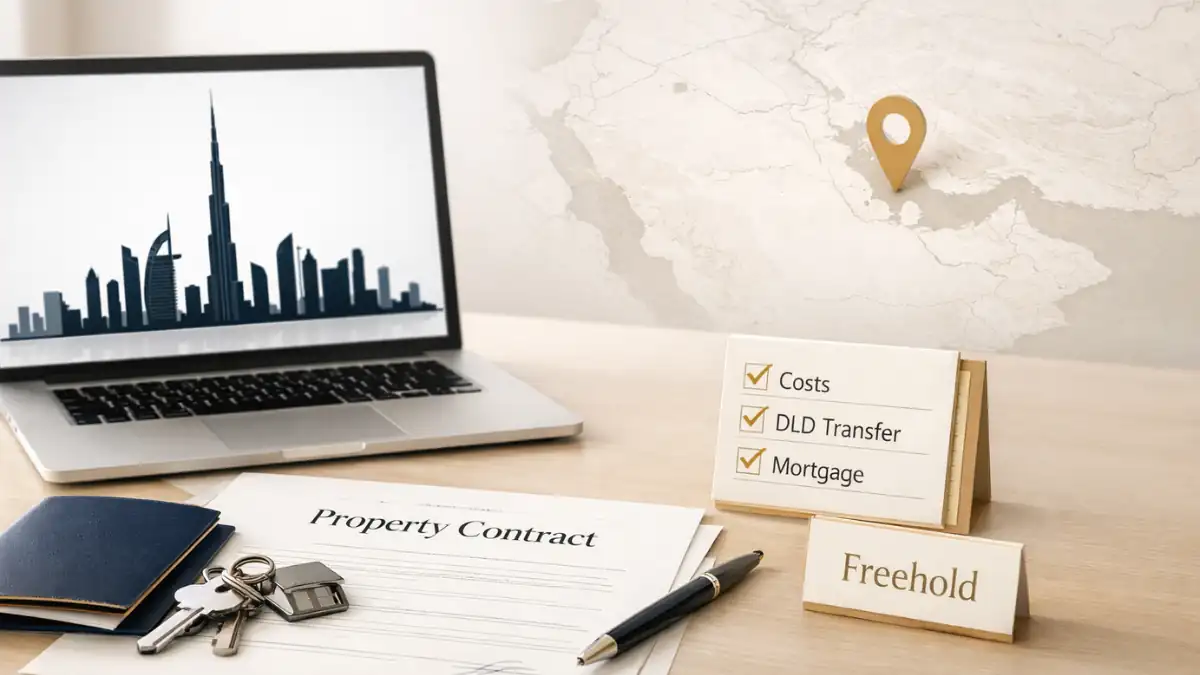
Yes — Can Non UAE Residents Buy Property in Dubai is a straightforward “yes”, provided you buy in designated freehold areas and follow the standard Dubai Land Department (DLD) transfer process. You do not need to live in Dubai, and you can usually complete the purchase remotely with the right agent support and paperwork.
- Where you can buy: Non-residents can purchase in Dubai’s freehold zones (not every area is eligible).
- Ownership type: Most international buyers choose freehold for long-term security and resale flexibility.
- Costs to budget: Plan for DLD fees, agent fee, trustee/admin fees, and ongoing service charges.
- Mortgage option: Non-residents can often get a Dubai mortgage, but deposits and documents are stricter than for residents.
- Timeline: A typical resale transfer can complete in days once documents are ready; off-plan timelines follow the developer’s payment plan and handover.
In the guide below, we break down the rules, the process, the real costs, and the practical “gotchas” we see with overseas buyers — so you can decide your next step with confidence.
Buying from overseas and want a clear “yes/no” on what’s possible?
Share your budget, preferred area, and whether you want off-plan or ready. Our team will outline what non-residents can buy, the likely costs, and the cleanest way to complete remotely.
Quick summary: Can Non UAE Residents Buy Property in Dubai
If you are wondering Can Non UAE Residents Buy Property in Dubai, the practical answer is: yes, in designated freehold communities, with a defined DLD transfer process and clear fee structure. You can buy as a cash buyer or (in many cases) with a non-resident mortgage, and you can complete the purchase even if you never relocate to Dubai.
The key is choosing the right area and property type for your goal (rental income, long-term hold, or lifestyle use), and then running proper due diligence so the numbers and the paperwork hold up.
Can non-residents buy property in Dubai? (Quick overview)
Dubai is one of the more accessible global property markets for international buyers. In simple terms, non-UAE residents can buy property in Dubai in freehold areas, where ownership is registered through the Dubai Land Department (DLD). You do not need residency to own property, and you do not need to live in the UAE to rent it out or hold it long-term.
For most overseas buyers, the decision is less about eligibility and more about selecting the right asset: a community with proven rental demand, predictable service charges, and a realistic resale market. That is where the “paperwork is easy, but the strategy matters” part comes in.
Where can foreigners buy property in Dubai? Freehold vs restricted areas
The headline rule is this: foreigners can buy in Dubai’s freehold areas. These are designated zones where non-UAE nationals can own property outright and register that ownership with the DLD.
Freehold ownership: what it means in practice
- You own the property (and usually a share of the building’s common areas if it is an apartment).
- You can sell at any time, subject to the property’s specific terms (off-plan rules may apply until handover).
- You can rent it out long-term, and in some cases short-term with the correct permissions.
Restricted areas: what to watch for
Not every location in Dubai offers freehold for non-residents. Some areas may have restrictions, or different ownership structures. This is why we always start by confirming: Is this specific building and plot eligible for foreign freehold?
Ownership rules and eligibility for non-UAE residents
From a legal ownership perspective, eligibility is typically straightforward. Non-residents can buy as an individual, and many buyers also explore company ownership depending on tax, inheritance planning, or portfolio structure.
What you usually need as a non-resident buyer
- Passport copy (and visa page if applicable).
- Proof of funds (especially for compliance and bank transfers).
- Contact details and basic KYC information.
- Power of Attorney (optional) if you want someone to sign on your behalf in Dubai.
If you are buying with finance, the bank will request more documents and may require specific formats (for example, stamped statements or employer letters). We cover the key points further below.
Quick costs snapshot – non-resident buying costs at a glance
- DLD transfer fee: a material upfront cost to plan for on resale purchases.
- Agency fee: typically charged as a percentage (varies by deal and service scope).
- Trustee / admin fees: smaller line items that still matter for budgeting.
- Service charges: ongoing annual costs that can change the true yield.
- Mortgage-related fees (if applicable): valuation, processing, and insurance-related costs.
If you are weighing off-plan versus ready property, remember that off-plan “feels cheaper” at the start because you pay in stages — but your total cost picture must still include DLD/registration items, service charges after handover, and furnishing if you plan to rent.
Costs, fees and the real budget to plan for
One of the most common mistakes overseas buyers make is budgeting only for the purchase price. In reality, your “all-in” number includes transfer and registration costs, professional fees, and then ongoing building costs that impact yield.
Upfront costs you should expect
- DLD / transfer-related fees and administrative charges at the point of purchase.
- Agent fee (agree this clearly in writing).
- Developer or building admin charges where applicable (more common in certain resale or off-plan scenarios).
- Mortgage fees if you finance (valuation, processing, and bank requirements).
Ongoing costs that affect true returns
- Service charges (building/community maintenance and operations).
- Maintenance allowance (especially for older units or high-usage rental properties).
- Letting and property management if you are not in the UAE.
- Furnishing (often required to compete in the rental market).
If you want a deeper breakdown of payment structures (particularly for off-plan), it is worth reading our guide on structuring staged payments and understanding what is included versus extra. We also recommend keeping a simple cashflow plan for the first 12 months so your overseas purchase stays stress-free.
Want us to sanity-check your numbers before you reserve?
We can model the true “all-in” cost, likely service charges, and a conservative rental scenario — so you can see the difference between headline yield and net yield.
Buying property in Dubai as a non-resident: step-by-step process
If you are buying from abroad, a clean process matters. A good agent and a disciplined checklist reduce delays, reduce stress, and help you avoid the classic “last minute surprise” at transfer.
Step-by-step: buying in Dubai from overseas
- Set your goal and time horizon. Are you prioritising rental income, capital growth, lifestyle use, or a mix?
- Choose the right eligible area. Confirm the community is a foreign-buyer freehold zone and matches your strategy.
- Shortlist buildings, not just locations. Check service charges, maintenance standards, layout quality, and rental demand.
- Run due diligence. Verify title/ownership status, payment status, and any building-specific conditions.
- Agree the deal terms. Price, deposit, inclusions, timelines, and who pays which fees.
- Prepare transfer documents early. Passport copies, KYC items, and (if needed) Power of Attorney.
- Complete the DLD transfer. Usually via the relevant trustee process, then register utilities/management accounts.
- Set up rental or handover plan. Furnish, snag (if needed), appoint management, and list the property professionally.
If you are new to the market and want a broader investor framework, your pillar guide is the best starting point for strategy, risk, and deal selection. It helps you avoid “pretty brochure buying” and focus on fundamentals.
Can non-residents get a mortgage in Dubai?
In many cases, yes — non-residents can get a Dubai mortgage, but the bank’s criteria is usually stricter than for UAE residents. The practical difference tends to be in the deposit requirement, the documents required, and how the bank assesses income and affordability.
What typically changes for non-resident mortgage applications
- Higher deposit expectations than resident borrowers.
- More documentation (and often tighter formatting requirements).
- Longer processing time because overseas income verification can take longer.
- Property eligibility (some units or developers may be easier to finance than others).
As a rule, you will want to get your mortgage “in principle” direction early, so your offer and timeline stay realistic. If you are choosing off-plan, mortgage rules can be different at different stages, so structure matters.
Can you buy property in Dubai without living there? Remote buying explained
Yes — you can buy property in Dubai without living there, and many international investors do exactly that. The key is building a remote-friendly process: clear communication, verified documentation, and a reliable local team to coordinate viewings, inspections, and transfer steps.
How remote purchases usually work
- Virtual viewings and shortlisting based on your strategy and budget.
- Document collection via secure channels and clear checklists.
- Remote signing using accepted processes, or via Power of Attorney where appropriate.
- Handover support (snagging, furnishing, management setup) if you plan to rent.
Common pitfalls and “gotchas” to avoid
Dubai is a high-opportunity market, but the risks are very real if you skip the basics. Here are the most common issues we see with overseas buyers, and how to avoid them.
Risk checklist for non-resident buyers
- Freehold eligibility not confirmed for the exact building/plot.
- Service charges ignored or underestimated (these can materially reduce net yield).
- Layout and livability not assessed (harder to rent, weaker resale demand).
- Off-plan terms misunderstood (payment schedule, handover timeline, and what is included).
- Short-term letting assumptions made without understanding permits, seasonality, and management requirements.
- Transfer timeline mismatch (especially if you are financing and the seller expects a fast close).
If you want a structured approach to due diligence, it is worth reading our investor checklist guide and aligning your purchase to a proven process rather than rushing a decision.
FAQs: Can Non UAE Residents Buy Property in Dubai
Can foreigners buy property in Dubai?
Yes. Foreign nationals can buy property in Dubai in designated freehold areas. Ownership is registered with the Dubai Land Department, and you do not need UAE residency to own property.
Can you buy property in Dubai without living there?
Yes. Many buyers purchase from overseas using virtual viewings, remote document handling, and (where appropriate) a Power of Attorney. The key is clear due diligence and a reliable local team to manage the process.
Can non residents buy property in Dubai?
Yes — non-residents can buy in Dubai’s freehold zones. The important step is confirming the specific property is eligible and budgeting properly for transfer fees, service charges, and any finance-related costs.
Can anyone buy a property in Dubai?
Many nationalities can buy, but not “anyone in any location”. Eligibility is mainly about freehold areas and compliance checks. If you are unsure, we can confirm eligibility for the specific building and plot before you commit.
Where can foreigners buy property in Dubai?
Foreign buyers can purchase in Dubai’s designated freehold communities. The safest approach is to confirm freehold status for the exact unit and building, then assess service charges, rental demand, and resale liquidity for that micro-location.
Can non residents buy property in UAE?
In many cases, yes — but rules vary by emirate. This guide focuses on Dubai, where the freehold framework is well-established and widely used by international buyers.
Can non residents own property in Dubai?
Yes. Non-residents can own property in Dubai’s freehold areas and register ownership through the DLD process. You can hold, sell, and rent the property, subject to the building and community rules.
Buying property in Dubai as a non resident: what is the simplest route?
The simplest route is usually: shortlist eligible freehold communities, choose a building with proven rental demand, complete due diligence, then transfer via the trustee process. If you are buying remotely, a clear document checklist and a reliable property manager make the biggest difference.
Can non UAE residents buy property in Dubai with a mortgage?
Often, yes. Non-resident mortgages are available, but requirements are typically stricter than for residents, with more documentation and a higher deposit expectation. The best approach is aligning your property shortlist with what banks commonly approve.
Want a clean shortlist of freehold options that fit your budget?
Tell us your target yield, preferred lifestyle/community, and whether you want off-plan or ready. We’ll suggest suitable options and explain the trade-offs clearly.
Next steps & useful guides
If you want to go deeper than eligibility and understand how to choose the right deal as an overseas buyer, these guides will help:
- Start with the complete investor pillar guide (strategy, risks, and how to think like an investor).
- Follow a step-by-step buying process (useful if you are buying from overseas).
- Understand ownership types and area rules (so you know what you are actually buying).
- Learn how staged payments really work (especially important for off-plan purchases).
- Use a practical due diligence checklist (before you pay a deposit).
- Can non-residents buy? Yes, in designated freehold areas, with ownership registered via the Dubai Land Department process.
- Do you need to live in Dubai? No. Many buyers purchase remotely and rent the property out with professional management.
- What matters most? Confirm freehold eligibility for the exact unit, model net returns (service charges + vacancy), and complete due diligence before reserving.
- Mortgage option? Often available for non-residents, but criteria is typically stricter with more documents and higher deposit expectations.
- Best next step Align your goal (yield, growth, lifestyle) to a suitable freehold community, then shortlist buildings with proven rental demand and sensible charges.
Ready to buy from overseas — without the usual stress?
Dubai Light Haven (our Plans Made Easy team) can help you choose the right freehold area, verify the details, and guide you through a clean, remote-friendly buying process.
Performance Verified ✅
This page meets PME Optimisation Standards — achieving 95+ Desktop and 85+ Mobile PageSpeed benchmarks. Verified on
