
Share this post:
Quick summary: Can You Buy Property in Dubai
Can You Buy Property in Dubai legally as a foreigner or non-resident? In most cases, yes — as long as you buy in Dubai’s designated freehold areas and follow the correct purchase process (on-plan or resale). You do not need UAE citizenship, and you usually do not need residency to own property, although a visa can be linked to qualifying purchases.
- Foreign ownership is allowed in specific freehold zones (apartments, villas and townhouses, depending on the community).
- Non-residents can buy — you can complete a purchase from overseas with the right documents and reputable support.
- You can buy with cash or a mortgage (mortgage criteria differ for residents vs non-residents).
- Buying does not grant citizenship — however, some purchases may support a residency pathway depending on the latest rules.
In this guide, our Dubai Light Haven team walks you through what’s legal, where foreigners can buy, the real costs to budget for, and a simple step-by-step process so you can buy confidently — whether you live in the UAE or not.
Want to know if you can buy in Dubai as a non-resident?
Share your nationality, budget and preferred area — we’ll explain the legal ownership route, the typical costs, and the safest way to proceed.
Can you buy property in Dubai legally?
Can You Buy Property in Dubai legally if you are not Emirati? Yes — Dubai has long-established rules that allow foreign buyers to own property in designated freehold areas. That legal framework is the reason you see so many international investors buying apartments, villas and townhouses across the city.
The key is understanding what you can own (freehold vs leasehold), where you can own it (approved communities), and how the transaction is registered (to ensure the title is correctly recorded).
Who can buy property in Dubai (residents vs non-residents)
Most buyers fall into one of two groups: UAE residents and non-residents. Both can buy in freehold areas, but the practical steps can differ slightly — especially around banking, mortgages and document verification.
Can you buy property in Dubai as a non-resident?
In many cases, yes. You can complete a purchase from overseas with a mix of digital paperwork and local support, as long as the deal is structured properly. Non-residents often prefer:
- New-build or off-plan purchases with staged payments, or
- Ready properties where the transfer can happen on a clear timetable.
Can you buy property in Dubai without residency or a visa?
Ownership and residency are separate. You can usually own property without being a resident. However, if your goal includes a residency pathway, the eligibility criteria can depend on the current rules and the value/type of property. For an investor-safe overview, see our guide to visa and legal considerations for property buyers.
Do you need an Emirates ID to buy?
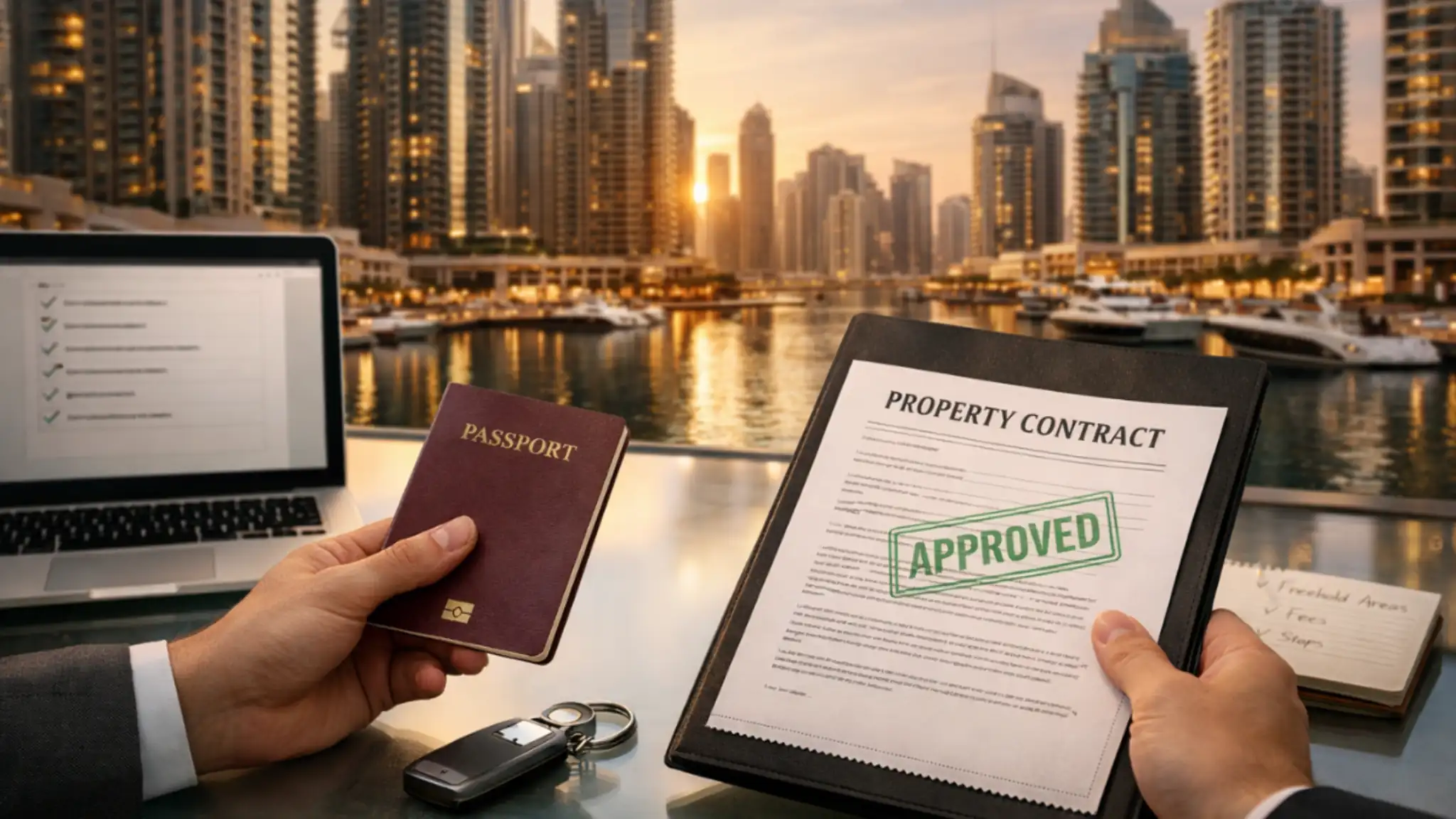
For many purchase scenarios, you can proceed using your passport and supporting documents. Some steps (especially banking or utilities) can be smoother if you have residency, but Emirates ID is not always required to own in freehold areas.
Where foreigners can buy property in Dubai (freehold areas)
Foreign buyers typically purchase in freehold communities where ownership is recognised and registered under Dubai’s property framework. “Freehold” generally means you own the unit (and, depending on the property type, a share of common areas through the building/community structure).
What “freehold” really means in Dubai
- Freehold: you can own the property outright in approved areas.
- Leasehold/other arrangements: rights can be time-limited or structured differently depending on location and contract.
If you want a plain-English breakdown, start with our explainer on ownership types and what buyers must know.
Choosing the right community
The “best” location depends on your strategy: rental demand, lifestyle use, capital growth potential, or a blend. If you’re weighing areas, our team’s community overview is a good starting point: Dubai communities and locations guide.
Quick costs snapshot: what to budget beyond the purchase price
Buyers often focus on the property price and forget the transaction and ownership costs. While fees vary by property type and deal structure, you should typically budget for:
- Transfer / registration costs (commonly a percentage of the purchase price, depending on the transaction route).
- Agency fee (where applicable, usually a percentage for resale purchases).
- Mortgage arrangement fees and valuation costs (if financing).
- Service charges (ongoing building/community charges for maintenance and amenities).
- Developer fees (possible admin fees on certain new-build/off-plan purchases).
Costs move with policy and project details. If you want a realistic “all-in” number for your budget, our deeper cost guide is here: understanding fees and real costs.
Is it worth buying property in Dubai?
This depends on your goals. Dubai can suit investors who value:
- strong rental demand in well-positioned communities,
- modern stock and high-quality amenities in many developments, and
- clear ownership registration when purchased and documented correctly.
That said, not every deal is a good deal. Pricing, service charges, unit quality, and developer track record matter. If you want a balanced view, our investor-focused breakdown is here: is it a good investment?
How to buy property in Dubai step-by-step (safe, legal process)
Whether you are buying a ready home or an off-plan unit, the safest approach is to follow a structured process that protects you from documentation gaps and payment surprises.
Step-by-step checklist: buying in Dubai as a foreign buyer
- Set your strategy. Are you buying for rental income, resale, lifestyle use, or a hybrid?
- Pick the right area for that strategy. Use data (rents, vacancy, service charges), not hype.
- Choose property type. Apartment vs townhouse vs villa — each behaves differently for yield and resale. Start here: property types and investment models.
- Shortlist buildings/projects. Compare developer reputation, handover record, and community management quality.
- Confirm ownership and registration route. Ready transfers and off-plan registrations follow different steps.
- Reserve the unit and verify the paperwork. Ensure names, unit numbers, payment schedule and fees match exactly.
- Complete due diligence. Title status (ready) or project registration/escrow route (off-plan), plus seller authority.
- Transfer/registration. The deal should be registered properly, and you should receive the correct ownership documentation.
If you want a fuller walkthrough with buyer protections and practical timelines, you’ll find it here: our step-by-step process guide for international buyers. For a deposit-to-handover view on new launches, use: off-plan projects explained.
Want us to sense-check a deal before you pay a deposit?
We’ll review the area, building/project, fee structure and paperwork route — so you know what’s normal and what’s a red flag.
Cash, mortgage and crypto: what’s possible?
Can you buy property in Dubai with cash?
Yes. Cash purchases are common, particularly for international buyers. “Cash” usually means funds are transferred via normal banking channels, with payment instructions aligned to the transaction stage. The key is ensuring payments go to the correct parties (and, for off-plan purchases, to the appropriate regulated route).
Can you buy property in Dubai with a mortgage?
Often, yes — but lending rules and affordability checks can vary. In practice:
- Residents may have broader lending options and simpler bank documentation.
- Non-residents can still qualify in many cases, although deposit levels and document requirements can differ.
If you want a buyer-safe overview of finance and residency considerations, see: legal, finance and visa guidance for property buyers.
Can you buy property in Dubai using crypto (USDT, Bitcoin, XRP)?
Some transactions are marketed this way, but the reality can be more nuanced. Even when “crypto accepted” is advertised, the settlement often ends up being converted into standard currency through regulated channels. If you are considering this route, treat it as a payment method conversation, not a shortcut — and make sure you understand fees, exchange rates, and the exact legal payment pathway.
Pitfalls and gotchas to avoid
Dubai can be very buyer-friendly when you follow the right process. However, most expensive mistakes come from rushing, skipping verification, or assuming all projects are “the same”.
Common pitfalls we see
- Buying the area, not the building. Two buildings in the same neighbourhood can perform very differently for rent and resale.
- Ignoring service charges. These can materially change your net yield.
- Assuming off-plan is always cheaper. It can be, but pricing and incentives vary by launch phase and developer.
- Under-budgeting for fees. Transfer, registration and admin costs add up.
- Relying on verbal promises. Only written terms in the contract set matter.
If you want a practical due diligence checklist designed for investors, use: our “before you pay a deposit” checklist. For an investor-specific process, see: buying investment property as a foreigner.
FAQs: Can You Buy Property in Dubai
Can you buy property in Dubai as a foreigner?
Yes. Foreign buyers can purchase in Dubai’s designated freehold areas. The practical steps are straightforward when the paperwork is correct and the transaction is registered properly. If you want the broader investor context, see our pillar guide: Dubai property investment overview.
Can anyone buy property in Dubai?
Most nationalities can buy in freehold areas, but “anyone” still needs to follow the correct legal process and documentation. Ownership rules can vary by area and property type, so it helps to confirm freehold status and the registration route before paying a deposit.
Can you buy property in Dubai as a non-resident?
In many cases, yes. Non-residents can buy property in freehold areas and complete a purchase from overseas, as long as documents, payments and registration are handled correctly. Where it gets more complex is banking and mortgages, which can differ for non-residents.
Can you buy property in Dubai without residency?
Generally, ownership and residency are separate. You can usually own without being a UAE resident, although residency pathways may be linked to qualifying criteria that can change over time. For the latest investor-focused explanation, see: Dubai visa requirements guide.
Can you buy property in Dubai without a visa?
You can often buy without holding a UAE visa, particularly in freehold areas. However, a visa may be relevant if you want easier banking access, longer stays, or eligibility routes connected to property ownership (subject to the latest rules).
Can you buy property in Dubai with a mortgage?
Often, yes — though terms, deposit requirements and documentation can vary for residents versus non-residents. The safest approach is to confirm mortgage eligibility early, before you commit to a unit or pay non-refundable amounts.
Can you buy property in Dubai in cash?
Yes. Cash purchases are common, especially for overseas investors. The most important point is to ensure payments follow the correct documented route, aligned to the transaction stage and registered properly.
If you buy property in Dubai do you get citizenship?
Buying property does not automatically grant citizenship. Some purchases may support residency pathways depending on current criteria, but citizenship is a separate matter. If residency is part of your plan, start with: visa types and requirements explained.
Can you buy property in Dubai without an agent?
You can, but many buyers still use professional support because it reduces risk: contract accuracy, negotiation, documentation checks and smoother registration. If you do go direct, be extra strict about verifying documents and ensuring everything is recorded correctly in writing.
What do you need to buy a property in Dubai?
At minimum, you typically need a valid passport, proof of funds (or mortgage approval where applicable), and correctly completed purchase documentation. The exact list depends on whether you are buying off-plan or resale, and whether you are a resident.
Not sure where to start — area, budget, or legal route?
Tell us your goal (investment, lifestyle, or both) and we’ll suggest the safest next step, plus the most suitable communities for your plan.
Next steps & useful guides
If you want to go deeper than “Can You Buy Property in Dubai”, these guides will help you make better decisions and avoid expensive mistakes:
- our complete buyer checklist (from research to transfer)
- understanding payment plans and what to watch for
- how off-plan purchases really work (risks and protections)
- what different budgets typically buy across Dubai
- area selection guide for investors and buyers
- Is it legal for foreigners? Yes, in designated freehold areas with proper registration.
- Can non-residents buy? In many cases, yes — you can buy from overseas with the right documentation and support.
- Do you need residency? Usually not to own, but residency pathways may depend on current eligibility criteria.
- How can you pay? Cash and mortgages are common; “crypto accepted” routes require extra caution and clear compliance steps.
- Key cost to plan for Budget beyond price for transfer/registration, agency fees (resale), mortgage fees (if any), and ongoing service charges.
- Biggest risk reducer Written documentation, verified parties, and a clean registration pathway — before paying a deposit.
Want a buyer-safe route mapped out for your situation? Message Dubai Light Haven and we’ll outline the simplest legal path.
Official resources worth checking
For official guidance and updates, it is sensible to review:
- Dubai Land Department (DLD) — official real estate authority
- RERA — Dubai’s real estate regulatory framework
- UAE Government Portal — residency and general services information
How Dubai Light Haven can help you buy safely
So, can you buy property in Dubai legally? In most cases, yes — and the process can be refreshingly efficient when you buy in the right area, verify the paperwork, and follow a clean registration route. The real advantage comes from making decisions based on facts: fee clarity, service charge realities, developer track record, and realistic rent/resale expectations.
If you’re buying from the UK, Europe, the US, Canada, India or elsewhere, our team can guide you through the safest path for your situation — and help you avoid the common traps that catch overseas buyers.
Ready to buy with clarity and confidence?
Tell us your budget, timeline and preferred areas — and we’ll help you choose the right strategy, shortlist the best options, and proceed safely.
Performance Verified ✅
This page meets PME Optimisation Standards — achieving 95+ Desktop and 85+ Mobile PageSpeed benchmarks. Verified on
