
Share this post:
Quick summary: Buy Property in Dubai Payment Plan
If you’re looking to Buy Property in Dubai Payment Plan, you’re usually agreeing to a staged schedule: a reservation fee, a deposit, then instalments during construction, with the balance due either at handover or over a post-handover period. It can be a smart way to manage cashflow, especially for off-plan, but only if you understand the real costs and the contract steps.
- Most common structure: 10–20% at booking, then instalments during build, then a final tranche at handover (or post-handover instalments).
- Best use case: buyers who want to spread payments without taking a mortgage immediately.
- Key checks: escrow account, developer track record, exact payment milestones, service charges, DLD fees, and handover timelines.
- Biggest mistake we see: focusing on the monthly payment and missing the “lump” due at completion, plus fees and furnishing costs.
In this guide, our team explains how Dubai payment plans work from deposit to handover, what’s typically included, what’s not, and the due diligence steps that protect you as a buyer.
Want us to sanity-check a payment plan before you pay a deposit?
Send the brochure or payment schedule and we’ll highlight the key milestones, fees, and the questions you should ask before signing.
Buy Property in Dubai Payment Plan: what it really means
When people search for Buy Property in Dubai Payment Plan, they’re usually looking for a way to secure a Dubai property without paying the full price upfront. In practice, a payment plan is simply a contract schedule that spreads your purchase price across agreed milestones.
Most payment plans are associated with off-plan property (buying during construction), although some developers also offer structured instalments on selected ready properties. Either way, the logic is the same: you pay in stages, and your ownership paperwork progresses as you meet each milestone.
If you’re new to the buying journey, it can help to read our broader step-by-step overview first: How to Buy Property in Dubai: Step-by-Step Guide for Foreign Buyers. This article then zooms in on the payment plan side of the decision.
How Dubai property payment plans work (deposit to handover)
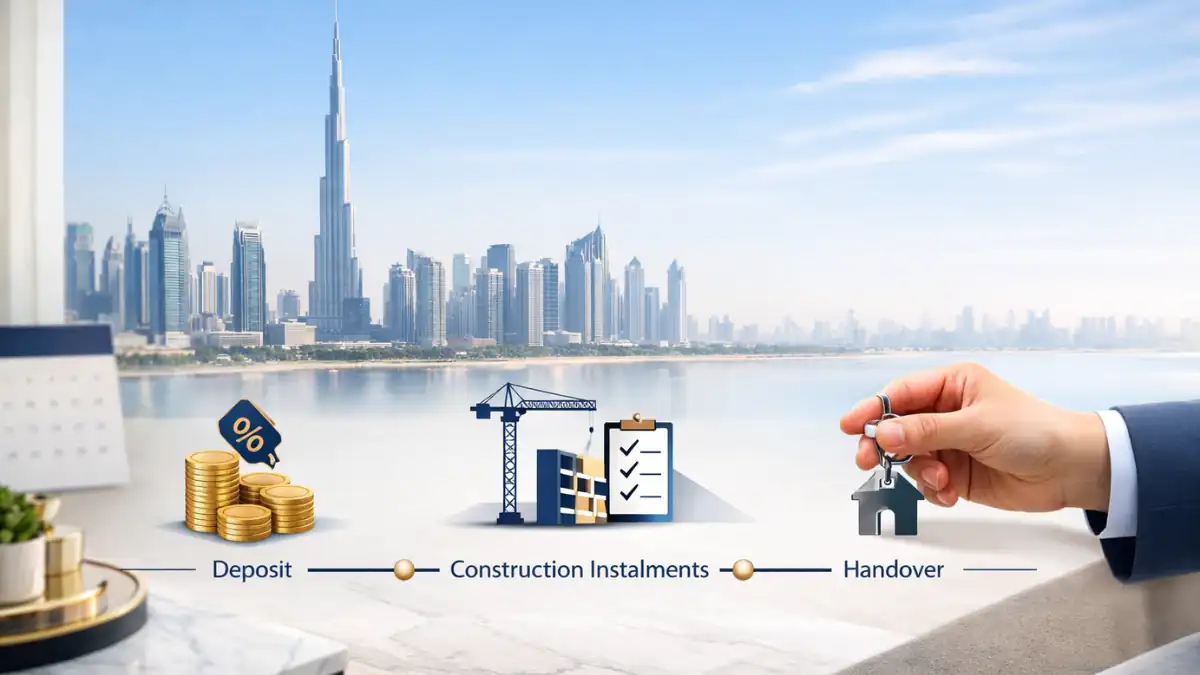
A typical Dubai payment plan has three phases: booking, construction instalments, and handover. The percentages and timing vary by developer, project stage, and demand, but the flow is broadly consistent.
1) Booking and reservation
You usually start by paying a reservation fee and signing a booking form. This is where the payment schedule, unit details, and key terms are first confirmed.
2) Deposit and Sales & Purchase Agreement
Next comes the deposit and signing the Sales & Purchase Agreement (SPA). The SPA is the core contract. It should clearly state:
- the full price and unit specifications,
- the exact instalment dates or construction milestones,
- handover timeline and what counts as “completion”,
- default clauses and late payment consequences,
- what is included at handover (finish level, appliances, parking, etc.).
3) Construction-linked instalments
During the build, you pay instalments either on fixed dates (for example, every 3 months) or linked to construction progress milestones. Milestones can include foundation completion, structure completion, façade completion, and practical completion.
4) Handover payment and key collection
At handover, you pay the agreed tranche (often the largest single payment). You’ll also typically handle snagging, final paperwork, and utility setup. In some cases, handover is when your mortgage begins (if you’re financing the final portion via a bank).
For a deeper dive into hidden costs that can appear at this stage, see: Dubai Payment Plan: The Real Costs, Hidden Fees & What Developers Don’t Tell You.
Types of Dubai payment plan: construction-linked vs post-handover
The wording on brochures can sound similar, so it helps to separate payment plans into two main categories.
Construction-linked plans (common for off-plan)
- Payments are made during construction and a final percentage is due at completion.
- Often suits buyers planning to refinance or sell at/near handover.
- Cashflow is front-loaded compared to post-handover options.
Post-handover plans (instalments after completion)
- A portion of the price is paid after you receive the keys (for example, over 2–5 years).
- Can support buyers who want rental income to help fund later instalments.
- May come with conditions (property management, direct debit setup, or stricter default terms).
If your focus is off-plan specifically, our broader guide may help: Dubai Off Plan Projects: Payment Plans, Handover & Real Costs.
Quick costs snapshot: what buyers often forget to budget for
- Dubai Land Department fees: typically a percentage-based fee on the purchase price (plus admin charges).
- Agency / broker fees: if applicable, confirm the percentage and payment timing.
- Oqood / registration admin: common for off-plan registrations.
- Service charges: ongoing building/community charges after handover.
- Furnishing and appliances: especially if you plan to rent immediately.
- Snagging / minor remedial work: even in good projects, expect some post-handover tweaks.
A payment plan spreads the property price, but it doesn’t remove purchase fees or running costs. Build a realistic “all-in” budget before you commit.
Real costs and fees to budget alongside the instalments
One reason buyers love instalment structures is clarity. However, clarity only helps if you include every cost line. When you plan to Buy Property in Dubai Payment Plan, your total outlay usually includes more than the staged purchase price.
One-off purchase costs (typical categories)
- Government registration and admin: fees charged through the official transfer/registration process.
- Agent fees: where applicable, clarify if they’re due at booking, SPA, or handover.
- Developer admin charges: sometimes appear in reservation paperwork.
- Mortgage setup (if used for final tranche): valuation, arrangement and bank admin fees.
Ongoing costs after handover
- Service charges: vary by building, facilities, and community.
- Utilities and cooling: budget for connection deposits and ongoing bills.
- Landlord costs: if renting, consider property management, maintenance reserves, and vacancy buffers.
If you’re buying from the UK and want a full cost checklist, this related guide is useful: Invest in Dubai From UK: The True Costs, Fees & Budget Checklist.
Not sure what you’ll actually pay between now and handover?
We’ll turn your payment schedule into a simple timeline, then add typical fees and post-handover running costs so you can see the real all-in picture.
Due diligence before you pay a deposit
Payment plans can be safe, but the safety comes from the checks you do upfront. Before you sign an SPA or transfer a deposit, treat this as your non-negotiable due diligence list.
Developer track record and delivery history
Look at what the developer has delivered before: build quality, handover punctuality, and how they handled defects after completion. A glossy brochure is not the same as a proven delivery record.
Project registration and escrow process
Off-plan projects should follow regulated registration and escrow mechanisms. The practical takeaway for you is simple: ask where funds are held and how the project is officially registered.
The exact handover definition in the SPA
Handover can be defined differently across contracts. Confirm what “completion” means (for example, practical completion, building completion certificate, or key readiness) and what happens if delays occur.
Exit plan and flexibility
Many buyers intend to hold long-term, but it’s still wise to understand your options if your circumstances change. Ask about assignment/resale rules during construction and any developer NOCs required.
For a broader buyer protection checklist, see: Invest in Dubai Property: The Due Diligence Checklist Before You Pay a Deposit.
Step-by-step: buying on a payment plan (simple checklist)
How to Buy Property in Dubai Payment Plan without nasty surprises
- Pick the right strategy first. Decide whether you’re buying for rental income, capital growth, lifestyle, or a blend. (This guide helps: Property Types and Investment Models.)
- Choose location based on demand, not hype. Shortlist communities with proven tenant demand and resale liquidity. Start here: Dubai Communities and Locations.
- Compare plans like-for-like. Put each schedule into a simple timeline (booking, construction, handover, post-handover) and circle any big lump sums.
- Confirm fees in writing. Registration, admin, broker fees, and any “extras” should be documented before you sign.
- Read the SPA properly. Pay attention to handover terms, delay clauses, default terms, and what is included in the unit finish.
- Plan your handover funding early. If you’ll use a mortgage later, speak with lenders early so you’re not forced into a rushed decision at completion.
- Prepare for snagging and setup. Arrange snagging, utilities, and furnishing ahead of time, especially if you want to rent immediately.
Pitfalls & gotchas (what catches buyers out)
Payment plans look straightforward, yet the same problems appear repeatedly. These are the big ones to watch.
“Low instalments” that hide a large completion payment
Some schedules keep instalments small during construction but require a significant tranche at handover. That can be fine if you’ve planned for it. It becomes a problem only when buyers assume the monthly figure tells the full story.
Confusing post-handover with “interest-free finance”
You’ll often hear buyers ask whether you can buy “without interest”. A post-handover plan can feel interest-free because it’s not a bank loan, but the pricing and terms still matter. Focus on the total price, your rights in the SPA, and the consequences of late payments.
Underestimating running costs
Service charges, furnishing, and management costs can materially affect your net yield. This is especially important if your plan relies on rent covering later instalments.
Not aligning the plan with your residency/visa goals
If you’re buying with an eye on residency pathways, make sure the property, value, and timing align with your goals. This is worth reviewing alongside: Legal Finance and Visa: Golden Visa Rules Explained for Property Buyers.
FAQs: Buy Property in Dubai Payment Plan
How do Dubai property payment plans work in simple terms?
You pay in stages: a booking amount, then instalments during construction, then a final payment at handover (or instalments after handover on a post-handover plan). The exact percentages and milestones are set out in the SPA and the payment schedule.
Is buying property in Dubai on a payment plan a good investment?
It can be, provided the underlying deal is sound: strong location demand, sensible pricing versus comparable units, realistic service charges, and a timeline you can fund comfortably. A payment plan helps cashflow, but it does not turn a weak project into a strong investment. If you want the beginner roadmap, start here: Can You Invest in Dubai Real Estate? A Step-by-Step Guide for Beginners.
Can foreigners buy property in Dubai using a payment plan?
Yes, foreign buyers can purchase in designated ownership areas, and payment plans are commonly available on off-plan projects marketed internationally. Your key focus should be the contract terms, developer credibility, and the full cost breakdown. For a wider overview, see: Buying Property in Dubai Foreigners: Complete Guide (Rules, Costs, Areas).
What fees should I expect when buying on instalments?
Budget for registration/admin charges, broker fees where applicable, and post-handover running costs such as service charges and utilities. The exact numbers vary, so the safe approach is to request a full fee schedule in writing before signing, then keep a cash buffer for furnishing and snagging.
Is it easy to buy property in Dubai from the UK on a payment plan?
It can be straightforward if you follow a structured process: verify the project, understand the SPA, confirm payment milestones, and plan how you’ll fund the handover tranche. Many UK buyers also choose to visit for viewings and final signing, although much can be handled remotely with the right support. This guide may help: Can I Buy Property in Dubai From UK? The Complete Guide for British Buyers.
Can you buy property in Dubai without interest?
Developer instalment plans are not bank loans, so they’re often described as “interest-free”. However, the important point is your total cost and the contract terms. Some plans may price flexibility into the overall deal, and late payment penalties can apply, so read the SPA carefully.
What’s the difference between off-plan payment plans and ready-property buying?
Off-plan spreads payments over the build and completion period. Ready-property purchases often involve quicker completion, and buyers may use a mortgage from day one. Off-plan can suit staged funding, while ready property can suit immediate occupancy or immediate rental income—provided the numbers stack up. If off-plan is your focus, see: How to Buy Off Plan Property in Dubai (Step-by-Step for Foreign Investors).
Still unsure which payment plan is actually “good”?
We’ll compare the schedule against typical market structures and highlight the clauses that matter before you commit.
Next steps & useful guides
If you want to keep researching, these guides are the most relevant next reads:
- Buying Property in Dubai as a Foreigner – What You Need to Know
- Dubai Payment Plan: The Real Costs, Hidden Fees & What Developers Don’t Tell You
- Dubai Off Plan Projects: Payment Plans, Handover & Real Costs
- Dubai Property Payment Plans Explained for International Buyers
- The Complete Dubai Buying Property Checklist
- Dubai Property Investment: The Complete Investor Guide
- DLH Market Insights and News: Dubai Property Market Update (This Month)
- Most common structure Booking + deposit, then instalments during construction, then a final tranche at handover (or post-handover instalments).
- Best fit for Buyers who want predictable cashflow and prefer to reduce reliance on a mortgage at the start.
- Biggest risk Underestimating the handover lump sum and purchase fees, which can force rushed financing decisions.
- Non-negotiable checks Developer delivery record, project registration/escrow process, SPA clauses, and a full “all-in” budget including service charges.
- Smart move Turn the schedule into a timeline and stress-test it against your income, buffers, and realistic rental assumptions.
- Best next step Have the payment plan reviewed before paying a deposit so you understand milestones, fees, and default terms.
Want a quick review? Message Dubai Light Haven and we’ll sense-check your payment schedule before you commit.
Official references (useful for due diligence)
For official information on property services, residency, and guidance, these sources are helpful starting points:
- Dubai Land Department (DLD) — official land and property services
- UAE Government — visas and Emirates ID overview
- UAE Government — Golden Visa information
How Dubai Light Haven can help
Choosing to Buy Property in Dubai Payment Plan can be a sensible move, provided the schedule fits your cashflow and the contract terms protect you properly. The best results come when you treat the plan as a full timeline—deposit, instalments, handover payments, and the real-world running costs after completion.
Our team helps buyers and investors compare payment structures, spot hidden cost lines, and stress-test the numbers against realistic rental and resale assumptions. If you want a calm, practical second opinion before you sign, we’re happy to help.
Ready to move forward with confidence?
Send us the payment plan and unit details and we’ll help you confirm the steps, the fees, and the risks before you commit.

Performance Verified ✅
This page meets PME Optimisation Standards — achieving 95+ Desktop and 85+ Mobile PageSpeed benchmarks. Verified on
