
Share this post:
Quick summary: Visa Requirement for Dubai
If you’re checking Visa Requirement for Dubai, the first thing to know is this: the UAE has different entry rules depending on your passport nationality, your purpose of visit (tourism vs work), and your length of stay. Many travellers (including most UK passport holders) can get a free visitor entry stamp on arrival, while other nationalities must arrange a tourist visa in advance.
- Passport validity matters: plan for at least 6 months remaining on your passport at entry.
- Tourist/visitor entry is different from residency or work — don’t assume you can “switch” after you arrive.
- Dubai and Abu Dhabi are both UAE — entry rules are federal, but visa issuing channels can differ (Dubai’s GDRFA vs federal ICP).
- For property buyers: visiting to view homes is usually covered by a visitor/tourist entry, but the moment your plans involve working or residency, you’ll need the correct visa route.
Planning a Dubai property viewing trip?
Tell our team your nationality and travel dates — we’ll help you map the practical steps so your viewing schedule and paperwork stay aligned.
Quick summary: Visa Requirement for Dubai
The Visa Requirement for Dubai depends on your passport and trip purpose. Many travellers can enter as visitors without arranging anything in advance, while others must apply for a tourist visa before flying. Either way, you should expect checks around passport validity, return/onward travel, and (for some visa types) proof of accommodation or funds.
For UK passport holders, the UK government states you can receive a free visitor visa on arrival valid for up to 90 days in a 180-day period, without applying in advance. Always confirm your personal circumstances before travel.
Visa Requirement for Dubai: the quick rules that catch people out
Most confusion around the Visa Requirement for Dubai comes from mixing up three different things: visitor entry (tourism/viewings), work/residency (employment or long-term living), and visa issuing channels (Dubai vs federal portals).
- Visitor/tourist entry is typically for holidays and short trips (including property viewings).
- Work visas are tied to employment and sponsorship — you cannot legally “work on a tourist stamp”.
- Residency routes (including property-linked options like longer-term residency frameworks) have separate eligibility and evidence requirements.
Who needs a visa for Dubai (and who gets one on arrival)
At a high level, travellers fall into one of these groups:
- Visa on arrival / visa-free entry eligible: you receive an entry stamp at immigration (no pre-application).
- Pre-arranged tourist visa required: you (or a sponsor such as a hotel/airline/agent) apply before travel.
- Special cases: residency holders of certain countries, business/work categories, or longer-stay products (e.g., multi-entry tourist options).
If you’re travelling from the UK, the official UK travel advice states British passport holders can get a free visitor visa on arrival for up to 90 days within a 180-day period (subject to meeting entry conditions). For other nationalities, the UAE’s official portal is the safest way to confirm whether you need a visa in advance.
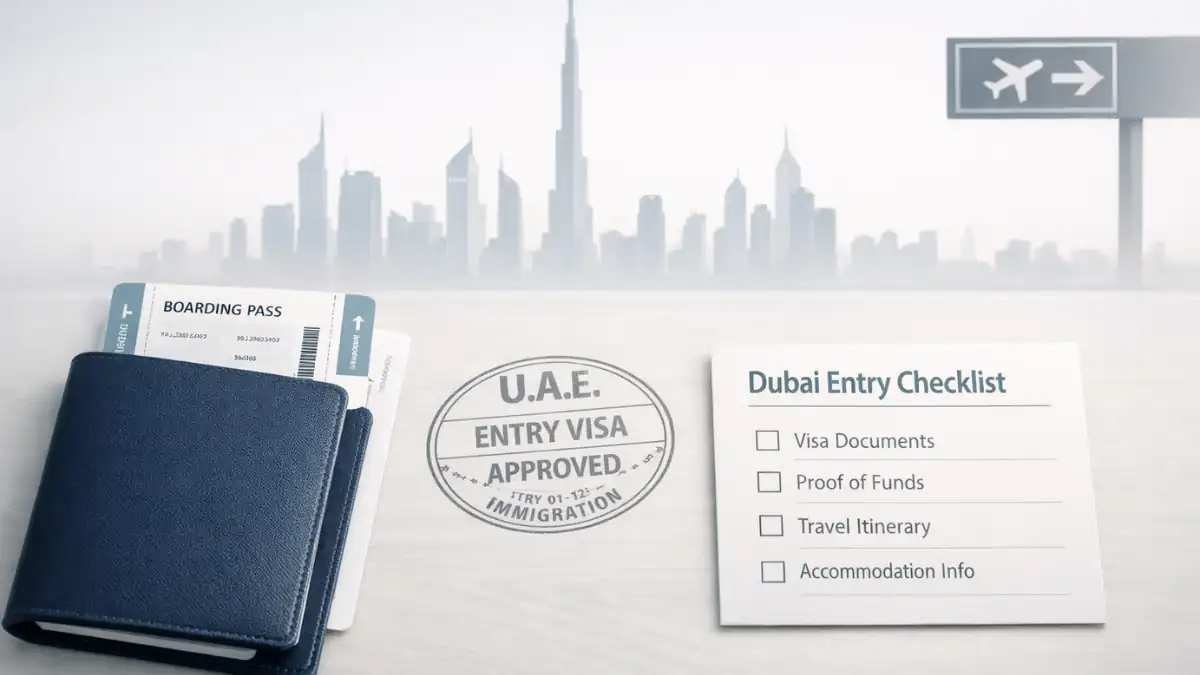
Documents checklist for Dubai entry
Whether you’re entering on a visa on arrival or a pre-arranged tourist visa, you should prepare a simple, practical pack. Immigration officers do not always ask for every item, but having them ready prevents delays — especially if you’re travelling during busy periods.
Essential documents (carry these)
- Passport with at least 6 months validity remaining at entry.
- Return or onward ticket (particularly relevant for visitor entry).
- Accommodation details (hotel booking or address you’re staying at).
- Travel insurance (and where applicable, health insurance evidence for certain visa products).
Useful supporting documents (especially for pre-arranged tourist visas)
- Passport copy and a passport photo (common requirements for applications).
- Proof of funds or bank statements if your visa type requests it.
- Any additional ID requested for specific nationalities (requirements can vary by issuing authority and visa type).
Dubai vs Abu Dhabi: is a separate visa required?
This is a very common question: “Do I need a separate visa for Dubai and Abu Dhabi?” In most visitor cases, no — both are part of the UAE, and entry rules are federal. However, where you apply (and which portal processes the visa) can differ.
- Dubai often routes visit visa services through the General Directorate of Residency and Foreigners Affairs (GDRFA Dubai).
- Other emirates / federal processing often routes through the UAE’s ICP platform and services.
On arrival visa requirements for Dubai: what to expect at immigration
If your nationality qualifies for a visa on arrival, the process is usually straightforward. You queue for immigration, your passport is stamped, and the permitted stay is recorded. That said, you should still expect basic checks.
What immigration may check
- Passport validity and condition.
- Purpose of visit (holiday, visiting family, business meetings, property viewings).
- Return/onward plans and where you will stay.
- Previous overstays or unresolved immigration issues (if any).
Costs, timelines and common processing questions
Costs depend on whether you need a pre-arranged tourist visa and which channel you use (airline, hotel, authorised agent, or government portal). Timelines can range from quick approvals to longer waits if extra checks are triggered.
Typical questions people ask (and the practical answer)
- “How much is the visa fee for Dubai?” — some nationalities pay nothing at arrival; pre-arranged visas have fees that vary by type and sponsor.
- “How long does a Dubai tourist visa last?” — depends on the visa type and your nationality; always check your stamp/approval notice.
- “How many days is the Dubai visa process?” — it varies; allow buffer time if you have a strict travel schedule.
Quick costs snapshot (what to budget for)
- Flights + accommodation (your main predictable costs).
- Visa fees (only if your nationality/visa type requires pre-approval).
- Insurance (strongly recommended, and sometimes required for specific visa products).
- Buffer time if you’re stacking viewings tightly across multiple communities.
If you’re coming to explore investment opportunities, it helps to plan your trip around realistic viewing slots and paperwork time — not the other way around.
Want a simple viewing trip plan with the right admin steps?
We’ll help you line up communities, unit types, and viewing days — and keep your entry/ID checklist tidy so nothing derails the schedule.
Step-by-step: how to check your Dubai visa requirement
If you want the fastest way to confirm your personal Visa Requirement for Dubai, follow this short checklist.
Step-by-step checklist
- Confirm your passport nationality (not your residence country).
- Define the purpose: tourism/property viewings, business meetings, or employment/residency.
- Check official guidance for your nationality and purpose.
- Validate document readiness: passport validity, photo/copies, accommodation and return ticket.
- If you need a pre-arranged visa, choose a legitimate channel (government portal, airline/hotel, authorised agent).
- Leave buffer before flights in case extra checks or document requests come back.
Pitfalls & gotchas (the reasons people get delayed)
In our experience, delays are rarely “mystery problems”. They’re usually one of these practical issues:
- Passport validity too short (or passport damage).
- Wrong visa category chosen (tourism vs work/residency).
- Using unofficial “fast visa” adverts instead of legitimate channels.
- Overstays from previous trips causing extra checks.
- Very tight travel plans with no buffer for approvals or queries.
FAQs: Visa Requirement for Dubai
Is visa required for Dubai from the UK?
For British passport holders, you typically do not need to apply in advance for short visits — you can receive a free visitor entry stamp on arrival (subject to meeting entry conditions). If you are a UK resident but not travelling on a British passport, your rules depend on your passport nationality.
What is the visa requirement for Dubai for tourists?
Tourist/visitor entry requirements vary by nationality. Many travellers receive a visa on arrival, while others must apply for a tourist visa in advance through an official channel or sponsor. In all cases, have a valid passport (ideally 6+ months), accommodation details, and return/onward travel evidence ready.
Is separate visa required for Dubai and Abu Dhabi?
In most cases, no. Dubai and Abu Dhabi are both within the UAE, and visitor entry rules are federal. However, the issuing authority and application portal can differ depending on where your visa is processed.
What are on arrival visa requirements for Dubai?
If your nationality qualifies, you will usually receive an entry stamp at immigration. Immigration may still check passport validity, purpose of visit, return/onward travel, and accommodation details. Keep your documents accessible to avoid delays.
How long can you go to Dubai without a visa?
It depends on your nationality and entry conditions. Some travellers receive an entry stamp allowing a defined period of stay (and sometimes a “90 days in 180 days” rule applies for certain passports). Always check the exact conditions for your passport and read what is stamped/recorded at entry.
What is transit visa required for Dubai airport?
If you are staying airside and not passing immigration, you may not need a transit visa — but requirements depend on your route, airline and nationality. If you plan to leave the airport (enter the UAE), you’ll need to meet entry requirements for your passport.
Not sure which rule applies to your passport?
Share your nationality and intended stay length — we’ll point you to the correct official route and help you plan your Dubai viewing trip accordingly.
- What drives the rule Your passport nationality, your purpose of travel, and your length of stay.
- Common minimum Aim for 6 months passport validity at entry to avoid disruption.
- Dubai vs Abu Dhabi Entry rules are UAE-wide, but visa application channels can differ (Dubai authority vs federal services).
- Visitor vs work Visitor entry is for tourism/viewings; work/residency needs the correct visa category and sponsorship.
- Best practice Verify using official sources before you book flights and lock in viewing dates.
Want a smoother viewing trip? Ask our team to help you plan your itinerary around the right admin steps.
Official guidance (always check these first)
For the latest entry rules, eligible nationalities, and visa channels, use official sources:
- UAE Government portal — check if you need an entry permit or visa
- UAE Government portal — tourist visa overview
- ICP — official visa and entry services
- GDRFA Dubai — visa and residency services
- UK government travel advice — UAE entry requirements
Next steps & useful guides
If you’re visiting Dubai with property in mind, these guides can help you plan the trip and the buying journey more confidently:
- Our step-by-step visa guide for visitors
- Guide for UK passport holders planning a short trip
- What foreign buyers need to know before purchasing
- A practical step-by-step buying process overview
- Budget checklist for UK-based investors
- Longer-term residency routes explained for buyers
How Dubai Light Haven can help
Getting the Visa Requirement for Dubai right is not complicated — but it does need to match your passport, your purpose, and your timeline. Once that’s sorted, you can focus on the part that actually matters: viewing the right areas, understanding total costs, and checking a deal properly before you commit.
Our team helps investors plan viewing trips, shortlist communities, and move through the buying process with clear due diligence — so you stay confident at every step.
Ready to plan your Dubai buying trip properly?
Speak to Dubai Light Haven and we’ll help you structure viewings, shortlist areas, and keep your checklist organised from arrival to reservation.

Performance Verified ✅
This page meets PME Optimisation Standards — achieving 95+ Desktop and 85+ Mobile PageSpeed benchmarks. Verified on
