
Share this post:
Quick summary: Legal Finance and Visa
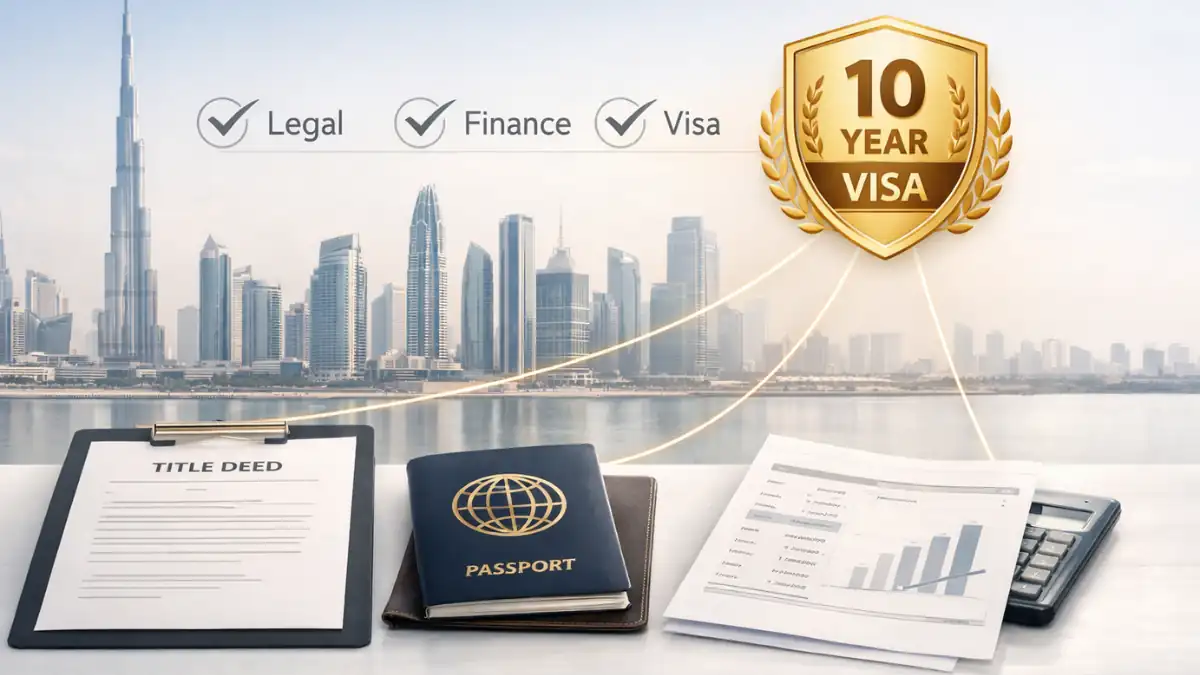
If you’re buying property in Dubai, Legal Finance and Visa planning is where most “surprises” (and delays) come from — not the viewing or the negotiation. The smoothest purchases happen when you treat these three items as one joined-up checklist: (1) ownership structure, (2) clean payment trail / funding, and (3) the residency route you’re aiming for (especially the Golden Visa).
- Visa reality check: a property purchase does not “automatically” give you a visa — you must meet criteria and apply through the correct channels.
- Golden Visa (property investor route): most buyers work around the widely used AED 2 million threshold, but documentation and how you funded the purchase matters.
- Mortgages can still work: however, you’ll need the right paperwork (and, in some cases, proof of the paid amount) before you plan around a visa outcome.
- Legal structure affects everything: buying in personal name vs joint names vs company can change your bank checks, timeline, and how straightforward the visa file is.
- Budget beyond price: plan for DLD fees, trustee/admin, agent fees, NOC (for resales), mortgage registration (if applicable), and ongoing service charges.
Want us to sense-check your visa plan before you reserve?
Share your shortlist, budget, and whether you’re aiming for Golden Visa — our Dubai Light Haven team will map the safest buying route and the cleanest paperwork sequence.
Legal Finance and Visa: the simple overview (Dubai context)
When you buy property in Dubai, the “deal” is only half the story. The other half is the paperwork chain: how ownership is registered, how money moves, and how (or whether) your purchase supports a residency route. That is exactly what we mean by Legal Finance and Visa planning.
Most delays happen because buyers treat these as three separate tasks. In reality, they overlap:
- Legal: who is buying (individual, joint owners, company), what is being bought (ready vs off-plan), and how it’s registered.
- Finance: source of funds, bank compliance checks, mortgage approvals (if any), and an auditable payment trail.
- Visa: the residency route you want (if any), the evidence required, and the order you must do things in.
If you’re still at the “how does buying work?” stage, start with our main process guide and then come back here once you’ve chosen your route: Buying Property in Dubai as a Foreigner – What You Need to Know.
Legal structure: who buys, how you hold title, and why it matters
In Dubai, your ownership structure is not just a legal detail — it influences bank checks, transfer timing, future resale flexibility, and (for some buyers) how straightforward the visa file will be.
Buying in a personal name (most common)
For many international buyers, purchasing in your own name is the simplest route. Documentation is usually cleaner, and it’s easier to show continuity between buyer identity, funds, and the registered title.
Buying in joint names (spouses / partners)
Joint ownership can work well, but it must be done deliberately. Names, passport details, and payment sources need to line up cleanly with the transaction file. If one party is funding the purchase, you’ll want to document that sensibly so compliance checks don’t stall the transfer.
Buying via a company (situational)
Some buyers use a company structure for planning reasons. However, company purchases can introduce extra layers: corporate documents, authorised signatories, and sometimes more intensive banking and compliance checks. If you’re considering this, treat it as a specialist route rather than a default.
Finance & compliance: proof of funds, AML checks, and clean payment trails
Dubai is fast-moving, but it is also compliance-led. Whether you pay cash or use a mortgage, you should expect requests for standard evidence. This is not “extra hassle” — it’s how regulated transactions protect buyers and the market.
What buyers are typically asked to show
- Identification: passport copy and entry/visa status where relevant.
- Source of funds / wealth: bank statements, sale proceeds, savings history, dividend statements, or business income evidence.
- Payment trail: receipts, bank transfer confirmations, and a clear link between payer and buyer.
- Mortgage documents (if applicable): pre-approval, valuation, offer letter, and bank disbursement confirmations.
Developer payment plans and staged payments (where buyers get caught)
Payment plans can feel simple because the instalments are clear. The risk is that buyers underestimate the legal and financial clauses inside the SPA and the extra fees that sit around the headline plan. If you’re using a staged approach, read this before you reserve: Dubai Payment Plan: The Real Costs, Hidden Fees & What Developers Don’t Tell You.
Quick costs snapshot: legal + finance items buyers should budget for
- Transfer and registration costs: DLD-related fees and trustee/admin charges (varies by transaction type).
- Agency fees: common in resale purchases (confirm in writing early).
- Developer NOC fee (resales): varies by building/developer.
- Mortgage fees (if used): valuation, arrangement, and mortgage registration charges.
- Ongoing service charges: annual building/community charges — check before you buy.
Your exact numbers depend on the property type (ready vs off-plan), whether you finance, and deal terms. We prefer to build a full “all-in” budget before you pay a reservation so there are no surprises at transfer day.
Golden Visa rules explained for property buyers (what’s actually checked)
Let’s keep this calm and practical. The Golden Visa is a long-term residency option that can suit some property investors — but only when you meet the criteria and follow the correct application route. It is not “automatic”, and it’s best approached as a separate workflow alongside your purchase.
What most property buyers focus on first
For the property investor route, most buyers plan around a commonly used AED 2 million property value threshold. What matters is not only the headline number, but also how the ownership is evidenced and how the funds are shown.
What is typically evidenced for a property-based Golden Visa file
- Proof of ownership: property ownership documentation from the relevant registration authority.
- Value evidence: documentation showing the qualifying value threshold is met (often based on purchase value and/or recognised evidence routes).
- Identity and status: passport, photo, and any current UAE entry/residency documents.
- Insurance / medical steps: depending on the stage and applicant status.
Who can be sponsored (in plain English)
Many applicants ask whether the residency benefit covers family. In most cases, the Golden Visa framework can support sponsorship for close family members, subject to the official conditions and documentation. It’s worth planning this early because family documents can take time to legalise and translate.
Does off-plan property count?
This is where buyers should be careful. Some investors assume any off-plan purchase “counts” immediately. In practice, visa eligibility often depends on the evidence you can present at the time you apply (and what stage your purchase is at). If visa is a priority, we will steer you towards the safest evidence path — and we won’t let you rely on assumptions.
Mortgage vs cash: how financing changes the Golden Visa file
Buying with a mortgage is common in Dubai — including for some non-resident buyers. However, financing changes your timeline and your paperwork. It can also affect what evidence you need for the visa file, particularly around the paid amount and bank documentation.
Cash purchase (why it’s simpler on paperwork)
- Fewer moving parts: no valuation gaps, no lender conditions, no bank disbursement timing risk.
- Clearer payment trail: fewer documents to “stitch together” during compliance checks.
- Often faster to complete if seller documentation is clean and due diligence is done properly.
Mortgage purchase (what you need to plan for)
- Approval timing: get a realistic pre-approval early, not after you fall in love with a unit.
- Valuation risk: if the bank values below your agreed price, you may need extra cash to close.
- Document load: salary/income evidence, bank statements, address proofs, and additional compliance questions.
- Visa file implications: some routes rely on confirming what has actually been paid versus financed.
If you’re buying primarily for yield and portfolio logic, this step-by-step guide is the right companion read: How to Buy Investment Property Dubai as a Foreigner (Step-by-Step).
Want us to build your “visa-safe” shortlist?
Tell us your budget, preferred areas, and whether you’ll use a mortgage. We’ll flag which options are easiest for clean ownership evidence, clean funding, and a realistic residency pathway.
Step-by-step: a practical Legal Finance and Visa checklist (from offer to residency)
Here’s the sequence we recommend to keep decisions calm and paperwork clean. Think of it as your “no drama” plan: you’re reducing risk, not chasing speed for its own sake.
HowTo checklist: Legal Finance and Visa sequence
| Stage | What you do | Why it matters |
|---|---|---|
| 1) Define the goal | Decide: lifestyle, rental yield, long-term base, and whether Golden Visa is a target. | Your visa aim changes the shortlist and the document strategy. |
| 2) Choose ownership structure | Personal vs joint vs company (only if justified). | Structure drives compliance checks and ownership evidence later. |
| 3) Pre-check finance | If mortgage: get realistic pre-approval; if cash: prepare source of funds evidence. | Avoids last-minute delays and protects your negotiating position. |
| 4) Shortlist “paperwork-friendly” units | Prioritise clear title status, reputable developers/buildings, and clean transfer paths. | Clean paperwork often matters more than a slightly better view. |
| 5) Run due diligence before you rush | Verify seller authority (resale), service charges, NOC requirements, and building “health”. | Most expensive mistakes come from skipped checks, not market timing. |
| 6) Agree terms with timeline logic | Align deposit, transfer date, mortgage milestones (if any), and document readiness. | Prevents avoidable “panic” at transfer day. |
| 7) Complete the transfer / registration | Finalise the registered ownership record through the proper channels. | This is where your ownership evidence becomes official. |
| 8) Start the visa file (if applicable) | Apply through the correct portal with the right evidence set for your route. | Keeps your visa outcome realistic and document-led, not assumption-led. |
Costs & timelines to plan for (purchase + visa workflow)
You don’t need an exact figure to plan well — you need a realistic framework. Below is how we encourage buyers to think about timing and costs so you can avoid avoidable stress.
Typical timing (high-level)
- Resale cash purchase: can be quick once documents are ready, but due diligence and NOC steps still take time.
- Resale with mortgage: add time for bank valuation, approvals, and disbursement coordination.
- Off-plan: timelines are driven by developer stages and registration steps; treat handover and snagging as real timeline items.
- Visa workflow: varies by applicant status and document readiness; plan it as a separate workstream rather than a “same day add-on”.
Budget headings most international buyers should expect
- Transaction costs: transfer/registration related items, trustee/admin, agent fees where applicable.
- Finance costs (if any): valuation, arrangement, mortgage registration, and bank admin items.
- Ownership running costs: service charges, maintenance, utilities setup, and management fees if renting.
- Visa costs: application-related fees and medical/ID steps depending on your route and status.
Pitfalls & gotchas we see (and how to avoid them)
1) Assuming a property purchase equals residency
This is the biggest myth. Property can support certain residency routes, but only if you meet the criteria and apply correctly. Treat visa as a process with evidence — not a perk that arrives by default.
2) Weak source-of-funds documentation
Buyers sometimes underestimate how normal it is to be asked for clean evidence. A good file is not complicated — it’s simply organised. When documents are scattered, timelines stretch.
3) Buying a unit before checking service charges and building “health”
In apartments, service charges and building management are part of your investment reality. Two similar-looking towers can have very different cost profiles and resale demand.
4) Payment-plan clauses ignored until it’s too late
Off-plan SPAs can include clauses that matter more than the showroom finish. Always understand payment triggers, penalties, handover expectations, and what happens if timelines move.
Useful comparisons (so you choose the right route)
- Golden Visa vs standard property-owner residency: longer term vs shorter term — and different evidence expectations.
- Cash vs mortgage: speed and simplicity vs leverage and extra documentation.
- Ready vs off-plan: immediate title evidence vs staged registrations and timeline dependency.
- Buying for lifestyle vs buying for yield: different area choices, different unit types, and different management expectations.
If Dubai Marina is on your shortlist, this area-specific guide helps you compare “headline appeal” versus practical ownership: Buy Property in Dubai Marina: Freehold Areas, Rules & Ownership Explained.
FAQs: Legal Finance and Visa
Does buying property in Dubai automatically give me a Golden Visa?
No. Buying property does not automatically grant residency. A property purchase can support certain visa routes if you meet the official criteria and apply through the correct portals with the required evidence. If residency is important, plan it as a separate workflow alongside your purchase.
What property value do buyers usually plan around for the Golden Visa investor route?
Many buyers plan around a commonly used AED 2 million threshold for the property investor route. The key is not just the number — it’s how ownership and value are evidenced, and how your funding is documented. Always confirm the latest requirements on the official platforms before relying on a threshold.
Can I qualify if I buy with a mortgage?
Mortgaged purchases can still be workable, but the documentation matters. In practice, you may need evidence of what has actually been paid and supporting bank letters. If you’re using finance and aiming for residency, align your mortgage timeline and document pack early.
What documents are usually needed for “legal finance” checks?
Expect standard items such as passport identification, source-of-funds evidence (bank statements and supporting proof), and a clean payment trail (transfer confirmations/receipts). If you’re using a mortgage, add the bank’s pre-approval/offer and valuation documentation.
Is it better to buy in my personal name or through a company?
For many individual buyers, personal-name purchases are simpler. Company structures can make sense in specific situations, but they usually introduce extra layers of documentation and checks. If residency is part of your plan, we typically prioritise whatever keeps evidence clean and straightforward.
What’s the biggest mistake buyers make with visa planning?
Choosing a property first and only then trying to “make it fit” a visa requirement. If residency is a core goal, confirm eligibility and evidence requirements early, then shortlist properties that support that pathway.
Want a second opinion on your paperwork plan?
We’ll review your proposed ownership structure, funding path, and visa goal — and tell you where delays usually appear before you commit deposits.
Next steps & useful guides
These guides pair well with this Legal Finance and Visa article, depending on where you are in the journey:
- Buying Property in Dubai as a Foreigner – What You Need to Know
- Dubai Payment Plan: The Real Costs, Hidden Fees & What Developers Don’t Tell You
- How to Buy Investment Property Dubai as a Foreigner (Step-by-Step)
- Buy Property in Dubai Marina: Freehold Areas, Rules & Ownership Explained
- Core idea Treat ownership structure, funding trail, and visa planning as one joined-up checklist — it reduces delays and protects you.
- Golden Visa focus Most property buyers plan around a commonly used AED 2 million threshold, but evidence and documentation drive outcomes.
- Mortgage impact Mortgages can work, but add valuation risk, timeline dependency, and extra evidence requirements (especially for residency files).
- Best timing move Clarify visa goal and finance route before you reserve — it keeps the shortlist “paperwork-friendly”.
- Cost planning Budget beyond the price: transfer/registration, trustee/admin, agent fees (where applicable), mortgage costs, and ongoing service charges.
- Our practical rule If anything is unclear in writing, pause. Clarity before cash is how you avoid expensive surprises.
Want a calm plan built around your goal? Talk to Dubai Light Haven and we’ll map your safest route from shortlist to title deed.
Official links to verify details
For the latest requirements and service steps, always cross-check on official portals:
- Dubai Land Department: investor residency service (10-year route)
- ICP: Golden Residency overview
- UAE Government portal: Golden visa information
- Dubai Land Department: property sale registration (fees and steps)
How Dubai Light Haven helps you buy with clarity
A safe Dubai purchase is rarely about being the fastest buyer in the room. It’s about being the most organised: clean ownership structure, clean funding trail, and a realistic residency plan that matches the official evidence requirements.
If you want, our team will help you shortlist the right units, pressure-test the numbers, and sequence the paperwork so you can buy confidently — whether you’re purchasing from the UK or already in the UAE.
Ready to buy with a clear legal + finance + visa plan?
Tell us your budget, preferred areas, and whether Golden Visa is a target — and we’ll map the safest route from shortlist to title deed (with no nasty surprises).

Performance Verified ✅
This page meets PME Optimisation Standards — achieving 95+ Desktop and 85+ Mobile PageSpeed benchmarks. Verified on
