
Share this post:
Quick summary: International City Dubai
International City is one of Dubai's more affordable residential communities, attracting property buyers and investors looking for lower entry prices, established rental demand and practical apartment investments. Located in the Al Warsan area, this distinctive neighbourhood offers country-themed residential clusters, everyday shopping facilities and access to major Dubai roads.
For investors, the main attraction is the relationship between purchase price and rental income. Market indicators in 2026 suggest gross apartment rental yields of approximately 8%–9% in some parts of the community, although individual properties can perform quite differently.
- Property types: Predominantly studios and one-bedroom apartments, alongside larger flats and selected nearby townhouse developments.
- Property prices: Older apartments can offer relatively accessible entry prices, while newer developments generally command higher asking prices.
- Rental yields: Published market indicators suggest around 8%–9% gross for apartments, before ownership costs, vacancies and maintenance.
- Popular locations: China, England, France, Italy, Spain and Morocco clusters, together with Central Business District and newer developments.
- Ownership: Foreign buyers can purchase eligible freehold properties, subject to title and transaction verification.
- Investment considerations: Building condition, service charges, parking, tenant demand and realistic resale values.
Our view: International City can be worth considering if your priority is rental income rather than luxury facilities or a prestigious address. However, the right apartment matters more than the area's headline yield. Always assess the building, purchase costs and expected net return before committing.
Market context: October 2026. Property prices, rental estimates and yields are indicative and may change. Check current registered transactions, comparable tenancies and building-specific costs before buying.
Considering an affordable property investment in Dubai?
Our Dubai Light Haven team can help you compare apartments, understand likely ownership costs and assess whether a property suits your investment objectives.
International City Dubai: an overview for property buyers
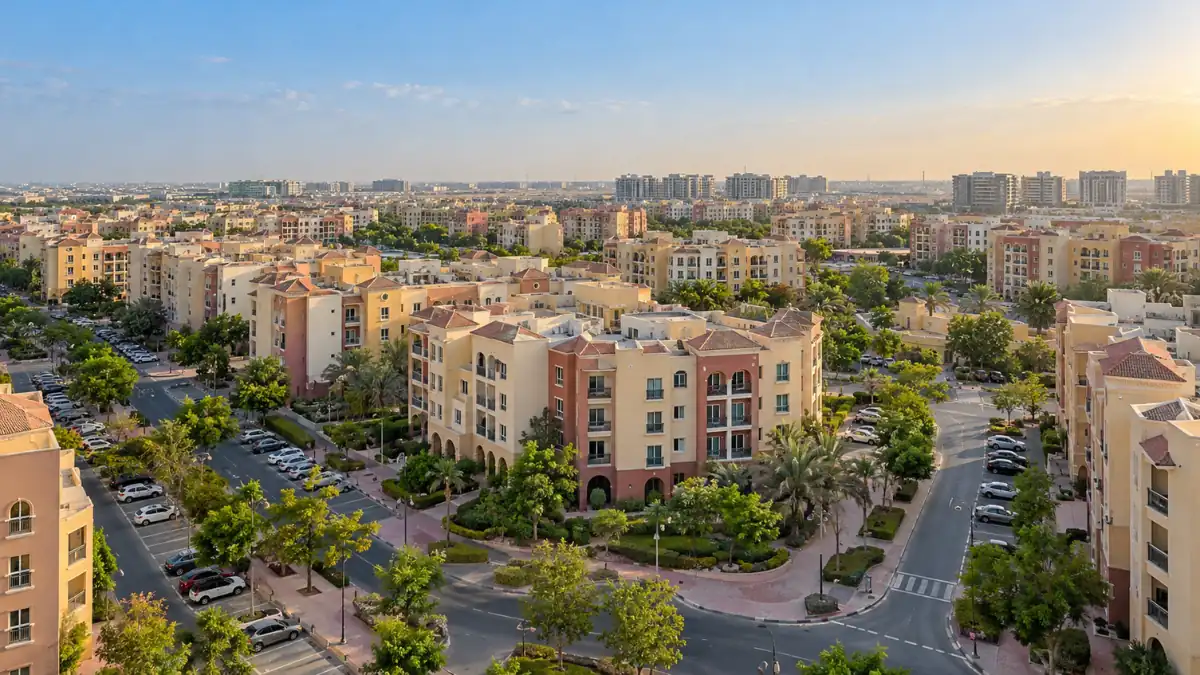
International City is an established residential community developed by Nakheel in the eastern part of Dubai, near Al Warsan. It is particularly familiar to investors searching for apartments at more accessible prices than those commonly found in Dubai Marina, Downtown Dubai or other premium neighbourhoods.
The development is known for its country-themed residential clusters, low-rise apartment buildings and extensive local retail facilities. Unlike communities centred around luxury towers or waterfront views, its appeal is largely practical: affordable accommodation, convenient shopping and a substantial rental market.
Consequently, International City is often considered by first-time Dubai property investors and buyers who want to keep their initial capital commitment relatively modest.
Why do investors consider International City?
- Lower purchase prices than many centrally located Dubai communities.
- A wide selection of studios and one-bedroom apartments.
- Established demand from budget-conscious tenants.
- Freehold ownership opportunities for eligible foreign buyers.
- Convenient access to Dragon Mart and everyday retail facilities.
- Potential for attractive gross rental yields when purchased at the right price.
If you are comparing neighbourhoods across the emirate, our wider Dubai communities and neighbourhood guide explains how different locations suit different budgets, lifestyles and investment strategies.
Where is International City in Dubai?
International City is situated in eastern Dubai, near Al Warsan and Dubai Silicon Oasis. Its location provides access to important road networks, including Sheikh Mohammed Bin Zayed Road (E311) and the Dubai–Hatta Road (E44).
This makes the area relevant to residents working in surrounding commercial, educational and residential districts. However, travelling to Dubai's principal coastal and central business destinations may involve longer journeys, particularly during peak periods.
International City clusters and neighbourhoods
One of the area's most recognisable features is its collection of residential clusters named after different countries.
The original development includes:
- China Cluster
- England Cluster
- France Cluster
- Italy Cluster
- Spain Cluster
- Morocco Cluster
- Persia Cluster
- Greece Cluster
- Russia Cluster
- Emirates Cluster
Each cluster has its own architectural styling, although the main investment differences usually relate to building upkeep, apartment layouts, accessibility and the prices achieved by comparable properties.
China Cluster and Dragon Mart
China Cluster is frequently mentioned in property searches because of its proximity to Dragon Mart, a major shopping destination specialising in a broad range of consumer goods, furnishings and commercial products.
For some tenants, convenient access to local shops and workplaces can be more important than premium communal amenities.
Is there a metro station in International City?
There is no dedicated Dubai Metro station within the established International City residential clusters. Residents generally rely on buses, taxis or private vehicles, with bus services connecting to parts of the wider public transport network.
Therefore, investors should check the actual walking distance to available bus stops rather than assuming that a property described as being near public transport is close to a metro station.
International City property prices in 2026
International City apartment prices vary considerably between the older country-themed clusters, Central Business District buildings and more recently developed projects.
According to Bayut's September 2026 property price index, the wider International City market recorded an indicative average of approximately AED 1,055 per square foot. However, this overall figure includes different property types and buildings, so it should not be treated as the price of every apartment.
In particular, older studios can trade at substantially different prices per square foot from modern apartments with additional facilities.
Indicative apartment prices by property type
Quick property price snapshot
The following ranges are illustrative budgeting bands for comparing older apartments and selected newer properties. They are not current offers or verified transaction averages.
| Property type | Illustrative purchase budget | Typical investor consideration |
|---|---|---|
| Studio apartment | AED 300,000–500,000+ | Entry price, rentability and maintenance |
| One-bedroom apartment | AED 400,000–700,000+ | Tenant appeal, layout and rental demand |
| Two-bedroom apartment | AED 650,000–1,100,000+ | Family demand, total budget and resale market |
| Newer developments | Project-specific | Amenities, developer record and price premium |
Figures are broad planning illustrations, not valuations. Actual asking prices and registered sale prices may fall outside these bands. Always compare equivalent units and completed transactions.
Why are some apartments considerably cheaper?
An unusually low purchase price may reflect an older building, a less desirable layout, limited parking or anticipated maintenance expenditure. Alternatively, it could simply represent a seller who wants to complete a transaction quickly.
Therefore, buyers should compare the property against recently completed transactions rather than relying on asking prices alone.
The Dubai Land Department's official transaction and rental data provides a useful starting point for checking registered market activity.
Our broader Dubai property price comparison guide also helps explain how different purchase budgets translate into property choices across the city.
International City rental yields: what can investors expect?
Rental income is one of the main reasons investors consider apartments in this community. Compared with more expensive neighbourhoods, the relationship between annual rent and purchase price can appear attractive.
Property Finder's 2026 apartment market indicators suggest a gross rental yield of approximately 8.36% for the wider International City apartment market.
However, this is an area-level indicator. It does not establish that a particular studio or one-bedroom flat will achieve the same return.
Gross rental yield versus net rental yield
Gross rental yield measures annual rent as a percentage of the property's purchase price before costs.
The basic calculation is:
Annual rental income ÷ Purchase price × 100
Net rental yield is more useful for deciding whether an investment meets your financial objectives. It takes account of relevant expenses, including service charges, maintenance, management and vacant periods.
In addition, a more complete investor calculation should consider acquisition costs and financing separately. These can have a substantial effect on the return achieved from the capital invested.
What affects rental demand?
- Affordability: Many tenants prioritise manageable annual rental payments.
- Apartment size: Studios and one-bedroom flats can suit individuals and couples.
- Building condition: Clean and properly maintained properties can be more appealing.
- Transport: Bus access, parking and commuting convenience matter.
- Nearby facilities: Supermarkets, pharmacies and restaurants support everyday living.
- Landlord responsiveness: Timely repairs can support tenant retention.
It is also important to distinguish advertised rents from completed tenancy contracts. The amount a landlord hopes to receive may not match the rent eventually agreed.
International City investment example: calculating the real return
To understand the difference between headline yields and actual investment performance, consider an illustrative purchase of a one-bedroom apartment.
These are hypothetical figures designed to demonstrate the calculation, not a specific property available for sale.
Worked example: one-bedroom apartment
| Purchase price | AED 450,000 |
|---|---|
| Annual contracted rent | AED 39,000 |
| Gross rental yield | 8.67% |
| Annual service charges (assumed) | AED 5,000 |
| Repairs and maintenance allowance | AED 1,500 |
| Management allowance | AED 1,950 |
| Vacancy allowance | AED 1,500 |
| Estimated annual net income | AED 29,050 |
| Net operating yield on purchase price | 6.46% |
Illustrative calculation before acquisition costs, mortgage payments, financing fees and investor-specific taxes. Actual service charges, vacancy and maintenance may differ significantly.
In this example, the gross return is 8.67%. However, after the assumed recurring expenses, the net operating yield falls to approximately 6.46%.
Furthermore, the initial purchase involves transaction expenses, which reduce the effective return on your total invested capital.
What are the additional buying costs?
Dubai property transactions commonly involve a Dubai Land Department registration fee calculated at 4% of the sale value. Responsibility for payment should be checked against the transaction agreement and applicable rules.
Depending on the purchase, other possible expenses include:
- Real estate agency commission and applicable VAT.
- Registration trustee and title-related charges.
- Mortgage registration, valuation and bank fees, if financing.
- Developer or management administration charges where applicable.
- Repairs, furnishing and initial letting preparation.
For a broader explanation, read our guide to assessing Dubai property investment returns.
Want to compare gross and net rental returns?
Our team can help you examine the purchase price, potential rent, building charges and practical risks before deciding whether an apartment is worth pursuing.
International City Phase 1 versus Phase 2: what is the difference?
Buyers often search for International City Phase 2 when considering newer apartments and alternatives to the original country-themed clusters.
Although these areas are regularly compared, investors should examine the precise project boundaries, title information and development status. The terminology used in property advertisements does not always provide enough information about the legal or physical characteristics of a particular building.
International City Phase 1
The original International City neighbourhood is characterised by established apartment buildings, recognisable country-themed clusters and extensive local commercial facilities.
Its advantages can include an existing rental history and the ability to inspect a completed apartment and building before purchasing.
International City Phase 2 and newer developments
Areas marketed as Phase 2 or newer surrounding projects may offer more contemporary layouts and amenities. However, specifications, completion dates, service charges and developer arrangements vary.
Comparison for property investors
| Consideration | Established clusters | Newer developments |
|---|---|---|
| Purchase price | Often more accessible | May carry a premium |
| Building age | Generally older | Typically newer |
| Rental evidence | Existing tenancy records may be available | May have limited operating history |
| Facilities | Usually practical rather than luxurious | Often more amenity-focused |
| Key risk | Maintenance and capital expenditure | Price premium and future operating costs |
Neither option is automatically the better investment. An older unit purchased at a sensible price may outperform a newer property bought at an excessive premium. Equally, a poorly maintained older building can undermine an otherwise attractive yield.
Living in International City: lifestyle, transport and amenities
From a tenant's perspective, International City provides a practical residential environment rather than a luxury lifestyle destination.
Local shopping, affordable dining and access to Dragon Mart are notable advantages. Residents can also find supermarkets, pharmacies, salons and other everyday services throughout the wider neighbourhood.
Who typically considers living here?
- Individuals seeking affordable rental accommodation.
- Couples renting studios or one-bedroom apartments.
- Residents working in nearby commercial districts.
- Small households who prioritise practical living costs.
- People comfortable using buses, taxis or private transport.
Transport and parking considerations
Although International City benefits from road connections, traffic can become congested around certain entrances and commercial areas.
Parking availability also differs between buildings and clusters. Some units may not include a dedicated parking space, which can affect both tenant appeal and resale value.
Schools, healthcare and nearby facilities
Families should evaluate school journeys, healthcare options and access to suitable community facilities before renting or purchasing.
While educational and healthcare services are available in surrounding Dubai districts, proximity should always be checked against the exact building location.
Can foreigners buy property in International City?
International City includes designated freehold property opportunities available to foreign purchasers. However, every buyer should verify the specific unit's ownership rights, title status and registration details before making a payment.
Foreign ownership is not dependent on living permanently in Dubai, although mortgage availability and lending conditions can differ for residents and non-residents.
For a fuller explanation of buying eligibility, see our guide to property ownership rules for overseas buyers.
You should also obtain independent legal advice where a transaction involves unusual ownership arrangements, disputed charges or complicated contractual conditions.
International City investment risks and hidden costs
International City has several characteristics that may appeal to income-focused investors. Nevertheless, affordability does not remove the risks associated with buying residential property.
1. Building maintenance and ageing infrastructure
Some original buildings have been occupied for many years. As a result, lifts, air-conditioning systems, waterproofing and communal areas may require repairs or replacement.
A property inspection should extend beyond the apartment itself. Pay attention to corridors, building entrances, common services and evidence of outstanding maintenance issues.
2. Service charges and owners' obligations
Service charges can materially reduce rental income, especially where the property's purchase price is relatively modest.
Before buying, check the approved charges through the Dubai Land Department's official Service Charge Index.
Ask for the latest account statement and confirm whether any arrears or exceptional obligations exist.
3. Tenant turnover and vacant periods
An apartment may produce attractive rent when occupied, but periods without a tenant reduce the effective annual return.
For this reason, it is sensible to include a vacancy allowance and a maintenance reserve in your financial projections.
4. Resale competition
Buildings containing many similar studios can create competition between sellers. Where several comparable units are available, buyers may negotiate more aggressively.
Therefore, review actual completed transactions and days on market where reliable evidence is available.
5. Future supply and market fluctuations
New apartment developments in eastern Dubai may provide additional choices for tenants and purchasers. This can influence achievable rents and the resale appeal of older properties.
Likewise, price appreciation is never guaranteed. An investment should be evaluated on realistic income and resale scenarios rather than assumptions of uninterrupted capital growth.
How to buy an apartment in International City: step-by-step checklist
A structured buying process can help you avoid overlooking important details, particularly if you are purchasing from overseas.
Property investor due diligence checklist
- Set your total budget. Include the purchase price, registration fees, professional expenses and a contingency.
- Choose your investment objective. Decide whether you prioritise rental income, long-term appreciation or personal use.
- Compare clusters and buildings. Focus on condition, accessibility, apartment size and tenant appeal.
- Review completed transactions. Compare similar units rather than relying entirely on listing prices.
- Verify ownership. Check title documentation, seller authority and any mortgage or other restrictions.
- Inspect the apartment and common areas. Identify existing defects and potential future repairs.
- Confirm ongoing charges. Obtain service charge details and investigate arrears or unusual building expenses.
- Verify rental evidence. Review the existing tenancy, Ejari information and comparable registered rents where applicable.
- Calculate the net return. Deduct realistic expenses and include potential vacancy periods.
- Complete the approved transfer process. Use the appropriate Dubai Land Department registration procedures and retain transaction records.
Our property investment due diligence checklist provides additional guidance on the checks worth completing before paying a deposit.
Is International City a good property investment in 2026?
International City can be an attractive option for investors whose priorities are lower purchase costs and rental income. However, it is not necessarily suitable for someone seeking premium accommodation, extensive leisure amenities or immediate access to the Dubai Metro.
The most appropriate strategy depends on your budget and tolerance for maintenance, vacancy and resale risk.
When an International City apartment may make sense
- You want a relatively affordable entry into Dubai's property market.
- You are comfortable investing in an established residential building.
- You have checked the realistic rent against the complete ownership costs.
- You are planning to hold the property long enough to accommodate normal market fluctuations.
- You value rental income more than premium facilities or prestige.
When another Dubai community may suit you better
If you prefer newer residential facilities, broader lifestyle amenities or a different tenant profile, it may be worth comparing International City with other mid-market communities.
For example, our Jumeirah Village Circle area guide explores a different apartment investment market, while our Dubai Silicon Oasis apartment guide covers another location relevant to buyers considering eastern Dubai.
Compare the net purchase cost, realistic rent, annual charges and building quality for each option before drawing conclusions about relative value.
FAQs: International City Dubai property investment
What is International City in Dubai?
International City is an established residential community in eastern Dubai, developed by Nakheel and recognised for its country-themed apartment clusters. The neighbourhood offers relatively affordable accommodation, local shopping and a sizeable rental market.
Is International City a good place to invest in property?
It can suit investors who prioritise rental income and a lower purchase budget. However, the outcome depends on the actual purchase price, rental evidence, service charges, maintenance condition and future resale demand.
What rental yield can investors expect in International City?
Published 2026 apartment market indicators suggest gross yields in the region of 8%–9% for parts of the community. Individual units may achieve higher or lower returns, and net yields will generally be lower after ownership expenses.
Where is International City Phase 2 located?
The name is commonly used in property marketing for newer residential development areas around Al Warsan, beyond the original country-themed clusters. Buyers should verify the precise project location, legal registration, completion status and applicable master community rather than relying on the Phase 2 label alone.
How many clusters are there in International City?
The original community is commonly described as having ten country-themed residential clusters, including China, England, France, Italy, Spain, Morocco, Persia, Greece, Russia and Emirates. Nearby Central Business District and newer projects provide additional residential options.
Is International City freehold for foreign buyers?
International City includes designated freehold properties available to eligible foreign buyers. Nevertheless, ownership status and title information should always be verified for the specific apartment before purchase.
Is parking free in International City?
Do not assume that parking is free throughout the neighbourhood. Public parking arrangements, charges and enforcement may differ by location and can change. Check current RTA rules, building parking rights and any designated bays before buying or renting.
Does International City have a Dubai Metro station?
The established residential clusters do not have a dedicated metro station. Residents typically use buses, taxis or private vehicles to reach surrounding districts and transport connections.
What is the difference between International City Phase 1 and Phase 2?
Phase 1 generally refers to the original established community, while Phase 2 is used for newer development areas. Older buildings may offer lower purchase prices and established rental histories, whereas newer projects can offer modern facilities at different price points.
How far is International City from Dubai Mall?
The journey depends on the exact departure point, traffic conditions and chosen route. International City is located east of central Dubai, so buyers should check a live mapping service at their usual commuting time rather than relying on one advertised journey estimate.
Can I rent out an apartment immediately after buying it?
A completed property may be rented subject to existing tenancy rights, applicable regulations and the terms of ownership. If a tenant is already in occupation, the purchaser must understand the existing tenancy obligations before completion.
Are apartments in International City cheaper than Dubai Marina?
Generally, apartments in the established International City clusters have substantially lower entry prices than comparable homes in Dubai Marina. Nevertheless, the investment comparison should include rental income, annual ownership costs, property quality and liquidity rather than purchase price alone.
Conclusion: should you buy property in International City?
International City remains a community worth examining for Dubai buyers seeking affordable apartments and potential rental income. Its established residential character, everyday facilities and relatively accessible purchase prices explain why it continues to attract investor attention.
Nevertheless, the strongest investment case comes from the individual property's figures, not the community's reputation for high yields.
At Dubai Light Haven, we recommend comparing verified sale prices, realistic rental income, service charges and the building's physical condition before making a decision. A carefully assessed apartment may provide a suitable long-term investment, but an inexpensive purchase is not automatically good value.
Next steps and useful Dubai property guides
If you are comparing locations or preparing to purchase, these related guides can help you understand the wider Dubai market:
- Dubai Communities and Locations: The Ultimate Guide for Buyers & Investors
- Best Areas to Buy Property in Dubai
- Dubai Property Prices: Budget and Location Guide
- Dubai JVC: Everything You Need to Know Before Buying
- Dubai Silicon Oasis: Apartment Prices and Rental Yields
- Dubai Property Investment: Complete Investor Guide
- Dubai Property Due Diligence: Checks Before Paying a Deposit
Key Facts Snapshot: International City Dubai
- Location Eastern Dubai, near Al Warsan
- Main developer Nakheel (original master development)
- Primary property types Studios, one-bedroom and larger apartments
- Ownership Eligible designated freehold properties
- 2026 market price indicator Approximately AED 1,055 per sq ft across property types (Bayut, September 2026)
- Indicative gross rental yield Approximately 8.36% for apartments (Property Finder market indicator)
- Metro access No dedicated station within the original clusters
- Nearby landmark Dragon Mart
- Main investor consideration Rental income relative to purchase price and operating costs
- Principal risks Maintenance, service charges, vacancies and resale competition
- Market context October 2026; figures are indicative, not guaranteed returns
Official Dubai property resources
Before purchasing, use official information wherever possible. The following resources are particularly useful:
- Dubai Land Department — ownership registration, transaction procedures and official property services.
- DLD Real Estate Data — registered transaction and rental information for market comparisons.
- DLD Service Charge Index — approved service charge information for jointly owned buildings.
- Official UAE Government Portal — general guidance covering government services, property-related matters and residency information.
Ready to explore your Dubai property investment options?
Dubai Light Haven can help you compare suitable communities, understand property costs and approach your investment decision with clearer information. Speak with our team about your budget and buying objectives.
Performance Verified ✅
This page meets PME Optimisation Standards — achieving 95+ Desktop and 85+ Mobile PageSpeed benchmarks. Verified on
