Share this post:
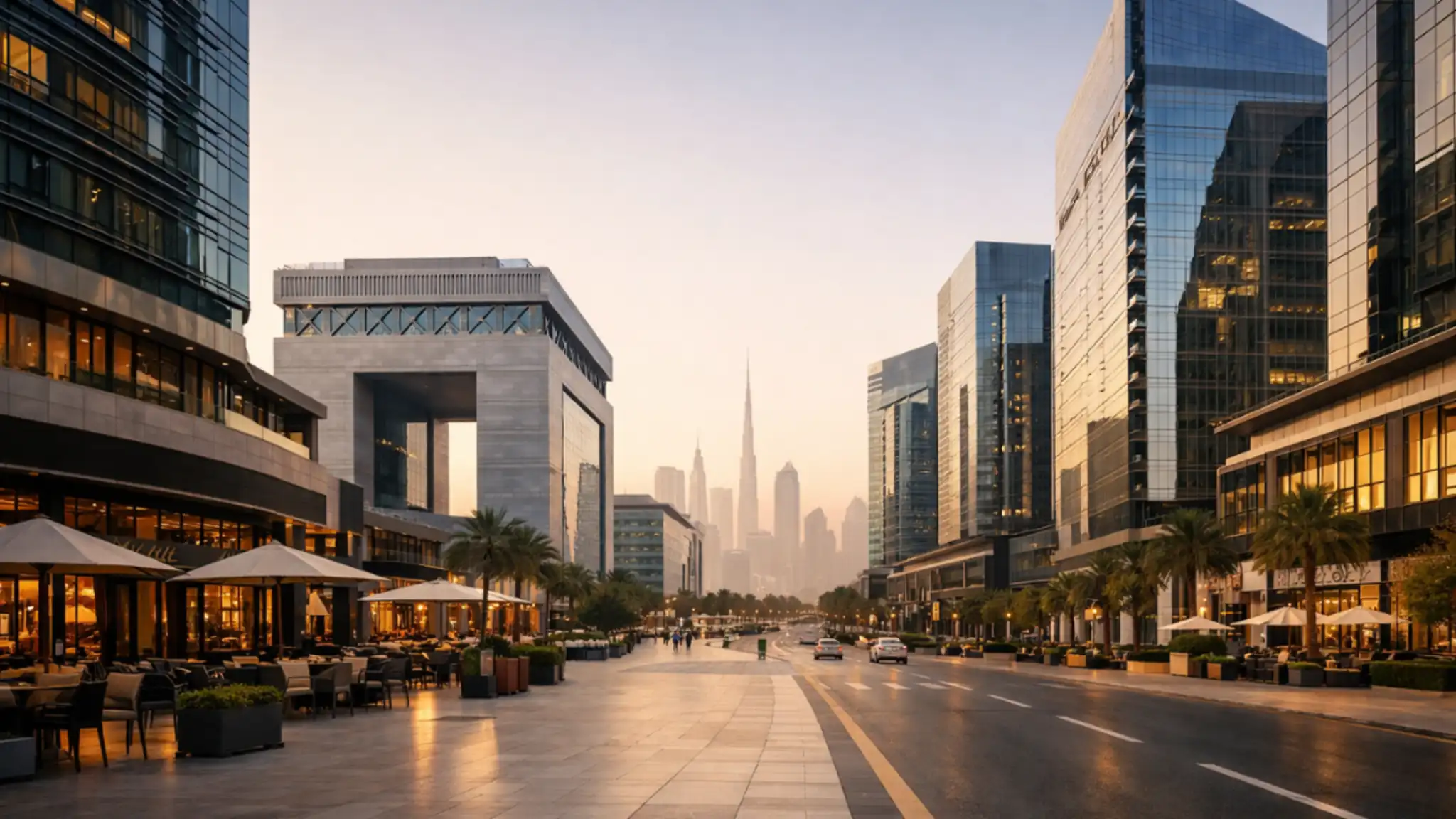
Dubai DIFC is one of the city’s most established “work-meets-lifestyle” districts — home to financial firms, premium restaurants, art spaces, and a walkable core that feels more like a compact city centre than a typical Dubai neighbourhood. For property buyers and investors, the appeal is simple: consistent corporate demand, strong resale liquidity, and a prestige address that tends to hold value well across market cycles.
Key facts snapshot: Dubai DIFC
- Best for: executives, corporate lets, professionals who want walkability and a central base
- Property style: mostly high-end apartments; limited family-sized stock compared with villa communities
- Rental profile: strong long-term demand; short stays can work where building rules and permits allow
- Connectivity: close to Downtown, Business Bay, and major road links; metro access depends on exact building
- Investor watch-outs: service charges, parking ratios, view/road noise, and building-specific short-let rules
Quick summary: Dubai DIFC for buyers & investors
- If you want a prime, central apartment with dependable tenant demand, DIFC is often a short-list area.
- If you want larger layouts and family amenities, compare DIFC against Downtown, Business Bay, City Walk, or villa-led communities.
- The best results usually come from choosing the right building, not just the district name.
In this guide, we break down Dubai DIFC from a property buyer and investor perspective — what it is, who it suits, what to watch out for, and how to make a sensible purchase decision that matches your strategy (end-user lifestyle, long-term rent, or a blended approach).
Note: DIFC is a “building-by-building” market. Two towers on the same street can perform very differently depending on layout efficiency, service charges, parking, and management quality.
What is Dubai DIFC
Dubai International Financial Centre (DIFC) is a prominent business and lifestyle district known for its concentration of professional services, modern office towers, and high-quality dining and cultural venues. For buyers, that mix matters because it creates a steady base of residents who want to live close to work, prefer a premium address, and value convenience over long commutes.
From an investment angle, DIFC tends to behave like a mature “core” market: demand is often more resilient than purely speculative areas, but the entry price is usually higher and your returns depend heavily on selecting the right unit, view, and cost base.
Where is Dubai DIFC and what’s nearby
One reason Dubai DIFC remains popular is its central positioning. You’re typically a short drive from key commercial and lifestyle hubs, which supports both end-user appeal and long-term rental demand.
Nearby districts buyers compare with Dubai DIFC
- Downtown Dubai: more tourism energy and landmark lifestyle, but building quality and crowding vary widely.
- Business Bay: broader range of prices and stock, although walkability and building consistency can be mixed.
- City Walk: lifestyle-led, lower-density feel in parts, often appealing to residents who want “city living” without constant tower intensity.
Tip: When you’re assessing “distance”, think in Dubai travel patterns: a short geographic distance can still mean a longer journey at peak times. If your plan relies on corporate tenants, commute convenience is a real value driver.
Dubai DIFC property market overview
The DIFC residential profile is primarily apartment-led, with an emphasis on modern finishes, concierge services, and amenity-driven buildings. You’ll see a mix of efficient one- and two-bedroom units (often popular with professionals) and a smaller supply of larger layouts that can suit couples, executives, or buyers who want more space without moving to a villa community.
What typically performs well in Dubai DIFC
- Efficient layouts: fewer wasted corridors, sensible storage, and a liveable kitchen/living flow.
- Quiet orientation: internal-facing or higher-floor units can reduce road and nightlife noise (depending on the exact location).
- View and light: natural light and a clean outlook often support both rentability and resale appetite.
- Strong building management: good maintenance and sensible house rules protect long-term value.
Common buyer misconceptions about Dubai DIFC
- “All towers are the same.” They’re not. Service charge levels, finishing quality, and management standards vary.
- “Any DIFC unit will rent quickly.” Pricing and positioning matter. A well-priced unit in a strong building wins; an overpriced one can sit.
- “Short-term letting is always allowed.” Building rules and permitting can differ. Always verify before you buy if this is part of your plan.
Who Dubai DIFC suits
Dubai DIFC generally suits buyers who value centrality, premium finishing, and a professional neighbourhood feel. The tenant and end-user profile often aligns with that: corporate renters, consultants, finance and legal professionals, and international buyers who want a “safe, familiar” city lifestyle.
Dubai DIFC is often a good fit if you are…
- Buying a base in Dubai with easy access to major business districts
- Targeting long-term corporate lets (stable demand, strong tenant quality)
- Prioritising walkability, dining, and a polished urban environment
Dubai DIFC may not be ideal if you are…
- Seeking the lowest entry price (DIFC is generally premium-priced)
- Focused on large family living (space-to-cost ratio can be better elsewhere)
- Highly sensitive to annual running costs (service charges can materially affect net yield)
Want a short-list of DIFC buildings that match your strategy?
Tell us your budget, target yield, and preferred unit size, and we’ll help you shortlist options that make sense on paper before you waste time on viewings.
Request a DIFC short-listBuying property in Dubai DIFC: the practical checklist
If you’re buying in Dubai DIFC, it pays to be methodical. Premium areas can hide “premium mistakes” — the kind that look small on a listing but become expensive over time.
1) Confirm your ownership and use strategy
- End-user: prioritise noise level, sunlight, parking convenience, and building facilities you’ll actually use.
- Long-term rent: focus on layout efficiency, furnishing expectations, and building reputation with tenants.
- Blended approach: choose a unit that works for you personally but still rents well if plans change.
2) Verify the “true cost base” of the unit
In DIFC, the listing price is only part of the picture. Service charges and recurring building costs influence your real net yield and can affect resale appetite. A slightly cheaper purchase can be the more expensive option if the annual costs are out of line with comparable towers.
3) Stress-test resale and exit liquidity
Ask a simple question: “If I needed to sell in 90 days, what would make this unit competitive?” The answer is rarely “because it’s in DIFC”. It’s usually layout, view, condition, and a clean financial story.
4) Check the practical details that renters care about
- Parking allocation and visitor parking availability
- Lift times and peak-hour congestion (especially in high-density towers)
- Gym and pool quality (not just “yes/no” amenities)
- Noise from roads, nightlife, or neighbouring construction zones
- Management responsiveness and maintenance standards
Important: If your plan includes holiday lets, corporate short stays, or Airbnb-style letting, confirm the building’s policy and your compliance route before you commit. It’s much easier to choose the right building than to “force” a strategy later.
For a full step-by-step buying process, you may also want to read our step-by-step guide for foreign buyers and our complete buying checklist.
Renting in Dubai DIFC: tenant demand and rental strategy
Dubai DIFC typically attracts tenants who pay for convenience, building quality, and proximity to work. That often supports stable occupancy for well-positioned units, especially when pricing is realistic and the unit is presented properly.
Long-term rental strategy in Dubai DIFC
- Target the “easy to rent” unit type: efficient one- and two-bedroom layouts often have the broadest demand pool.
- Keep furnishings sensible: quality, durable furniture usually performs better than trendy choices that date quickly.
- Price to the market, not to your spreadsheet: a small discount can reduce vacancy and improve annualised returns.
Short stays and serviced letting: what to consider
Some investors explore short stays because DIFC is close to major attractions and business hubs. However, outcomes depend on building policies, seasonal demand, and professional management. If you’re considering this route, build your numbers conservatively and make sure the unit still works as a long-term rental if the market shifts.
If you’re weighing short lets, our team often recommends reviewing the practical rules and permit considerations here before choosing a building.
Costs to budget for in Dubai DIFC
In premium districts like DIFC, “hidden costs” are rarely truly hidden — but they are often underestimated. The key is to budget properly so you can compare units on a like-for-like basis.
Typical cost categories to plan for
- Service charges: ongoing building fees that can materially affect net yield
- Maintenance and refresh: painting, appliance replacement, wear-and-tear between tenancies
- Furnishing: if you’re letting, presentation can influence rent and vacancy periods
- Financing and admin: if you use a mortgage or need structured payment planning
To plan your cashflow more accurately, you may find these helpful: a guide to payment plans and real costs and a breakdown of fees and running costs investors often miss.
Dubai DIFC vs nearby areas
Choosing DIFC is often about your priorities. If you want a central, premium, professional feel, DIFC can make sense. If you’re more focused on maximising space or lowering your annual running costs, nearby districts may offer better value depending on the building.
Dubai DIFC vs Downtown Dubai
- DIFC: more corporate demand, a refined “business-lifestyle” blend, and often a calmer residential profile.
- Downtown: landmark lifestyle and strong visitor appeal, but building-by-building variation is significant.
Dubai DIFC vs Business Bay
- DIFC: premium positioning and brand value; typically higher entry prices.
- Business Bay: broader inventory and pricing range; quality and liveability can vary widely.
Dubai DIFC vs lifestyle districts (City Walk and similar)
- DIFC: stronger corporate pull and a more “work adjacent” tenant base.
- Lifestyle districts: can feel more residential and lower density, sometimes better for end-users.
Note: If your broader goal is choosing the right district before you pick a building, use our complete Dubai communities guide as your starting point.
FAQs: Dubai DIFC
Where is Dubai DIFC?
Dubai DIFC sits in a central corridor between major business and lifestyle districts. From a practical standpoint, that centrality is one of its biggest strengths because it reduces commute friction for professionals and keeps the area relevant for both end-users and tenants.
Is DIFC a city in Dubai?
No — it’s a district within Dubai. However, it can feel “city-like” because it has offices, residences, restaurants, galleries, and public spaces within a compact footprint.
Is Dubai Mall in DIFC?
Dubai Mall is not inside DIFC, but it’s nearby. Many residents choose DIFC precisely because they can reach key Downtown destinations quickly while still living in a slightly more professional, neighbourhood-style environment.
Are apartments in Dubai DIFC good for investment?
They can be, particularly for long-term rentals aimed at professionals. The key is selecting a unit with a strong rental profile: efficient layout, sensible annual costs, and a building that tenants actively prefer.
What should I check before buying in Dubai DIFC?
Focus on the practical value drivers: service charges, parking, noise orientation, management quality, and resale competitiveness. If your plan includes short stays, also verify the building’s policy and your compliance route before you commit.
Is Dubai DIFC better for long-term rent or short stays?
Long-term rent is often the more stable baseline because demand is anchored by professionals and corporate tenants. Short stays can work in the right building with the right setup, but it’s more operationally intensive and should be modelled conservatively.
Next steps
If Dubai DIFC is on your shortlist, the smartest next step is to translate “area appeal” into a building-and-unit decision that matches your numbers. Our team can help you compare options side-by-side so you understand the true cost base, rentability, and realistic resale story.
Speak with Dubai Light Haven
Message us your budget, preferred unit size, and whether you’re buying for lifestyle or investment. We’ll help you move forward with clarity and avoid expensive assumptions.

Performance Verified ✅
This page meets PME Optimisation Standards — achieving 95+ Desktop and 85+ Mobile PageSpeed benchmarks. Verified on
