
Share this post:
If you want to Buy Property in Dubai, the smartest move is to treat it like a professional investment: understand freehold rules, budget for the full set of fees, and follow a clear process from reservation to title deed. This guide is written for normal investors and buyers who want clarity, not confusion.
Below you’ll find a practical checklist, the real costs to expect, how mortgages and payment plans work, what visa outcomes are realistic, and the due diligence steps our team uses to help clients buy safely.
Key Facts Snapshot: Buy Property in Dubai
- Who can buy: Foreign buyers can own property in designated freehold areas.
- Main routes: Resale (ready) or off-plan (developer) purchases.
- Typical fees: Plan for transfer/registration, admin fees, agent fees (where applicable), and annual service charges.
- Mortgage options: Available for residents and non-residents, subject to bank criteria.
- Visa reality: Property can support certain residency pathways, but it does not automatically equal citizenship.
Tip: If you’re comparing Dubai with another city (UK, Abu Dhabi, Sharjah, India), keep the fee structure and ownership rules front-of-mind — that’s where most surprises happen.
Support Stone note: This guide supports our pillar page for foreign buyers. If you want the complete legal and ownership overview, read our foreign-buyer overview here.
Buy Property in Dubai: start here (what matters most)
Most buyers don’t lose money in Dubai because the market is “bad”. They lose money because they skip the boring parts: fee planning, title checks, developer track record, and exit strategy. So, if you’re about to Buy Property in Dubai, treat the purchase like a process, not a moment.
In practical terms, that means you want to be clear on three things before you even pick a unit:
- Purpose: lifestyle home, long-term rental, short-term rental, or resale uplift?
- Budget: purchase price plus the full transaction costs and ongoing service charges.
- Structure: ready vs off-plan, cash vs mortgage, and how you’ll protect yourself contractually.
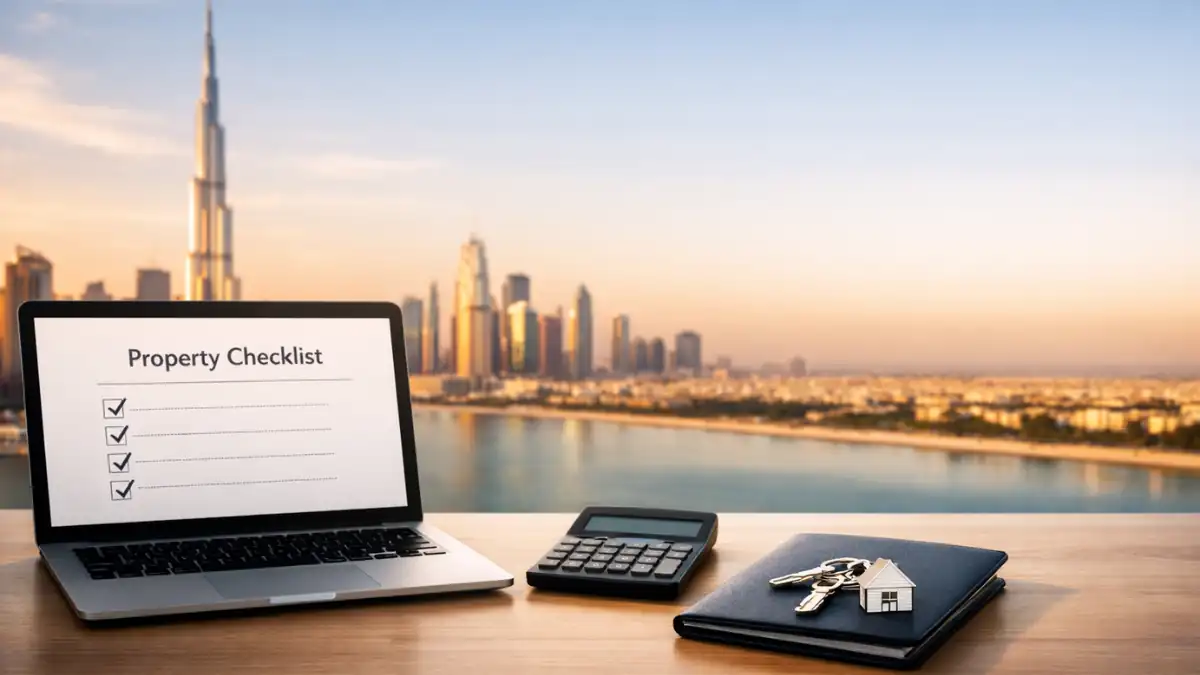
Quick win: Before you view anything, download our internal checklist and use it as your “non-negotiables” list. It keeps emotion out of the decision. Open the checklist here.
Who can buy and where: freehold vs leasehold
A common question is: can foreigners buy property in Dubai? In many cases, yes — provided the property is in a designated freehold area. Freehold typically means you own the unit (and, where applicable, a share of the land) outright, subject to the building’s rules and service charges.
Leasehold is different. It usually means a long lease for a defined period rather than full ownership. Leasehold can still be workable, but the resale pool can be narrower, and you’ll want to understand the lease terms carefully.
Important: “Freehold area” is not a marketing phrase — it’s a legal designation. Always confirm the status before you reserve a unit.
If you want a deeper breakdown of ownership rules, residency status, and what changes between resident and non-resident buyers, our team covers it in detail in this foreign-buyer overview.
Should you buy property in Dubai? Pros and cons
Buyers often search “buying property in Dubai good or bad” because they want certainty. Realistically, Dubai can be excellent value for the right buyer, but it’s not a one-size-fits-all decision. The best approach is to weigh the true benefits against the real-world trade-offs.
Pros of buying property in Dubai
- Global demand: A strong mix of residents, business travellers, and long-stay tenants supports rental demand in many locations.
- Newer stock: Many buildings are relatively modern, with amenities that support tenant appeal.
- Choice of strategy: Ready units for immediate income, or off-plan for staged payments and potential uplift.
- Investor accessibility: Many buyers can purchase without living in the UAE full-time.
Cons and risks to plan for
- Fee stacking: Transaction costs and annual service charges can surprise first-time buyers.
- Quality variation: Finishes, maintenance, and building management vary widely by developer and community.
- Market cycles: Like any major city, pricing can move in cycles — timing and exit planning matter.
- Short-term rental rules: If your model is Airbnb-style letting, you must follow local licensing requirements.
Reality check: The best deals are rarely the loudest. If a unit looks “too cheap for the area”, it usually needs investigation — service charges, view obstruction, building condition, or title/owner issues.
Steps to buy property in Dubai (ready vs off-plan)
The process changes depending on whether you’re buying a ready property (resale) or an off-plan unit (from a developer). However, the safe path always includes verification, written terms, and a realistic timeline.
Ready property: typical buying process
- Shortlist communities and buildings based on your purpose (yield vs lifestyle vs resale demand).
- Arrange viewings and compare like-for-like (size, view, floor, parking, service charges).
- Offer and negotiate terms (price, furnishings, handover date, included items, payment method).
- Sign the sale agreement and pay the agreed deposit to secure the unit.
- Complete checks (ownership details, NOC requirements, outstanding service charges where applicable).
- Transfer at the appropriate office and receive the updated title deed/ownership record.
Off-plan property: typical buying process
- Select project and unit based on developer history, location fundamentals, and contract terms.
- Reservation and initial payment (often a booking fee / first instalment).
- Contract review (handover timelines, penalties, snagging, variation clauses, payment milestones).
- Staged payments throughout construction, according to milestones.
- Handover and snagging, then final payment(s) and documentation completion.
If you want a simple, buyer-friendly walkthrough (especially useful if you’re comparing Dubai with the UK buying system), use our step-by-step guide: read the process overview here.
Costs, fees, and budgeting (the part most people miss)
When people decide to Buy Property in Dubai, they usually focus on the unit price and forget the “stack” around it. A proper budget includes:
- Purchase-related costs: transfer/registration, admin charges, and any project-specific fees.
- Professional costs: conveyancing/legal support where used, and agent fees where applicable.
- Mortgage costs: valuation, arrangement fees, and bank-related charges if financing.
- Ongoing costs: service charges, maintenance, insurance, and vacancy planning.
Note: Service charges can materially change your net yield. Always ask for the current service charge schedule and compare it to realistic rent, not “best case” rent.
For a deeper look at what buyers call “hidden fees” (and how to plan for them), use our dedicated explainer: see the fees and costs breakdown.
Mortgage and finance: loan to buy property in Dubai
Many buyers ask whether they can get a loan to buy property in Dubai. The short answer is yes, mortgages can be available, but approval depends on your profile (resident vs non-resident), income documentation, credit history, deposit size, and the property itself.
What banks typically care about
- Your documentation: proof of income, bank statements, and identity documents.
- Deposit: a higher deposit can improve options and affordability.
- The unit: valuation, building quality, and resale liquidity in that community.
- Affordability: debt-to-income limits and overall risk assessment.
If you’d like a practical checklist for budgeting (especially if you’re buying from abroad), our UK-focused cost guide is useful: see the budgeting checklist here.
Off-plan and instalments: payment plans explained
“Buy property in Dubai on instalments” is popular because payment plans can reduce the initial cash burden. However, the right plan depends on what you’re buying and why. A good payment plan should match your cash flow, not just your excitement on launch day.
How to judge whether a payment plan is genuinely good
- Milestones: are payments tied to meaningful construction progress?
- Handover realism: is the timeline credible based on the developer’s history?
- Total cost: do incentives hide higher pricing compared to comparable buildings?
- Exit plan: if you need to sell before handover, what are the assignment rules and costs?
Tip: Never judge an off-plan deal by the brochure. Judge it by (1) developer delivery history, (2) location fundamentals, and (3) resale/rental comparables in nearby completed buildings.
For a detailed, buyer-first breakdown (including the “hidden” charges and how to read the terms), use: our payment plan costs guide and our off-plan projects explainer.
Buying property in Dubai and visa outcomes
A frequent search is “buying property in Dubai and visa” or “buy apartment in Dubai and visa”. Property ownership can support certain residency routes, but it’s important to stay grounded: buying a property does not automatically equal citizenship, and eligibility depends on your situation and the current rules.
What to do if visa outcomes matter to you
- Decide your priority: investment return first, or residency pathway first.
- Check thresholds: some visa routes have minimum value requirements and documentation rules.
- Document properly: title deed, proof of payment, and property status can affect applications.
For a clear overview of the visa landscape as it relates to property buyers, use: our visa rules explainer and this residency and visa guide.
External references (official sources) you may want to read alongside this guide: Dubai Land Department (DLD), UAE Government portal.
Can you buy property in Dubai without living there?
Yes, many buyers purchase from abroad. The key is to make the process “audit-friendly”: every decision should be backed by written evidence, a clean paper trail, and clear third-party confirmations where available.
Practical safeguards if you’re buying remotely
- Video walkthroughs: not just the unit — corridors, lobby, parking, and surrounding streets.
- Comparable evidence: recent sale and rental comparables in the same building/community.
- Clear contract terms: handover dates, snagging obligations, and any furnished inventory list.
- Independent checks: confirm fees, service charges, and documentation before funds move.
Our team’s approach: We build a “decision file” for each property so you can review everything calmly — numbers, risks, fees, and upside — before you commit.
Do you need an agent? How to buy without one
Some buyers ask, “can I buy property in Dubai without agent?” It can be possible, especially when dealing directly with a developer for off-plan. However, the real question is whether you have the time, confidence, and local context to protect your downside.
If you’re buying without an agent, don’t skip these checks
- Fee clarity: get a written breakdown of all costs and who pays what.
- Contract clarity: read the payment schedule, handover terms, and cancellation/variation clauses.
- Comparables: verify the price against completed alternatives nearby.
- Management quality: understand how the building/community is maintained and funded.
If you prefer a structured approach, our due diligence checklist is designed to prevent expensive “small mistakes”: use the due diligence checklist here.
Best areas to buy: how to choose (not hype)
Searches like “best place to buy property in Dubai” can be misleading because “best” depends on your strategy. A high-yield rental play, a family home, and a long-term hold can point you to different communities.
A simple framework we use with buyers
- Demand engine: who rents or buys here — professionals, families, tourists, or commuters?
- Supply risk: how much new stock is coming, and will it dilute rents?
- Liquidity: how easy is resale in a normal market (not just a boom market)?
- Cost drag: service charges and upkeep relative to achievable rent.
If you want a grounded map of communities (rather than “top 10” hype), start here: our communities and locations guide.
If you’re drawn to Dubai Marina
Marina can offer strong tenant demand, but buildings vary massively. Focus on management quality, service charges, and unit layout (liveability affects rent more than people realise).
See our Marina checklistIf you’re considering a villa community
Villa communities can be excellent for family demand and longer tenancies, but budget properly for maintenance and long-term condition.
Explore villa community optionsIf you’re comparing multiple strategies
Not sure whether to target yield, capital growth, or a hybrid approach? Start with strategy first, then match locations and property types to it.
Choose the right modelComparisons buyers make (UK, Abu Dhabi, Sharjah, India)
Many investors compare Dubai to other markets before they commit. That’s sensible, but it helps to compare the right variables: fees, ownership rules, rental demand, and how easy it is to resell.
Buy property in Dubai vs UK
UK buyers are often surprised by how different the transaction flow is. Instead of focusing on what feels familiar, focus on what actually drives outcomes: service charges, building management quality, and the true cost of ownership over time. If you’re buying from Britain, start with our cost and budget checklist: open the UK buyer guide.
Buy property in Dubai or Abu Dhabi (how to decide)
The better question is “what tenant or buyer demand am I targeting?” Dubai often has broader international rental demand in certain hubs, while Abu Dhabi can fit specific lifestyle and employment patterns. If your goal is purely investment, compare yields after fees and service charges, not just headline rents.
FAQs: Buy Property in Dubai
Can foreigners buy property in Dubai?
Can you buy property in Dubai without living there?
Is buying property in Dubai a good idea right now?
Can you buy property in Dubai with mortgage as a foreigner?
Does buying property in Dubai give you residency or citizenship?
Can I buy property in Dubai without an agent?
Ready to Buy Property in Dubai with a clear plan?
Our team will help you shortlist the right communities, verify the real costs, and follow a safe step-by-step process — whether you’re buying from the UK, Europe, India, Canada, Australia, or the US.
If you’re still deciding whether to Buy Property in Dubai now or later, the safest approach is to run the numbers on two or three realistic options and choose the one that works even if the market cools. That’s exactly what we do with clients — calmly, transparently, and with a clear paper trail.
External reference (official): Dubai Land Department (DLD)

Performance Verified ✅
This page meets PME Optimisation Standards — achieving 95+ Desktop and 85+ Mobile PageSpeed benchmarks. Verified on
