
Share this post:
Buying Property in Dubai Foreigners is absolutely possible — and for many international buyers it’s one of the most straightforward “overseas purchase” processes, provided you understand where you can buy, what fees apply, and how to protect yourself during due diligence.
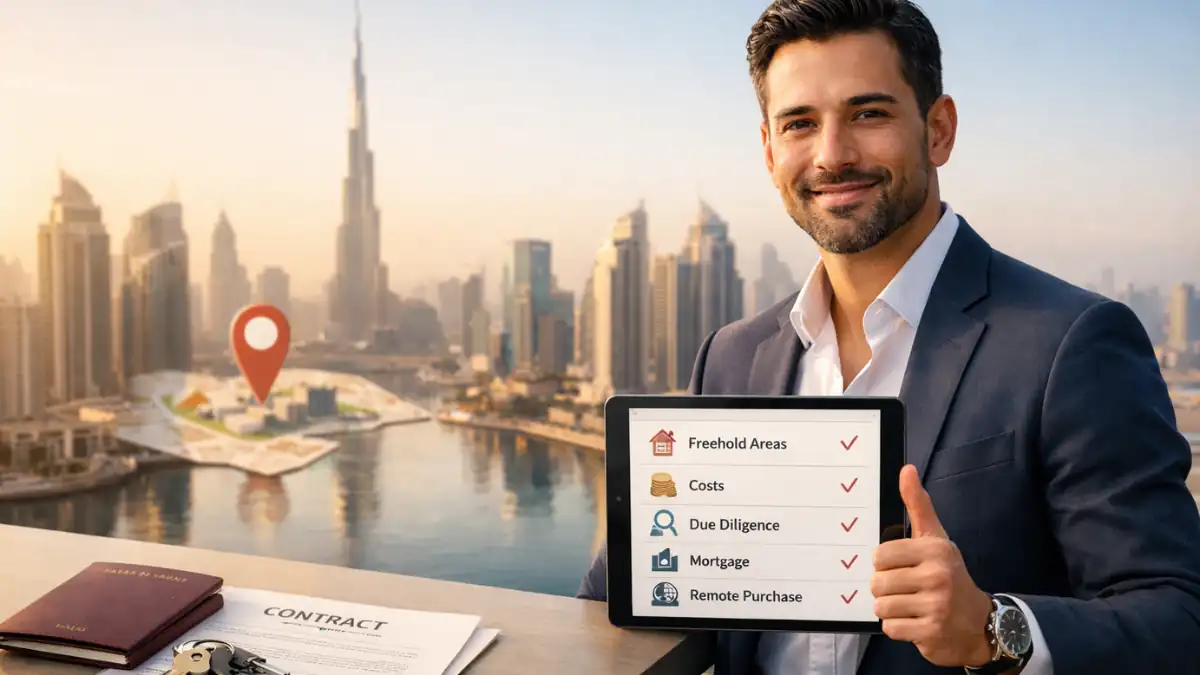
Quick Summary: Buying Property in Dubai Foreigners
- Foreigners can buy in designated freehold areas with title deeds issued by the Dubai Land Department.
- Budget for upfront costs beyond the price (DLD fees, agent fee, trustee/admin charges, mortgage fees if applicable).
- Off-plan vs ready changes the payment timings and risk checks — both can be safe with the right steps.
- You do not need to live in Dubai to buy — but you do need proper identity checks and solid documentation.
Key Facts Snapshot
- Ownership: Freehold ownership is available to non-residents in approved areas.
- Main costs: DLD transfer/registration fees + admin/trustee fees + agency fee (typical) + mortgage costs (if any).
- Best protection: Verify title/escrow, understand service charges, confirm payment plan terms, and document everything.
🎥 Watch: Buying Property in Dubai Foreigners: Complete 2026 Guide (Rules, Costs, Areas)
Prefer to watch instead of read? Here’s our quick guide on “Buying Property in Dubai Foreigners” 👇If you’re researching Buying Property in Dubai Foreigners, you’re probably trying to answer a few practical questions quickly: Can I legally own a property? Where can I buy? What are the real costs? and how do I avoid mistakes when I’m not on the ground? Our team at Dubai Light Haven works with international buyers every day, and in this guide we’ll walk you through the process in a calm, step-by-step way — without sales talk, and without glossing over the checks that actually matter.
Important: This is a practical overview for 2026 planning. Rules and fees can change, and your situation (nationality, financing, intended use, residency plans) affects the right path. If you want a buyer-safe checklist tailored to you, contact our team before you pay any reservation fee.
Buying Property in Dubai Foreigners: can you legally buy?
In most cases, yes. Foreign nationals can purchase property in Dubai in designated freehold areas. “Freehold” generally means you own the property outright, and your ownership is registered with the Dubai Land Department (DLD). In practice, the key is not whether you’re a resident — it’s whether the property is located in an area approved for foreign ownership and whether the transaction is registered correctly.
Freehold vs leasehold: the only definition that matters for most buyers
If you’re comparing options, you’ll see “freehold” and “leasehold” referenced often. Here’s the investor-friendly way to interpret it:
- Freehold: You (as the buyer) own the unit and the ownership is recorded through DLD. This is what most international buyers target.
- Leasehold (or long lease): You have rights for a set term rather than full ownership. It can still be viable, but it’s not what most foreign investors are looking for.
If you want a deeper explanation of ownership types and what they mean in real life, we also recommend reading our guide on ownership structures and area rules (we can point you to the right section based on your target community).
Where can foreigners buy property in Dubai?
The short answer: foreigners can buy in the city’s designated freehold communities. The more useful answer is: you should choose an area based on tenant demand, resale depth, service charges, building quality, and how easy it is to exit later — not just marketing or a glossy brochure.
Tip: If you’re choosing between “lifestyle” areas and “yield” areas, decide your priority first. A unit that’s perfect for short stays isn’t always the best long-term rental performer, and vice versa.
To compare communities properly, use our location guide as your starting point (it’s built to help buyers scan the trade-offs quickly): Explore Dubai neighbourhoods and community choices.
Is Dubai Marina, Downtown, or Palm “better” for foreign buyers?
It depends on your strategy. Some areas are more liquid for resale, some are stronger for holiday lets (with the correct setup), and others work well for end users. If you’re considering a flagship location, start with focused area guides rather than general headlines:
- What to check before buying in Dubai Marina
- A practical Downtown buying walkthrough for UK buyers
- Palm ownership costs and the “hidden” running expenses
Buying Property in Dubai Foreigners: step-by-step process
Whether you’re buying from the UK or elsewhere, the safest approach is to follow a structured process. The steps below keep you protected, especially if you’re buying remotely.
Step 1: decide your buying route (ready vs off-plan)
- Ready property: You can inspect the unit, review service charges, and complete a transfer relatively quickly once documents are aligned.
- Off-plan: Your timeline is longer, payments are staged, and your key risk checks shift to developer reputation, escrow arrangements, contract terms, and delivery history.
If you’re weighing off-plan, do not rely on headline payment plan percentages alone. Use a detailed breakdown of what “payment plan” really costs across the timeline: Understand payment plans, fees, and what catches buyers out.
Step 2: confirm ownership and documentation early
For Buying Property in Dubai Foreigners, your protection comes from verification. Before you transfer funds (beyond a standard, documented reservation), confirm:
- Who the seller is (and whether they’re authorised to sell).
- Title deed / unit details for ready property, or escrow registration for off-plan.
- Outstanding liabilities that could affect transfer (where relevant).
- Service charges and realistic annual running costs.
Step 3: budget the true costs (not just the purchase price)
Most foreign buyers underestimate costs because they compare Dubai to their home market and assume the same fee structure. Dubai is often simpler — but you still need to plan properly. Here’s a practical cost map (always confirm the latest numbers for your exact transaction):
| Cost Item | What it covers | When you pay |
|---|---|---|
| DLD transfer / registration | Government registration of ownership | At transfer (ready) / as required (off-plan milestones) |
| Trustee / admin fees | Transaction processing at trustee/registration centres | At transfer |
| Agency fee (typical) | Broker service for sourcing and negotiation | Often at signing/transfer (varies by deal) |
| Mortgage fees (if financing) | Bank processing, valuation, registration (structure varies) | During approval + at transfer |
| Service charges (ongoing) | Building/community upkeep and facilities | Ongoing (usually annual, sometimes quarterly) |
If you want a deeper cost reality-check built specifically for international buyers, this companion guide helps you plan the “all-in” budget: Costs and budget checklist for UK-based buyers.
Step 4: complete due diligence (the part that protects you)
Due diligence is where most expensive mistakes are prevented. It’s also where many foreign buyers rush, because they feel pressure to “reserve now” or worry they’ll miss out. Instead, slow down and run a proper checklist:
- Unit basics: layout, view, noise factors, access, parking, maintenance history (for ready units).
- Building health: management quality, realistic service charges, and facility condition.
- Market logic: comparable sales, comparable rents, and time-on-market for similar units.
- Contract clarity: what happens if timelines change (off-plan), handover standards, snagging process, and payment milestones.
We keep a dedicated due diligence checklist you can use before paying a deposit: Due diligence checks before you commit funds.
Can foreigners buy property in Dubai without living there?
In many cases, yes. International buyers frequently purchase without relocating, particularly when buying for investment or future use. However, “remote buying” is only safe if you tighten your process:
- Use clear written documentation for every payment and milestone.
- Confirm who holds funds at each stage (and under what terms).
- Keep a single “source of truth” file for ID documents, approvals, receipts, and signed forms.
- If needed, use a properly documented power of attorney route — only when appropriate and with guidance.
Note: If you’re arranging finance, lenders may require additional documentation for non-residents. Start the mortgage conversation early so your buying timeline doesn’t get squeezed.
Buying Property in Dubai Foreigners with a mortgage
Some foreign buyers purchase in cash, while others use mortgage finance — particularly for ready properties. Mortgage availability depends on the bank, your financial profile, and the property itself. The practical takeaway is simple: if you want optionality, keep your paperwork tidy (income evidence, bank statements, credit background where relevant) and be realistic about timelines.
For a wider view of finance and residency-related considerations, you can also browse: Legal, finance and visa guidance for property buyers.
Is buying a property in Dubai worth it for foreigners?
“Worth it” depends on your objective. For many international buyers, Dubai’s appeal is a combination of modern infrastructure, global tenant demand in key areas, and a relatively streamlined purchase process compared to some overseas markets. That said, your outcome depends on what you buy and how you buy it — not the headline story.
A sensible investor checklist (before you pick a unit)
- Exit plan: Are you relying on resale, rental income, or personal use?
- Total running cost: Service charges + utilities + furnishing + maintenance allowances.
- Demand proof: Comparable rents and occupancy trends in the specific building or cluster.
- Quality signals: Developer/building track record, maintenance standards, and community management.
If you’re building an investment plan and want the step-by-step process laid out cleanly, this guide complements what you’ve read here: How international buyers approach investment purchases step-by-step.
FAQs: Buying Property in Dubai Foreigners
Can foreigners buy property in Dubai?
Can you buy property in Dubai without living there?
Where can foreigners buy property in Dubai?
What are the main costs when buying as a foreigner?
Can foreigners buy property in Dubai with a mortgage?
Is buying a property in Dubai worth it for foreigners?
Next steps: let’s make your purchase safe and clear
If you’re serious about Buying Property in Dubai Foreigners, the best next step is a buyer-safe plan: confirm the right ownership area, map your true all-in budget, and run due diligence before you pay any non-refundable money. Our team at Dubai Light Haven (Plans Made Easy) will help you compare options calmly and protect your downside while you move forward.

Performance Verified ✅
This page meets PME Optimisation Standards — achieving 95+ Desktop and 85+ Mobile PageSpeed benchmarks. Verified on
