
Share this post:
Quick summary: Can Anyone Buy Property in Dubai?
In most cases, Can Anyone Buy Property in Dubai comes down to one simple rule: yes — foreigners can buy — but only if the home is in a designated freehold area (or you buy a long-term right such as a leasehold/usufruct where available).
- Foreigners can buy in Dubai in approved freehold zones — you do not need UAE citizenship.
- Non-residents can still purchase (your documents and banking options may differ, but ownership is possible).
- Freehold usually means you own the property outright (and can sell, rent, or hold long-term).
- Leasehold / usufruct means you own the right to use the property for a fixed term (often up to 99 years), not the land itself.
- Due diligence matters: confirm the ownership type, the community’s status, service charges, and the exact transfer process before you pay a deposit.
If you tell us your budget, preferred area, and whether you’re buying for rental income or lifestyle, our team can quickly confirm whether the property is freehold, leasehold, or another legal right — and what that means for you.
🎥 Watch: Can Anyone Buy Property in Dubai? Freehold vs Leasehold Areas
Prefer to watch instead of read? Here’s our quick guide on “Can Anyone Buy Property in Dubai” 👇Not sure if you’re allowed to buy in a specific Dubai area?
Tell us your nationality, budget, and preferred community — we’ll confirm whether it’s a designated freehold zone and explain the ownership type in plain English.
Quick summary: Can Anyone Buy Property in Dubai?
If you’re asking Can Anyone Buy Property in Dubai, the practical answer is: most people can, including non-residents — as long as you buy in a designated freehold area (or you’re purchasing a long-term right such as a leasehold/usufruct where offered).
The part that trips buyers up is not “permission” — it’s ownership type and location. So, in this guide we’ll show you how to tell freehold from leasehold, and what that means for your resale, rental income, and long-term security.
Can anyone buy property in Dubai?
In everyday terms, yes — Dubai has a well-established framework that allows foreign buyers (including non-residents) to purchase property. However, not every building and not every neighbourhood is available for every buyer.
The key distinction is whether a property sits inside a designated area where non-UAE nationals can acquire freehold ownership (or related long-term rights), versus locations that are typically reserved for other ownership categories.
If you’re still at the early stage of comparing strategies (off-plan vs ready, apartment vs villa, long-term hold vs flip), start with our pillar guide: beginner’s guide to choosing the right property type and investment model.
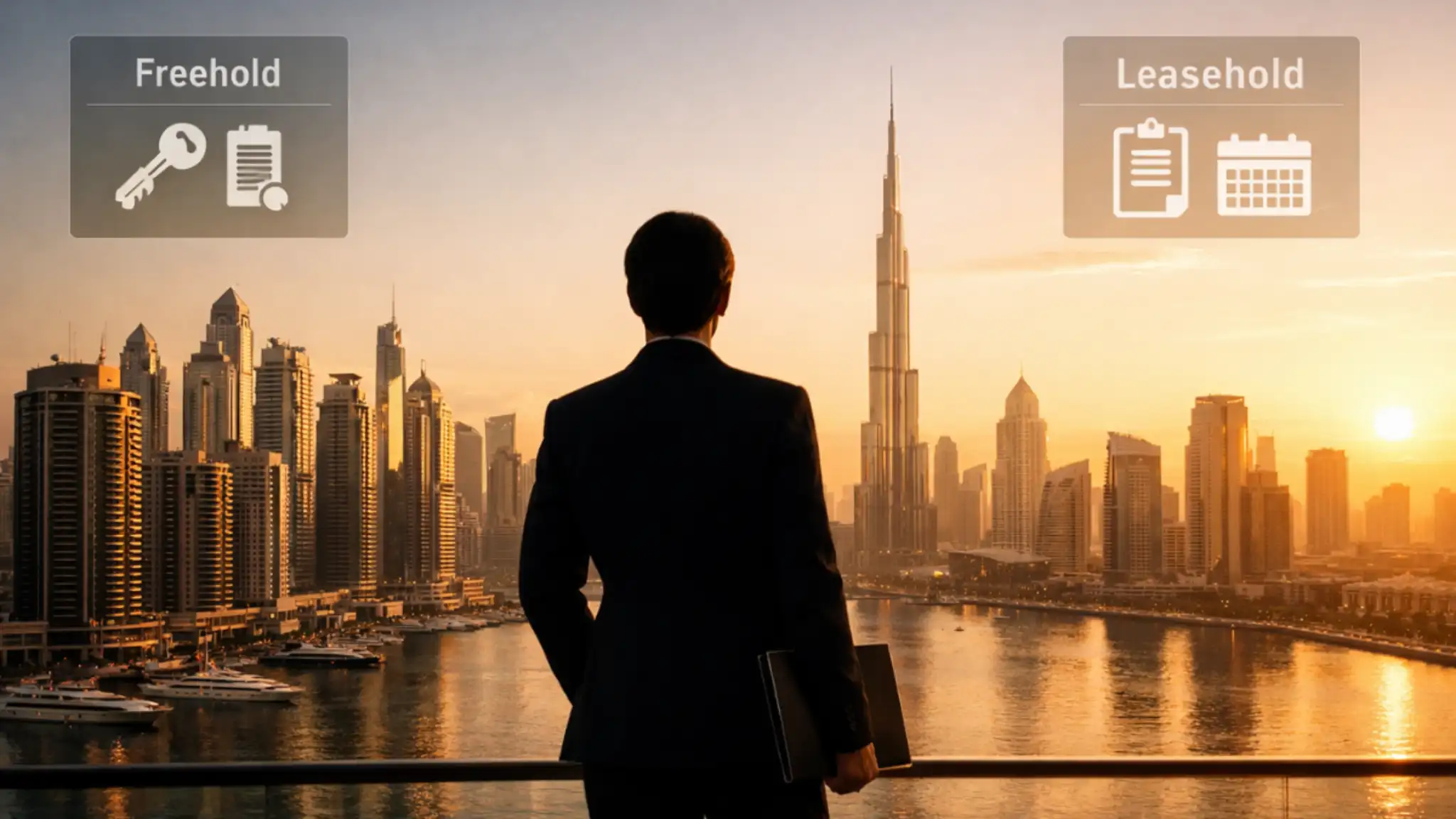
Freehold vs leasehold in Dubai (and what foreigners can actually buy)
Most buyer confusion comes from the words freehold and leasehold. They sound similar, but they affect what you truly “own”, how long you own it for, and how straightforward resale can be.
Freehold ownership in Dubai
- What it means: you typically own the property outright (and your ownership is registered via the Dubai Land Department system).
- What you can do: sell, rent out, live in it, and hold long-term.
- Where it applies: designated freehold areas approved for foreign ownership.
Leasehold / usufruct (long-term rights)
- What it means: you own the right to use/occupy the property for a fixed term (often up to 99 years), rather than owning the underlying land outright.
- What you can do: depending on the contract, you may still be able to sell that right or rent the property, but you are working within a time-limited legal interest.
- Who it suits: buyers focused on a long holding period with clear legal paperwork, or specific projects where freehold is not offered.
If you want a deeper explanation of the terminology and how it shows up on title documents, see: our guide to freehold vs leasehold ownership and what buyers should check.
Who can buy property in Dubai as a foreigner or non-resident?
In practice, Dubai attracts buyers from the UK, Europe, the US, Canada, India, and many other countries. Whether you live in Dubai or abroad, your ability to purchase usually comes down to property location and how you’re funding the purchase.
Can non-residents buy property in Dubai?
Yes, non-residents can purchase in designated freehold areas. The difference is often logistical rather than legal: for example, banking, signing processes, and the documents you’ll use for identity verification.
Can you buy property in Dubai without citizenship?
Yes. Property ownership is separate from citizenship. Buying a home does not automatically grant citizenship, and citizenship is not required to buy in approved foreign-ownership zones.
Can you buy property in Dubai without an Emirates ID?
Many buyers complete purchases using a valid passport and the required transaction documents. However, some practical steps around financing, utilities, and long-term administration can be easier if you have residency. If your plan involves a mortgage, your bank’s requirements become a major factor.
For a clean “before you pay a deposit” checklist, use: our due diligence checklist for Dubai property buyers.
Where can foreigners buy in Dubai? Freehold areas explained
Foreign ownership is generally available in designated freehold areas. These zones include many of the best-known investor communities. Because designated areas can expand and project boundaries matter, we recommend checking each building and plot rather than relying on “general” location talk.
Examples of popular freehold communities (not a complete list)
- Dubai Marina
- Downtown Dubai
- Business Bay
- Jumeirah Lake Towers (JLT)
- Palm Jumeirah
- Jumeirah Village Circle (JVC)
- Arabian Ranches (selected phases/projects)
If you’re deciding between communities based on rental demand, tenant profiles, and resale liquidity, this will help: our neighbourhood guide for buyers and investors.
Can you buy property in Dubai and rent it out?
In many cases, yes — investors commonly purchase property in Dubai specifically for rental income. The right route depends on whether you’re doing a standard long-term tenancy or a short-term/holiday let approach.
Long-term rental (typical tenancy)
- Generally simpler operationally.
- Often appeals to stable tenant demand in established communities.
- Best for investors who want predictable cash flow and lower turnover.
Short-term / holiday let (where permitted)
- Can produce higher gross income in strong tourism locations, but it’s more hands-on.
- Requires careful compliance, good furnishing standards, and reliable operations.
- It is essential to follow the correct permit rules and building policies.
If you’re considering a holiday-home style strategy, read: our guide to short-term letting rules and what investors must check.
Want us to sanity-check a deal before you reserve?
Send the listing link (or project name), asking price, and your goal (rental vs lifestyle). We’ll confirm the ownership type, typical costs, and what to check next.
Step-by-step: how to buy property in Dubai as a foreigner
While each transaction has its own details, the buying flow in Dubai is usually straightforward when your paperwork is clean and the ownership type is clear.
Step-by-step checklist (foreign buyer friendly)
- Choose the right ownership zone. Confirm the unit is in a designated freehold area (or understand the exact long-term right you’re purchasing).
- Clarify your strategy. Are you buying for long-term rental, short-term lets, a second home, or a future move? Your area and unit type should match the plan.
- Budget for total cost. Include the transfer fee, trustee/admin charges, agent commission (if applicable), and ongoing service charges.
- Agree terms in writing. Make sure the payment schedule, included items, and timelines are clearly stated.
- Secure any required approvals. For many resales, you’ll need a developer NOC confirming there are no outstanding dues.
- Complete transfer correctly. Ownership should be transferred and registered through the proper channels so your title documentation is issued correctly.
- Set up post-completion admin. Utilities, building access, leasing setup, and (if renting) choosing the right management approach.
If you want the full end-to-end process in one place (including common hidden fees and timing expectations), use: our complete buyer checklist for Dubai property.
Common pitfalls with freehold vs leasehold (and how to avoid them)
Most “bad experiences” we see come from misunderstandings rather than the market itself. The good news is that a few checks early on prevent most problems later.
1) Assuming every Dubai property is available to every buyer
Dubai is not one universal rule-set across every district. Always confirm the property’s status rather than relying on a broad community name.
2) Focusing on purchase price and ignoring service charges
Service charges can materially affect your net rental yield. Compare realistic rental income against annual service costs, not just the headline ROI.
3) Not checking what “ownership” really means on paper
Freehold, long lease, usufruct, and off-plan registration all have different documentation. If something is unclear, pause and ask for clarification before any non-refundable step.
4) Buying off-plan without understanding escrow and handover costs
Off-plan can be excellent when the developer and payment plan are solid — but you need to understand timelines, snagging, and post-handover costs. If that’s your route, read: our off-plan guide covering payment plans, handover, and real costs.
FAQs: Can Anyone Buy Property in Dubai?
Can foreigners buy property in Dubai?
Yes — foreigners can buy property in Dubai in designated freehold areas (and may also purchase certain long-term rights such as leasehold/usufruct where offered). The key is verifying the ownership type and confirming the unit is in an approved zone for foreign ownership.
Can a non-resident buy property in Dubai?
In many cases, yes. Non-residents commonly purchase in Dubai, especially in major freehold communities. What can differ is your banking route (if using a mortgage) and the practical admin steps after purchase.
Can you buy property in Dubai without citizenship?
Yes. UAE citizenship is not required to purchase in approved freehold zones. Ownership rights depend on the property’s legal classification and location, not your citizenship.
Can you buy property in Dubai and rent it out?
Often, yes. Many foreign investors buy specifically to rent. Your best approach depends on whether you want long-term tenants or a short-term/holiday-let model — and you should always follow the correct permitting and building rules for short-term letting.
Can you buy property in Dubai from the UK / USA / Canada / India?
Typically, yes. Buyers from the UK, US, Canada, India (and many other countries) regularly purchase in Dubai’s freehold zones. The core steps are similar — the main difference is how you handle signing, currency transfer, and whether you are buying cash or with finance.
What do you need to buy property in Dubai?
At minimum, you’ll need identity documents (often a passport for non-residents), signed transaction paperwork, and a clear method of payment. For resales, you may also need a developer NOC and a proper transfer appointment so ownership is registered correctly.
Is it safe to buy property in Dubai?
Dubai is widely viewed as a mature market with established transaction procedures. That said, “safe” depends on process: verify ownership type, confirm the unit’s legal status, understand service charges, and use proper transfer channels rather than informal arrangements.
Can you buy property in Dubai without an agent?
It is possible, particularly with some developer direct purchases. However, many buyers still use experienced professionals to reduce mistakes, help negotiate terms, and ensure the paperwork and transfer steps are handled correctly.
Want a simple “yes/no” on whether you can buy in a specific building?
Share the project name and location — we’ll confirm the ownership type and what it means for you as a foreign buyer.
Next steps & useful guides
If you’re building your Dubai buying plan, these guides will help you go deeper (without getting lost in jargon):
- Choosing a property type and investment model (beginner guide)
- Due diligence checklist before you pay a deposit
- Understanding freehold vs leasehold ownership in Dubai
- Dubai payment plans: real costs and hidden fees to watch
- Off-plan buying: timelines, handover, and true costs
- Golden Visa basics for property buyers
- Neighbourhood guide: choosing the right community
- Core rule Most foreigners can buy in Dubai in designated freehold areas (and sometimes via long-term rights such as leasehold/usufruct).
- Freehold Generally means you own the property outright and can sell, rent, or hold long-term (subject to standard community rules and fees).
- Leasehold / usufruct A long-term legal right (often up to 99 years) to use/occupy the property, rather than owning the underlying land outright.
- Non-resident buyers Often allowed to purchase in freehold zones; the biggest differences are typically banking, signing logistics, and post-completion admin.
- Most important checks Confirm ownership type, verify designated area status, understand service charges, and follow a proper registered transfer process.
If you want help confirming whether a specific property is freehold or leasehold (and what that means for resale and renting), message Dubai Light Haven and we’ll walk you through the checks.
Official guidance (worth bookmarking)
For the most reliable, current information, it’s always sensible to cross-check official sources:
- Dubai Land Department (DLD) – official real estate authority
- UAE Government Portal – expatriates buying property in the UAE
How Dubai Light Haven can help
The question “Can Anyone Buy Property in Dubai?” is usually easy to answer — but the smarter question is: “Can I buy the right property, in the right ownership zone, with the right paperwork — without nasty surprises?”
That’s what we help you do. We’ll confirm the ownership type (freehold vs leasehold), sense-check the numbers, and make sure you understand the buying steps before you commit to a reservation or deposit.
Ready to buy with clarity?
Share your goal (rental income or lifestyle), your budget, and your preferred areas — our team will map out the safest next steps.

Performance Verified ✅
This page meets PME Optimisation Standards — achieving 95+ Desktop and 85+ Mobile PageSpeed benchmarks. Verified on
