
Share this post:
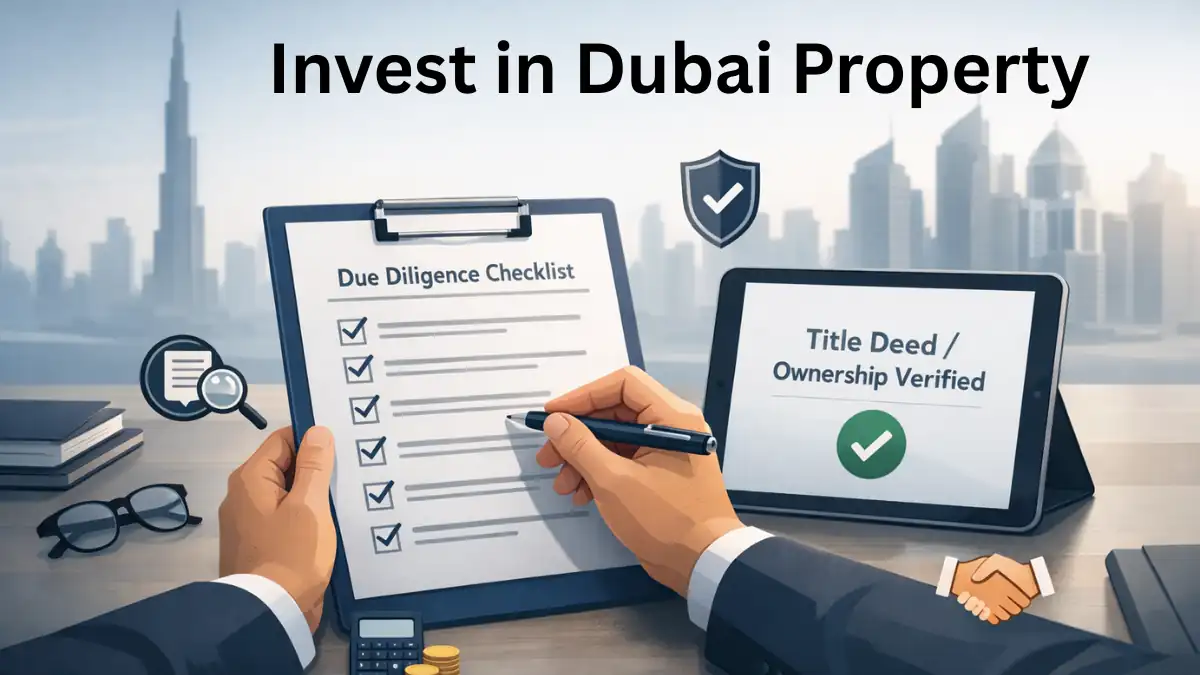
If you want to Invest in Dubai Property, the smartest moment to be strict is before you pay any reservation fee or deposit. Dubai’s process can be smooth and well-regulated — however, it moves quickly, and small “missing” checks can become expensive later.
Quick summary: Invest in Dubai Property (deposit-safe checklist)
- Verify the asset: title deed / ownership, unit details, and (for off-plan) the correct project + provisional registration route.
- Verify the people: seller authority, broker licensing, developer track record, and who is actually receiving your money.
- Verify the numbers: total upfront costs, payment schedule, service charges, and realistic net returns.
- Verify the paperwork: SPA / MOU, NOC requirements, snagging/handover terms, and exit clauses.
Key facts snapshot: what you should know before paying
- Don’t treat “deposit” as a formality — ask where it is held, when it becomes non-refundable, and what triggers forfeiture.
- Check official records early (title deed verification / service charge index) so you’re not relying on screenshots or promises.
- Budget beyond price — transfers, trustee/service partner fees, and mortgage registration (if applicable) can materially shift your cash required.
Paying a deposit in Dubai often happens fast — sometimes within hours of agreeing a deal. That’s why this guide exists: a calm, investor-first due diligence checklist to run before you commit funds. If your goal is to Invest in Dubai Property with confidence, you want clarity on the asset, the paperwork, and the real costs — not just the headline price.
Important: Reservation fees and deposits can be partly or fully non-refundable depending on the developer, the contract wording, and the timeline. Always read the exact clause that explains (1) where the money is held, (2) when it becomes non-refundable, and (3) what events trigger forfeiture.
What we cover in this due diligence checklist
- Invest in Dubai Property: the “before you pay” checklist
- Asset checks: title, unit details, and what you’re actually buying
- People checks: seller, broker, developer, and where your money goes
- Paperwork checks: SPA/MOU, NOC, handover terms, and exit options
- Money checks: fees, payment plans, and cash required at each step
- Ready vs off-plan: what changes before paying a deposit
- FAQs: Invest in Dubai Property (deposits, documents, and safety)
- Key facts snapshot
- Useful external links
Tip: If you’re buying from overseas (UK, India, Australia, etc.), do not let time zones push you into rushing. We’d rather you miss one “hot” unit than pay a deposit on something you haven’t properly verified.
Invest in Dubai Property: the “before you pay” checklist (10 checks)
Use this as your pre-deposit filter. If any item is unclear, pause the transaction and get the point clarified in writing.
- Confirm what you’re buying: unit number, floor, size, parking, view notes, and inclusions (appliances, furniture, upgrades).
- Confirm the ownership proof: title deed (ready) or the correct off-plan registration route and project details.
- Confirm seller authority: who is signing, and whether they’re legally entitled to sell (especially with POA situations).
- Confirm money destination: whose account receives the deposit/reservation, and under what reference.
- Confirm deposit terms: refundable vs non-refundable triggers, deadlines, and cancellation wording.
- Confirm total costs: DLD/transfer-related costs, trustee/service partner fees, agent commission, NOC (if resale), mortgage fees (if any).
- Confirm service charges: ask for the latest approved rate and whether chiller/air-con is included or separate.
- Confirm rental rules: long-let vs short-let permissions, building policies, and any landlord restrictions.
- Confirm defects and handover: snagging process, retention (if any), and what the developer commits to fix.
- Confirm your exit: resale rules, assignment fees (off-plan), and practical liquidity for your building/community.
Invest in Dubai Property safely: asset checks (title, unit details, and building reality)
1) Title and ownership: verify the asset exists as described
For ready property, the title deed is the anchor document. Your job is to make sure the deed details match what you’re being sold — and that the seller has the right to transfer it. Where possible, use official verification tools rather than relying on screenshots.
- Title deed details: owner name, property type, unit/plot references, and any notes that affect transfer.
- Encumbrances: if there’s a mortgage on title, the clearance process must be clearly planned (and timed).
- Designated ownership area: confirm the community/project is eligible for the ownership structure you’re expecting.
2) Building and unit reality: what you can’t see in the listing
Investors lose money when the unit is fine but the building is operationally expensive or poorly managed. So, alongside your unit checks, you want a basic health check on the building.
- Service charges: confirm the latest approved service charge rate and understand what’s included (security, facilities, sinking fund, etc.).
- Chiller/air-con arrangement: check whether it’s included or billed separately (this affects tenant cost and rentability).
- Facilities and maintenance: lifts, pools, gyms, parking access, and common area condition.
- Community pipeline: nearby construction phases can impact noise, access, and short-term rental appetite.
Note: “High yield” only matters after service charges, vacancy, maintenance, and letting costs. When we review a deal, we always stress-test the net number.
Invest in Dubai Property: people checks (seller, broker, developer, and payment safety)
3) Seller authority: who is legally selling to you?
This is particularly important on resales. If the seller is overseas, selling via Power of Attorney, or selling on behalf of a company, you need to confirm who signs and what documents support their authority.
- Seller ID alignment: the name on the documents should align across the sale paperwork.
- Power of Attorney: if used, confirm its scope, validity, and whether it is acceptable for the transfer process.
- Outstanding obligations: service charge arrears or developer fees can delay transfer if not settled.
4) Broker and developer checks: reduce “deal risk” before it becomes your problem
Dubai is regulated, but the market is fast-moving. The practical protection is to verify that the parties are legitimate and that the story matches the paperwork.
- Broker legitimacy: ensure you’re dealing with a properly registered agent (and that commission terms are in writing).
- Developer track record (off-plan): past delivery, quality, and how they handle snagging and delays.
- Escrow/payment structure: understand how and when money is collected, and what documentation you receive at each stage.
Deposit safety rule: never send funds to a personal account. Deposits/reservation fees should go through the correct, documented channel (developer / trustee / agreed escrow mechanism), with a receipt and the correct reference.
Invest in Dubai Property: paperwork checks (SPA/MOU, NOC, and handover clauses)
5) SPA (off-plan) or MOU (resale): the clauses that matter before you pay
Marketing brochures don’t protect you — contracts do. Before you pay, focus on a few practical items that most affect your downside risk.
- Deposit clause: refundability, forfeiture triggers, and timelines.
- Completion/handover: target dates, what happens if timelines move, and what you can do if delays are material.
- Specifications: finishes, upgrades, parking, and any “subject to change” wording.
- Assignment/resale rules (off-plan): when you can sell, fees, and developer approval requirements.
- Snagging and defects: process, timeframes, and how issues are documented and resolved.
6) NOC and transfer steps (resales): plan the sequence, not just the price
Many resale transactions require a developer NOC before transfer can happen. That step can take time, and it may involve settling outstanding charges first. So, your pre-deposit checklist should include: who handles it, how long it takes, and what it costs.
Invest in Dubai Property: money checks (fees, payment plans, and the real cash required)
7) Understand the fee stack early (so transfer day doesn’t shock you)
Dubai transactions typically include government registration/transfer-related costs and additional service partner/trustee charges. If you’re using a mortgage, there are also mortgage registration fees and bank costs. The exact structure varies by deal; nevertheless, you should map out a conservative budget before you pay a deposit.
Tip: Ask for a one-page “completion statement” style breakdown — even at pre-deposit stage. If the seller, agent, or developer can’t outline the likely fees, that’s a sign to slow down.
8) Payment plans (off-plan): check the calendar, not the headline “%”
Payment plans can look comfortable on paper, but the schedule matters more than the marketing. Check (1) the dates, (2) the construction milestones (if used), and (3) whether there’s a post-handover plan — and what “handover” practically means.
If you’re comparing projects, you may find our deeper cost breakdown helpful — it’s designed to show the real numbers buyers face once you add fees and timing.
Read our deeper guide on payment plan realities and common hidden costs
9) Mortgage readiness (if applicable): avoid paying a deposit before finance is realistic
If finance is part of your plan, aim to secure an Approval in Principle (or equivalent bank indication) before you pay a deposit on a specific unit. Banks can be conservative on building eligibility, valuation outcomes, and affordability checks — particularly for non-residents.
Invest in Dubai Property: ready vs off-plan (what changes before paying a deposit)
Ready property (resale): your “deposit risk” is mostly about title + timing
- Main risk: paying before you’ve verified title details, seller authority, and the transfer path.
- Main checklist focus: title verification, mortgage clearance (if any), NOC steps, service charge arrears, and a realistic transfer timeline.
Off-plan property: your “deposit risk” is mostly about contract + delivery
- Main risk: non-refundable reservation terms, unclear specs, and handover timelines that don’t match your plan.
- Main checklist focus: SPA clauses, developer delivery record, escrow/payment structure, milestone wording, snagging/defects process, and assignment rules.
Related DLH guides (useful next steps)
- Our complete foreign-buyer guide (process, ownership, and common pitfalls)
- A step-by-step route for overseas investors (from shortlist to ownership proof)
FAQs: Invest in Dubai Property (deposits, documents, and safety)
What documents should I ask for before I pay a deposit?
At minimum, ask for the key identity and property documents relevant to your deal type. For resales that usually means proof of ownership, seller authority, and a clear transfer plan. For off-plan, it means the SPA terms and evidence you’re paying through the correct channel.
- Ready property: title deed details, seller ID/authority, and a clear outline of the transfer sequence (including NOC where required).
- Off-plan: SPA (especially deposit/refund clauses), payment schedule, specification/finish schedule, and handover + snagging wording.
Is it safe to invest in Dubai property as a foreigner?
It can be, provided you buy in the correct ownership areas, use the official transfer/registration routes, and run proper due diligence on the unit, building, and contract terms. In our experience, most problems come from rushing and relying on verbal assurances rather than verified paperwork.
How much do I need to invest in Dubai property to get started?
It depends on your target area, unit type, and whether you’re using finance. Rather than focusing on the minimum “entry” figure, plan your total cash requirement: deposit/reservation + upfront transaction costs + a buffer for snagging, furnishing (if needed), and initial vacancy.
Can I invest in Dubai property from the UK (without living in the UAE)?
Yes. Many buyers purchase from abroad. The practical difference is logistics: signing, payments, and verification. Because you’re not on the ground, it’s even more important to verify the title/records and get every key term in writing before you pay a deposit.
Is buying off-plan riskier than buying ready property?
Off-plan isn’t automatically “riskier”, but the risk is different. With resale, the focus is title + timing + transfer. With off-plan, the focus is contract wording, delivery quality, handover timelines, and how the developer handles defects. Your due diligence should match the deal type.
Can I live in Dubai if I own a property?
Owning a property does not automatically grant residency. However, some ownership scenarios can support residency routes if you meet the official criteria and apply correctly. If residency is part of your plan, treat it as a separate workstream: confirm eligibility first, then buy accordingly.
What are the biggest “hidden” costs investors miss?
- Service charges (and whether chiller is separate).
- Transfer/trustee/service partner fees and admin items at registration.
- Mortgage costs: valuation, arrangement fees, and mortgage registration (if financed).
- Letting costs: vacancy, agent fees, and maintenance between tenants.
What’s the simplest way to reduce deposit risk?
Slow down for one day and verify: (1) the asset (official record checks where possible), (2) the people (seller authority and legitimate channels), and (3) the clause that governs deposit refund/forfeiture. That single pause is often the difference between a smooth deal and a stressful one.
Key facts snapshot: Invest in Dubai Property (deposit-first rules)
- Never pay blindly: confirm who receives the money and what receipt/proof you get.
- Verify with official tools where possible: title deed validity and approved service charges are checkable through official channels.
- Know your fee stack early: plan the full cash requirement, not just the deposit.
- Match due diligence to deal type: resale = title + timing; off-plan = contract + delivery.
Useful external links (official starting points)
- Property sale registration (DLD e-services)
- Title deed verification (DLD e-services)
- Service charge index overview (DLD/RERA)
- Dubai REST app (DLD)
- Central Bank rulebook: mortgage lending regulations
Final word (and how we can help)
Dubai rewards prepared buyers. If you’re about to pay a deposit and you want a second set of eyes on the deal — the unit, the building costs, the payment plan, and the paperwork — our Dubai Light Haven team will walk you through it calmly, step-by-step.
Performance Verified ✅
This page meets PME Optimisation Standards — achieving 95+ Desktop and 85+ Mobile PageSpeed benchmarks. Verified on
