
Share this post:
Quick summary: Dubai Property Legal Process
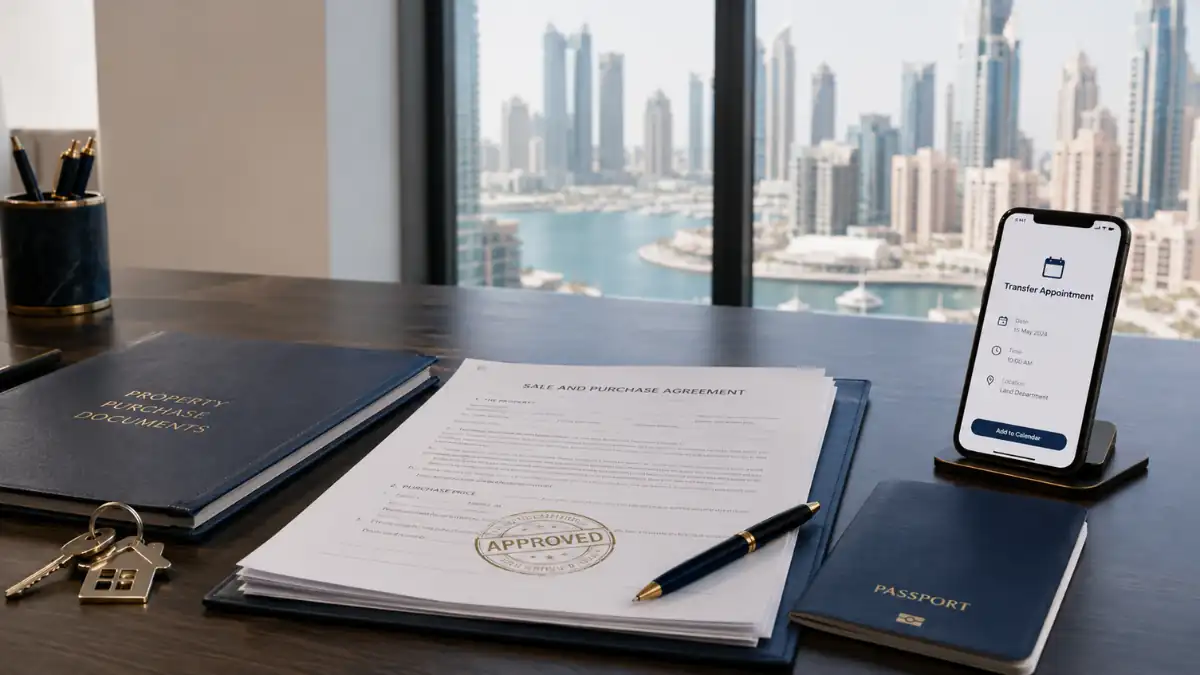
If you’re buying in Dubai for the first time, the Dubai Property Legal Process is usually straightforward — but it is document-led and timing matters. In most resale deals, you’ll move from offer → signed MoU (Form F) → developer NOC → transfer at a DLD Registration Trustee → title deed. Off-plan is different: you sign an SPA with the developer and your purchase is typically recorded through Oqood until handover.
- Foreign buyers can purchase in eligible areas (often freehold zones) and ownership is registered with Dubai Land Department.
- You do not need a UAE visa to buy, although residency pathways can be relevant later. (See our related guide below.)
- Most delays come from missing documents, mortgage timing, or waiting on a developer NOC.
- Risk is reduced by using the correct RERA/DLD contracts, confirming title status early, and transferring only via an approved DLD channel.
This guide walks you through the process step-by-step, highlights common pitfalls, and shows what to prepare as a foreign buyer — especially if you’re buying from the UK or buying without living in Dubai.
Buying property in Dubai and want the legal steps checked?
Speak with our team before you pay a deposit, sign a contract or commit to an off-plan payment plan.
Overview: Dubai Property Legal Process for foreign buyers
The Dubai Property Legal Process is one of the most important things to understand before buying as a foreign investor. Dubai is a well-established international property market, but the process, fees and terminology can feel unfamiliar if you are used to buying in the UK, Europe, India or the United States.
In simple terms, the process is built around three main ideas: checking that you can legally buy in the chosen area, making sure the property and seller are legitimate, and completing the transfer through Dubai Land Department. Once the title deed is issued in your name, your ownership is formally registered.
The good news is that foreign buyers can own property in designated freehold areas of Dubai. However, you still need to understand the difference between ready property, off-plan property, freehold ownership, leasehold rights, mortgage approval, service charges and visa eligibility.
At Dubai Light Haven, we help buyers make sense of the process before they commit. That means looking beyond the headline price and asking practical questions:
- Is the property in a foreign-buyer approved freehold area?
- Is the seller, developer or broker properly registered?
- Are all fees, service charges and transfer costs understood?
- Is the payment plan realistic for your budget?
- Could the property support a future residency or Golden Visa route?
For broader buying guidance, you may also find our guide to buying property in Dubai as a foreigner useful alongside this legal process article.
Step-by-step Dubai Property Legal Process
The exact steps depend on whether you are buying a ready property or an off-plan property. However, the core legal route usually follows a clear sequence.
Step-by-step checklist: Dubai Property Legal Process
- Confirm your buyer status. Check whether you are buying as an individual, company, UAE resident or overseas buyer.
- Choose a permitted ownership area. Foreign buyers normally buy in designated freehold locations.
- Reserve the property. This may involve a booking form, reservation agreement or initial deposit.
- Carry out due diligence. Check the seller, developer, title status, fees, mortgage position and service charges.
- Sign the sale agreement. For ready property this is commonly linked to a Memorandum of Understanding. For off-plan property, you sign the developer’s sale agreement.
- Pay required fees and instalments. These may include deposit, DLD fee, admin fees, trustee fees, agency commission and developer charges.
- Complete transfer or registration. Ready property transfers normally happen through Dubai Land Department systems. Off-plan purchases are registered on the interim register.
- Receive ownership evidence. For completed property, this usually means a title deed. For off-plan property, it means official registration until handover and final title deed issue.
Step 1: Confirm whether you can buy the property legally
Foreign buyers can buy property in Dubai, but not every property is available for freehold ownership by non-UAE nationals. The first step is to confirm that the property is in a designated area where foreign ownership is permitted.
Popular freehold areas include locations such as Dubai Marina, Downtown Dubai, Palm Jumeirah, Jumeirah Village Circle, Dubai Hills Estate, Business Bay and Dubai Creek Harbour. However, rules and project structures can vary, so it is sensible to check before you pay anything.
Our guide on whether foreigners can buy property in Dubai explains the ownership basics in more detail.
Step 2: Check the broker, seller or developer
Once you have found a property, the next stage in the Dubai Property Legal Process is verification. You should know who you are dealing with and whether they have the authority to sell.
For a ready property, this means checking the seller’s title deed, Emirates ID or passport details, mortgage status and any power of attorney documents if someone else is signing. For off-plan property, you should check the developer, project registration, escrow account and payment schedule.
Step 3: Understand the reservation or booking form
Many Dubai property purchases begin with a booking form or reservation agreement. This document can feel simple, but it may still create obligations. It usually records the buyer’s details, the property unit, purchase price, deposit amount and key payment terms.
Before signing, check whether the deposit is refundable, what happens if finance is refused, and whether any verbal incentives have been written into the agreement. This matters especially with off-plan property, where payment plans can run over several years.
If you are comparing staged payments, our guide to Dubai property payment plans will help you understand how instalments usually work.
Step 4: Sign the sale agreement
For ready property, buyers and sellers normally sign a sale agreement that records the agreed price, deposit, completion date and conditions. In many resale transactions, this is commonly known as an MOU.
For off-plan property, the developer’s sale and purchase agreement is central. It should explain the unit details, completion expectations, payment schedule, default clauses, handover conditions and any service charge obligations.
Step 5: Complete Dubai Land Department registration
Dubai Land Department registration is the step that gives the transaction its formal legal effect. For completed property, the transfer process ends with the buyer being recorded as the owner and receiving the title deed.
For off-plan property, the buyer’s interest is usually registered before completion, with final title deed steps following handover. This helps create a recognised record of the buyer’s interest in the property.
As a buyer, you should keep copies of every receipt, contract, registration record and official notice. These documents can later support mortgage applications, resale, rental licensing and potential visa applications.
Key documents in the Dubai Property Legal Process
Documents are at the heart of the Dubai Property Legal Process. The names may vary slightly depending on the transaction, but most buyers should expect to see several core documents.
Documents for a ready property purchase
- Passport copy for overseas buyers.
- Emirates ID if the buyer is already a UAE resident.
- Title deed showing the current legal owner.
- Sale agreement or MOU confirming the agreed terms.
- No Objection Certificate from the developer or master developer, where required.
- Mortgage documents if either buyer or seller has finance involved.
- Power of attorney if someone signs on behalf of the buyer or seller.
Documents for an off-plan property purchase
- Reservation form or booking form.
- Sale and purchase agreement from the developer.
- Payment plan showing instalment dates and amounts.
- Escrow payment details for project-linked payments.
- Oqood or interim registration where applicable.
- Handover notices and final completion documents.
Freehold vs leasehold ownership in the Dubai Property Legal Process
A major part of the Dubai Property Legal Process is understanding what type of ownership you are actually buying. In Dubai, foreign buyers commonly focus on freehold property, but leasehold structures also exist.
Freehold property in Dubai
Freehold ownership generally means you own the property outright, subject to the rules of the development, service charges and applicable Dubai regulations. For most international investors, this is the preferred ownership structure because it gives stronger long-term control and simpler resale potential.
Freehold areas are especially important for buyers who want the clearest route to ownership, rental income, resale flexibility and possible property-linked residency options.
Our detailed guide on whether property in Dubai is freehold for foreigners explains how this works in more detail.
Leasehold property in Dubai
Leasehold ownership usually gives you rights to use the property for a fixed term rather than owning it outright forever. This may still suit some buyers, but it is important to understand the length of the lease, renewal terms and resale limitations before proceeding.
Freehold vs leasehold: quick comparison
- Freehold: usually stronger ownership rights, better resale clarity and often preferred by foreign investors.
- Leasehold: rights are tied to a fixed term, so the remaining lease length matters.
- Investor focus: most overseas buyers prefer recognised freehold locations.
- Legal check: always confirm the ownership structure before signing.
Legal fees, DLD fees and buyer costs in Dubai
Legal process costs are a key part of buying property safely in Dubai. The headline property price is only one part of the total budget, so you should allow for transfer costs, registration fees, broker commission and mortgage-related costs if finance is involved.
Most buyers should budget for:
- Dubai Land Department transfer fee, commonly calculated as a percentage of the property price.
- Trustee office fees for transfer handling.
- Agency commission where a broker is involved.
- Mortgage registration fees if you are buying with finance.
- Bank valuation and arrangement fees for mortgage buyers.
- Developer admin fees for some off-plan or resale transactions.
- Legal review fees if you appoint an independent lawyer or conveyancer.
Quick costs snapshot: Dubai Property Legal Process
- DLD transfer fee: commonly one of the largest transaction costs.
- Broker commission: usually payable if you buy through an agent.
- Mortgage costs: apply if you use finance, including valuation and registration fees.
- Legal review: optional for simple purchases, but sensible for complex, high-value or off-plan deals.
- Service charges: ongoing annual costs that affect net rental return.
For a fuller breakdown of buyer-side costs, see our guide to Dubai property fees and our article on Dubai Land Department fees.
How long does the Dubai property legal process take?
A ready property transaction can often move relatively quickly once documents, finance and seller clearance are in place. However, timing depends on whether there is a mortgage, whether a No Objection Certificate is needed, whether documents are complete and whether either party is signing through power of attorney.
Off-plan purchases follow a different rhythm. The initial reservation and contract stage may be quick, but legal completion is linked to project construction, payment milestones, handover and final title deed steps.
How the Dubai Property Legal Process connects to visa options
Property ownership and visa eligibility are connected, but they are not the same thing. Buying a property in Dubai does not automatically mean every buyer receives residency. Instead, visa options depend on the property value, ownership structure, mortgage position, current immigration rules and supporting documentation.
This is why the legal paperwork matters. If you later want to apply for a property-linked residence visa or Golden Visa, you may need clear evidence of ownership, property value, title documents and payment status.
This article supports our wider guide to Dubai visa requirements, documents, costs and timelines. You may also find our guide to buying property in Dubai to get residency helpful if visa planning is part of your investment decision.
What documents may support a property-linked visa?
Depending on the visa route, buyers may need documents such as:
- passport copy,
- title deed or ownership certificate,
- property valuation or value evidence,
- mortgage statement if finance is involved,
- proof of payment or equity,
- health insurance,
- photographs and application forms,
- supporting UAE immigration documents.
If your long-term aim is residency, it is sensible to read our guide to Dubai Golden Visa requirements before choosing the property.
Common legal mistakes buyers should avoid
Most Dubai property purchases are straightforward when handled properly. However, problems can arise when buyers rush, rely only on informal advice or focus only on price rather than legal structure.
1. Paying a deposit before checking the documents
A deposit may feel like a small step, but it can become difficult to recover if the terms are unclear. Before paying, check the refund rules, buyer obligations and whether the person receiving the money is properly authorised.
2. Assuming visa approval is automatic
Some buyers choose a property partly because they want Dubai residency. That is completely understandable, but the property must match the visa route. Value thresholds, mortgage rules and documentation can all affect eligibility.
3. Ignoring service charges
Service charges are ongoing costs paid for building and community maintenance. They can have a major impact on rental yield, especially in apartment buildings with pools, gyms, concierge services and high-end amenities.
For investor calculations, our guide to rental yields in Dubai explains why ongoing costs matter.
4. Buying off-plan without checking the payment plan
Off-plan property can be attractive because of staged payments and new-build appeal. However, you need to understand the full payment plan, construction milestones, handover expectations and what happens if you miss an instalment.
If you are considering a new launch, read our guide to buying off-plan property in Dubai process before committing.
5. Not checking whether finance changes the process
Mortgage buyers have additional legal and timing steps. The bank may need a valuation, formal approval, mortgage registration and release arrangements if the seller also has an existing mortgage.
Our guide to buying property in Dubai with a mortgage explains what overseas buyers should expect.
Not sure if the legal process matches your buying plan?
We can help you sense-check the ownership type, payment route, buyer costs and visa implications before you move forward.
Related comparisons buyers often ask about
When buyers research the Dubai Property Legal Process, they often compare it with wider ownership, investment and visa questions. These comparisons are useful because they help you see the full picture before you buy.
Dubai property legal process vs UK conveyancing
UK conveyancing is usually solicitor-led and can take several months. Dubai can feel faster and more direct, but that also means you should be organised before signing. The legal checks are still important, even if the process appears more streamlined.
Ready property vs off-plan property
Ready property gives you a completed asset, clearer inspection opportunity and quicker rental potential. Off-plan property may offer staged payments and future growth, but it also brings developer, construction and handover risk.
For a wider investor view, see our article on what off-plan property in Dubai means.
Buying for lifestyle vs buying for residency
A lifestyle buyer may prioritise location, views, schools and community feel. A residency-focused buyer must also check property value, ownership evidence and eligibility documents. Ideally, your property should support both your lifestyle and legal goals.
FAQs: Dubai Property Legal Process
Can foreigners legally buy property in Dubai?
Yes. Foreign buyers can legally purchase property in designated freehold areas of Dubai. Popular locations include Dubai Marina, Downtown Dubai, Palm Jumeirah, Dubai Hills Estate and Business Bay. The key is to confirm that the property is within an approved ownership area before proceeding.
What is the first step in the Dubai Property Legal Process?
The first step is confirming your eligibility as a buyer and checking whether the property is in a freehold area open to foreign ownership. After that, you can move to due diligence, reservation and contract stages.
Do I need a lawyer to buy property in Dubai?
Many straightforward purchases are completed without appointing a lawyer. However, legal advice can be valuable for off-plan purchases, high-value properties, company ownership structures or situations involving inheritance and international tax planning.
How long does the Dubai Property Legal Process take?
Ready property transactions can often be completed relatively quickly once all documents are available and finance is approved. Off-plan purchases follow a longer timeline linked to construction progress, payment milestones and handover.
Can buying property in Dubai help me obtain residency?
Certain property investments may support residency or Golden Visa options, depending on the property value, ownership status and current visa regulations. Ownership alone does not automatically guarantee residency, so it is important to understand the visa criteria separately.
What documents do foreign buyers usually need?
Most overseas buyers will need a valid passport, sale agreement, proof of payment, ownership documents and any mortgage paperwork if finance is involved. Additional documents may be required depending on the purchase structure and visa plans.
Still unsure about the legal side of buying property in Dubai?
Dubai Light Haven helps investors understand ownership, fees, legal steps and visa considerations before they commit.
Next steps & useful guides
If you are researching the Dubai Property Legal Process, these guides may also help you understand the wider buying journey:
- Buying Property in Dubai as a Foreigner – What You Need to Know
- How to Buy Property in Dubai as a Foreigner (Complete Beginner’s Guide)
- Dubai Visa Requirements: Documents, Costs & Timelines (Step-by-Step)
- Dubai Golden Visa Requirements: Property Value, Rules & Eligibility
- Can Anyone Buy Property in Dubai? Freehold vs Leasehold Areas
- Dubai Property Fees: Complete Cost Breakdown for Foreign Buyers
- Dubai Property Payment Plans Explained for International Buyers
- Buying Property in Dubai Rules: Full Guide for Foreign Buyers
- Foreign ownership Foreign buyers can purchase property in approved Dubai freehold areas.
- Main legal authority Dubai Land Department (DLD) oversees registration and ownership records.
- Key ownership proof The title deed is the official document confirming ownership.
- Important checks Verify the ownership type, developer status, fees, payment schedule and legal documents before signing.
- Visa connection Property ownership may support certain residency routes, subject to current eligibility rules.
- Best practice Carry out due diligence before paying deposits or signing contracts.
Thinking about buying in Dubai? Speak with Dubai Light Haven before making your next move.
Official resources worth checking
For official guidance and updates, it is sensible to review:
- Dubai Land Department (DLD) — official real estate authority
- RERA — Dubai’s real estate regulatory framework
- UAE Government Portal — residency and general services information
How Dubai Light Haven can help
The Dubai Property Legal Process does not need to feel complicated. Once you understand ownership rules, legal documents, fees and registration steps, buying property in Dubai becomes far more straightforward and far less stressful.
Our role is to help you understand the process clearly, identify the right questions to ask and approach your investment with confidence. Whether you are buying for lifestyle, rental income, long-term investment or residency, having the right information at the start can make a significant difference.
Ready to explore Dubai property with confidence?
Speak with Dubai Light Haven and get clear, investor-focused guidance before you buy.

Performance Verified ✅
This page meets PME Optimisation Standards — achieving 95+ Desktop and 85+ Mobile PageSpeed benchmarks. Verified on
