
Share this post:
Quick summary: Dubai Off Plan Escrow
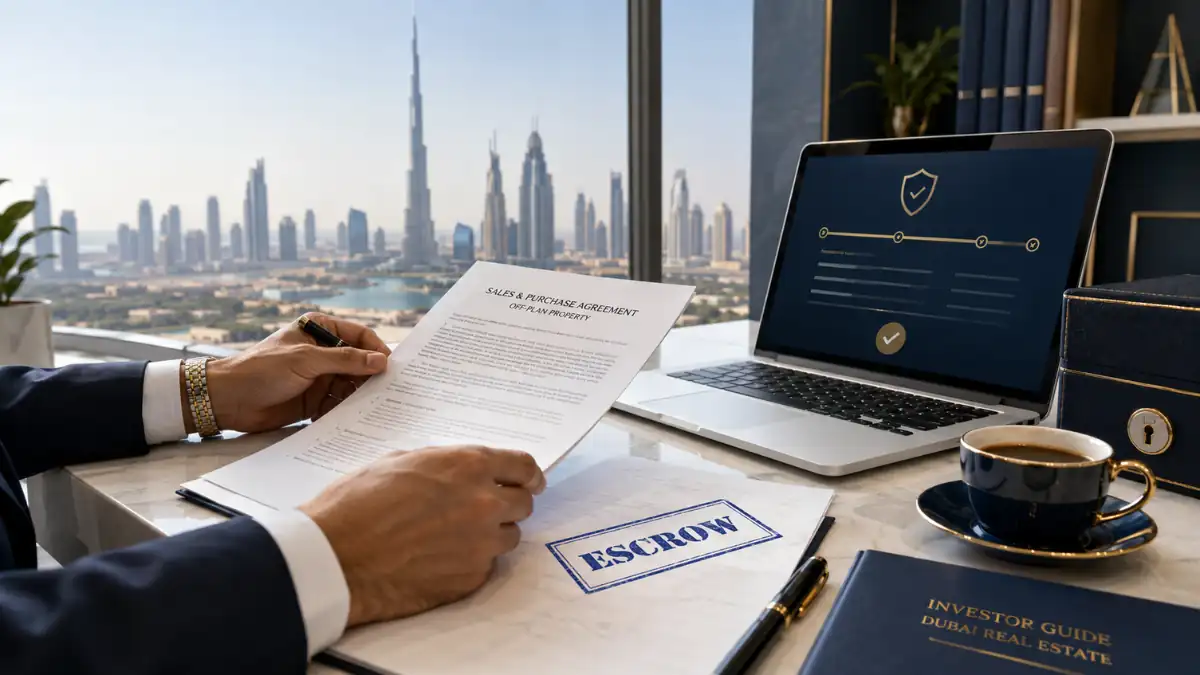
Dubai Off Plan Escrow is a buyer protection system where your instalments are paid into a regulated project escrow account (not directly to the developer), and funds are released in stages as construction progresses. In plain English: your money is ring-fenced for that specific development, and it should only be used for that project.
- Purpose: protects buyer instalments by controlling how and when funds can be used.
- What it reduces: misuse of funds, unfinished projects, and “cashflow risk” during construction.
- What you still must check: the project is registered, the escrow account exists, your SPA matches the payment milestones, and you keep proof of every payment.
- Best practice: only pay via the official payment channels stated in your SPA (and confirm the beneficiary details match the escrow account setup).
In this guide, we explain how escrow works in Dubai off-plan property, what it does (and doesn’t) protect, and the simple checks you can do before you transfer your first instalment.
Want us to sense-check the escrow setup before you pay?
Share the project name, developer, and your payment schedule — our team will tell you what to verify and what to ask for before you transfer any instalments.
Dubai Off Plan Escrow: what it is (in plain English)
If you are buying off-plan, the big question is always the same: “How are my instalments protected while the building is still a construction site?” That’s where Dubai Off Plan Escrow comes in.
In most mainstream Dubai off-plan transactions, your payments are directed into a project escrow account linked to that specific development. The key idea is simple: the money is held and controlled, and the developer is typically able to access it in stages as the project advances, rather than having unrestricted use from day one.
This guide sits alongside our broader pillar: Dubai Property Investment: The Complete Investor Guide. If you are building a long-term strategy, read that first — then use this escrow guide as your practical checklist before you pay.
How Dubai Off Plan Escrow works step-by-step
Although every developer’s process varies slightly, most escrow-backed off-plan purchases follow a familiar pattern:
Step-by-step: what typically happens from booking to handover
- Reservation / booking. You pay a booking amount and sign initial documents (often followed by the SPA).
- SPA issued. Your Sale & Purchase Agreement (SPA) sets out the unit details, price, timeline, and the payment plan milestones.
- Payments made to the designated account. Instalments are paid according to the SPA payment schedule — typically into the project’s escrow setup.
- Funds released in stages. Releases are usually linked to progress and approvals (the exact mechanism can vary by project structure).
- Completion and handover. Final payment is made, snagging is completed, then title transfer occurs when ready.
Your job as the buyer is to ensure (a) the project is properly registered, (b) the payment destination is correct, and (c) you keep a clean audit trail for every transfer.
What escrow protects (and what it doesn’t)
Escrow is often described as “buyer protection”, which is fair — but it’s important to understand the boundaries so you don’t assume it covers risks that it simply can’t.
What escrow is designed to protect
- Ring-fencing: funds are intended to be used for that project, rather than being freely moved elsewhere.
- Controlled access: the developer’s access is typically staged, rather than unlimited from the first instalment.
- Transparency: there is usually a clearer “paper trail” showing where buyer money went.
What escrow does not automatically protect you from
- Overpaying for the unit relative to the market.
- Weak resale demand if the area becomes oversupplied.
- Long delays (escrow can reduce risk, but delays can still happen).
- Misunderstood terms in your SPA (handover dates, penalties, cancellation clauses).
Dubai off-plan payment plans and escrow releases
Many buyers focus on the headline payment plan (“60/40”, “70/30”, “post-handover” and so on). However, from a risk point of view, the more important detail is: when you pay and what triggers the next instalment.
Typical payment plan milestones you’ll see
- Booking (reservation amount)
- Down payment after SPA signing
- Construction-linked instalments (often a series of dates or progress points)
- Handover / completion payment
- Post-handover instalments (if offered)
Quick snapshot: what to look for in an off-plan payment schedule
- Clarity: every instalment amount, date, and trigger should be unambiguous.
- Manageable timing: avoid “front-loaded” structures unless you’re comfortable with the cashflow risk.
- Proof of payment: receipts and bank confirmations should match the beneficiary details stated in the SPA.
- Change process: understand how variations, upgrades, or re-issues of invoices are handled.
If anything about the payment destination or timing looks unclear, pause and verify before transferring funds.
How to verify the escrow account before you pay
The best time to verify the escrow details is before your first significant instalment. Most problems we see come from buyers moving too fast — especially when a “limited-time offer” creates urgency.
Checklist: verifying escrow in a Dubai off-plan purchase
- Confirm the project registration details. Ask for the official project registration reference and ensure it matches the development you are buying into.
- Check the payment beneficiary. The account name on the invoice should match the escrow setup for that project (not a random third party).
- Match the SPA and invoice. Unit number, price, and instalment schedule should align across documents.
- Use bank transfers (not cash). Keep clean records: transfer confirmation, invoice, and receipt for each payment.
- Keep a single “audit folder”. Store SPA, invoices, receipts, emails/WhatsApp confirmations, and ID documents in one place.
- Ask what happens if there is a delay. Understand what your SPA says about timelines, notices, and remedies.
Common pitfalls and gotchas to avoid
Even with escrow in place, buyers can create avoidable risk by missing the basics. Here are the most common trip-ups we see:
- Assuming escrow means “risk-free”. It reduces certain risks, but it doesn’t replace due diligence.
- Not reading the SPA properly. Key clauses (handover, penalties, cancellation terms) sit here — not in the brochure.
- Paying too quickly on verbal assurance. Always rely on written documentation and official payment instructions.
- Confusing discounts with value. A “deal” only helps if the property still makes sense on location and resale demand.
- Skipping a strategy check. Your “why” matters: yield, capital growth, lifestyle, or residency pathways are different journeys.
Helpful comparisons (to keep your thinking clear)
Buyers often mix different concepts together. These quick comparisons help you stay grounded:
- Off-plan vs ready property: off-plan is usually a structured instalment journey; ready property is a more immediate transfer process.
- Payment plan headline vs real risk: the “60/40” label matters less than the actual milestone timing and your cashflow comfort.
- Marketing promise vs SPA reality: the SPA is the controlling document. If it’s not in writing, assume it doesn’t exist.
Not sure if the escrow and payment plan look “normal”?
We’ll review the project basics and help you build a simple “yes/no” checklist before you commit to the next instalment.
FAQs: Dubai Off Plan Escrow
Is Dubai Off Plan Escrow mandatory for every off-plan purchase?
Many mainstream off-plan projects operate with regulated escrow arrangements, but “always” is too strong a word without checking the specific project. As a buyer, you should confirm the project registration and the official payment instructions in writing before transferring funds.
Does escrow guarantee the project will finish on time?
No. Escrow is designed to control how buyer funds are used and reduce misuse risk, but construction timelines can still move due to real-world factors. Your SPA terms (handover dates, notice periods, and remedies) are still crucial.
What should the invoice beneficiary name look like?
The beneficiary should align with the official project payment setup for that development. If the beneficiary name changes unexpectedly, or you are asked to pay a third party without clear documentation, pause and verify.
Can I pay by card or cash if the developer offers it?
From a buyer-protection perspective, bank transfer records are usually the cleanest audit trail. If you use alternative methods, make sure you have a full documentation chain: invoice, proof of payment, and official receipt referencing your unit and instalment.
How does escrow relate to the Oqood / title process?
Escrow is about how funds are held and released during construction. Oqood (and eventual title transfer) is about registration and ownership records. They are linked in the broader off-plan framework, but they solve different problems.
What’s the single best thing I can do to protect myself?
Slow down and verify the basics: project registration, SPA terms, and payment beneficiary details — then keep a perfect audit trail of every payment and receipt.
Want a second opinion before you sign?
We’ll help you spot unclear SPA wording, payment-plan pressure tactics, and anything that needs clarifying before you commit.
Next steps & useful guides
If you are building an off-plan strategy (rather than buying purely on emotion), these are sensible next reads:
- Dubai Property Investment: The Complete Investor Guide
- Speak to Dubai Light Haven about your off-plan shortlist
- What it is A regulated escrow structure intended to ring-fence buyer instalments for a specific off-plan project.
- Why it matters It reduces the risk of buyer funds being used outside the project, and usually supports staged release linked to progress.
- Your key check Verify project registration, escrow/payment beneficiary details, and that SPA + invoices match your unit and instalments.
- What it doesn’t do It doesn’t guarantee timelines, resale demand, or investment performance — due diligence still matters.
- Best habit Keep a complete audit trail: SPA, invoices, bank transfers, receipts, and written confirmations in one folder.
If you want a calm, investor-style review before you pay, message Dubai Light Haven and we’ll guide you on what to verify.
Official resources worth checking
For official guidance and regulatory context, it is sensible to review:
- Dubai Land Department (DLD) — official real estate authority
- RERA — Dubai’s real estate regulatory framework
- UAE Government Portal — residency and general services information
- Dubai REST — DLD digital services overview
How Dubai Light Haven can help
Escrow is one of the most important “plumbing” features in an off-plan purchase — it’s not glamorous, but it’s where buyer protection becomes real. When you understand how Dubai Off Plan Escrow works, you can ask better questions, avoid preventable mistakes, and move forward with far more confidence.
If you are unsure about the escrow setup, the payment schedule, or what your SPA wording really means in practice, our team can help you sense-check the details before you transfer funds.
Ready to buy off-plan with clearer protection?
Dubai Light Haven can review the project basics, explain the paperwork in plain English, and help you avoid common off-plan payment mistakes.
Performance Verified ✅
This page meets PME Optimisation Standards — achieving 95+ Desktop and 85+ Mobile PageSpeed benchmarks. Verified on
