
Share this post:
Quick summary: Off plan property Dubai meaning
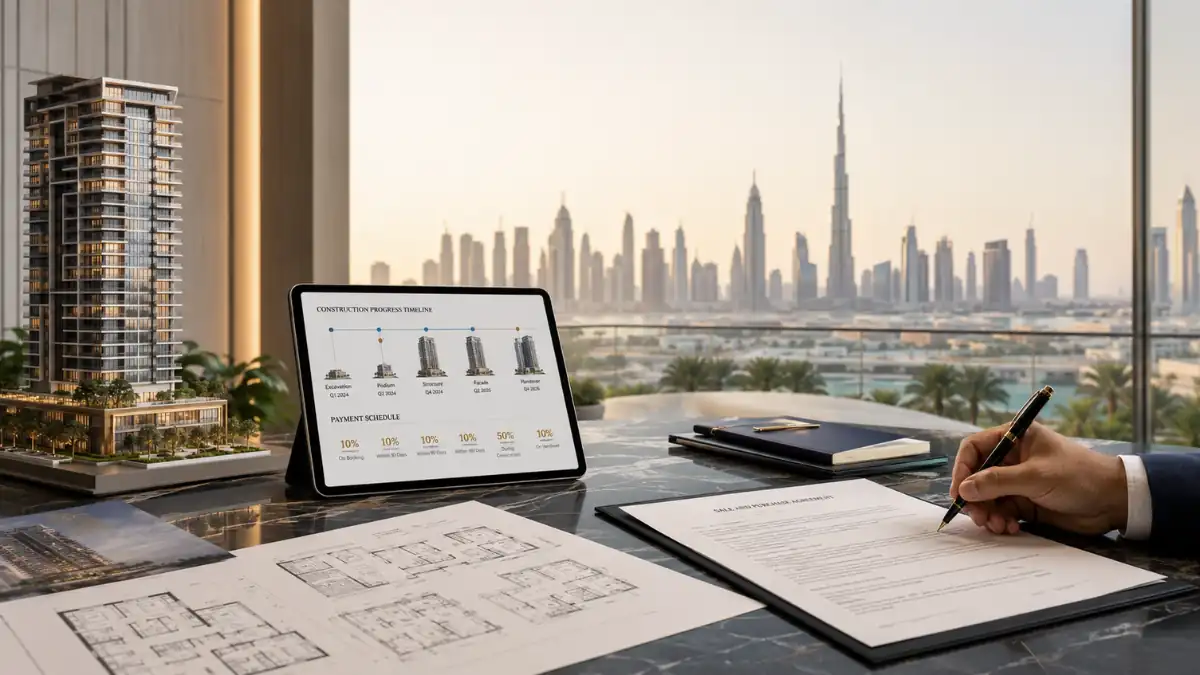
Off plan property Dubai meaning is simple: you are buying a home before it is completed, directly from a developer (or via a broker), using a staged payment plan linked to construction milestones and handover.
- What you’re buying: a specific unit on a plan, with specifications set out in the SPA (Sale & Purchase Agreement).
- How you pay: usually a booking deposit, then instalments during build, then a handover payment (sometimes with post-handover instalments).
- Main upside: newer stock + payment spread over time (helpful for cash-flow planning).
- Main trade-off: you accept construction timeline risk and need tighter due diligence on the developer, contract terms, and total “all-in” costs.
If you’re a new buyer, treat off-plan as a process decision, not just a price decision. The safest approach is to map your payment schedule, confirm protections, and keep a contingency buffer before you reserve a unit.
Not sure if off-plan fits your timeline and budget?
Share your target budget and timeframe and we’ll sense-check whether a new-build purchase route suits you — and what to watch before you reserve.
Off plan property Dubai meaning (in plain English)
If you’re Googling Off plan property Dubai meaning, you’re usually trying to answer one practical question: “Am I buying something real, or just a brochure?” In reality, you are buying a contracted right to a specific unit that will be delivered in the future, on terms set out in the legal paperwork.
In an off-plan purchase, you normally reserve a unit in a new development, then sign the Sale & Purchase Agreement (SPA). After that, you pay in stages over time, and you receive the property at handover once the development is completed and final payments are made.
If you’re completely new to the market, it helps to see off-plan as one part of the wider buying decision. Our beginner pillar guide walks through the bigger picture (areas, fees, workflow, and risk control): our step-by-step beginner guide to investing in Dubai property.
Key differences: off-plan vs ready (on-plan) property
Many buyers compare “off plan vs on plan property” as if it’s purely price-based. In truth, it’s about risk profile, cash-flow timing, and what you can verify before you commit.
Off-plan property (new build, not yet completed)
- You pay over time via staged instalments.
- You can’t inspect the finished unit today — you rely on specs, plans, and contract terms.
- Completion date matters for your life plan (move-in) or investment plan (rental income).
- Best for: buyers who want modern buildings, newer layouts/amenities, and a structured payment schedule.
Ready property (completed and transferable)
- You can inspect what you’re buying (unit condition, building quality, and immediate surroundings).
- Transaction is more immediate — you can often rent or move in sooner.
- You can validate real market signals (rent levels, service charges, building management).
- Best for: buyers who want certainty on what exists today and prefer shorter timelines.
Related comparison you might find useful
If you’re also comparing Dubai to the UK on headline affordability, keep the comparison grounded in all-in costs and running costs, not just the price tag: our Dubai vs London comparison guide.
How buying off-plan works in Dubai (step-by-step)
Here is the typical flow we walk new buyers through. Exact steps vary by developer and project, but the structure is broadly consistent.
Step-by-step: buying an off-plan property (beginner-friendly)
- Shortlist the right area and building type. Start with demand drivers: transport, job hubs, schools, and long-term liveability.
- Compare developers, not just floorplans. Delivery record and after-handover management matter more than a glossy brochure.
- Request the full cost sheet. Unit price is only one line — confirm fees, admin items, and expected ongoing costs.
- Review the payment schedule. Map instalments against your cash-flow and keep a buffer for delays or changes.
- Read the SPA properly. Focus on handover conditions, variation clauses, penalties, and what counts as “completion”.
- Reserve the unit. You typically pay a booking deposit to secure it.
- Sign and register. The project is registered through the official system and payments follow the agreed milestones.
- Handover and snagging. You inspect the unit, raise defects (snags), and complete final steps before move-in or letting.
If you’re buying from overseas, you’ll also want a clear remote-friendly workflow for documents and payment trail. For example, UK buyers may find this helpful: our guide to buying from the UK.
Payment plans, deposits, and handover: what “normal” looks like
A common reason people look up “off plan meaning Dubai” is because payment plans sound too flexible to be real. They are real — but you need to understand what you pay, when you pay it, and what triggers each instalment.
Quick costs snapshot (what you typically pay — and when)
- Booking deposit: often a small percentage to reserve a unit (varies by project).
- During construction: staged instalments linked to build milestones (or fixed dates).
- At handover: a larger payment when the unit is completed and ready to transfer/occupy.
- Sometimes post-handover: some plans extend beyond completion, but terms vary widely.
- Also budget for: registration/authority items, developer admin fees, and ongoing service charges after handover.
The right way to compare two deals is to put both payment schedules into a simple timeline and see what your cash requirement looks like month-by-month.
If you want a more detailed breakdown on evaluating modern new-build options and pricing, you can browse: our new-build apartment guide.
Pitfalls & gotchas to avoid (especially for first-timers)
Off-plan can be a sensible route, but most problems come from rushing the paperwork and not modelling the full “all-in” picture. Here are the most common issues our team sees.
1) Timeline assumptions that don’t match your plan
If you need to move by a specific date (or you need rental income by a specific quarter), timeline risk matters more than brochure features. Build in breathing room and avoid committing funds you cannot leave parked for longer than expected.
2) Buying the brochure instead of the building fundamentals
Amenities and visuals help, but fundamentals win: micro-location, layout livability, building management, and realistic tenant demand. Where possible, compare previous handovers by the same developer for quality consistency.
3) Underestimating the ongoing running costs
Service charges, utilities, maintenance, and furnishing (if you’re letting) can shift your net return. Plan your investment case based on conservative net numbers, not “best case” yields.
4) Not understanding what the contract actually allows
SPAs can include clauses about specification changes, unit size tolerances, handover definitions, and processes for dispute resolution. This is exactly where many first-timers discover they assumed something that isn’t in writing.
How to choose an off-plan deal safely (our checklist)
Below is the clean, repeatable checklist we recommend for new buyers. It keeps the decision calm and evidence-led.
Checklist: what to verify before paying a deposit
- Developer track record: past delivery quality, timeliness, and after-handover reputation.
- Project fundamentals: location demand, transport, access, and what the area will look like at handover.
- Unit practicality: layout, view/position, parking, storage, and sunlight (where relevant).
- Payment schedule: milestone vs date-based instalments; confirm total due before handover.
- Total “all-in” budget: fees/admin items + furnishing + contingency buffer.
- SPA clauses: delivery terms, variations, default terms, and snagging/handover process.
- Exit plan: are you holding for rent, resale, or lifestyle? Your strategy changes what “good” looks like.
Want a simple yes/no on whether a deal fits your strategy?
We’ll compare the payment schedule, developer profile, and unit fundamentals against your goal — so you don’t commit on marketing alone.
Next steps & useful guides
If you’re still deciding between a new-build purchase route and a ready option, these guides can help you build confidence:
- Beginner step-by-step guide to investing in Dubai property
- Property types & investment models explained
- How to buy property in Dubai from the UK (process + documents)
- Community example: a buyer-friendly area guide (process mindset)
- New-build apartments: how to compare pricing and plans
FAQs: Off plan property Dubai meaning
What is off plan property?
Off-plan property is a home you purchase before it is completed. You are buying a specific unit based on the plans and specifications in the SPA, then paying in stages until handover.
What does “off plan meaning” in real estate actually mean?
“Off plan” means the property is sold from plans rather than as a completed, ready-to-inspect unit. Your decision relies more on paperwork, developer credibility, and delivery terms.
Is it worth buying off plan in Dubai?
It can be, if the project fits your timeline and you do thorough checks. Off-plan often suits buyers who value modern buildings and staged payments, but it comes with delivery/timeline risk — so it works best with a clear process and contingency buffer.
What is buying off plan property in Dubai like for a first-time buyer?
It’s usually straightforward when you follow a checklist: confirm the total all-in budget, understand the payment schedule, read the SPA properly, and verify project fundamentals. The main difference versus a ready purchase is that you’re committing ahead of completion.
How do off-plan property payment plans in Dubai work?
Payment plans vary by developer and project, but usually include a booking deposit, staged instalments during construction, and a handover payment. Some plans include post-handover instalments. Always map the schedule against your cash-flow before reserving.
Can you sell an off-plan property before completion in Dubai?
In many cases, reselling before completion is possible, but it depends on the developer’s policies and the contract terms (including any fees or conditions). Treat it as a potential option, not a guaranteed exit route.
Where can I find off-plan property in Dubai for sale safely?
Start with a clear shortlist process: choose the area first, then compare developers and projects. The safest approach is to request the official paperwork and cost sheet and have the deal reviewed before paying a deposit.
What’s the difference between “off plan” and “on plan” (ready) property?
Off-plan is purchased before completion with staged payments and timeline risk. Ready property is completed today, so you can inspect the unit and often complete and rent/move in sooner. The “best” choice depends on your timeframe and risk tolerance.
Still unsure what to check before you reserve?
We’ll turn your shortlist into a simple, buyer-safe checklist — including the questions that protect your deposit and timeline.
- Plain-English meaning Buying a property before it is completed, based on plans/specs and a contract.
- How you pay Typically a deposit + staged instalments during build + a handover payment (sometimes with post-handover instalments).
- Best for Buyers who want modern stock and a structured payment timeline — and can hold through construction.
- Main trade-off You take on delivery/timeline risk and must rely more on paperwork and developer credibility.
- Most important check Model your payment schedule + all-in costs, then read SPA clauses that affect handover, variations, and resale rules.
- Smart approach Use a calm checklist and keep a contingency buffer — don’t commit purely on brochure claims.
Want us to sanity-check your shortlist? Message Dubai Light Haven and we’ll review the numbers and the key clauses before you reserve.
Official resources worth checking
For official guidance and updates, it is sensible to review:
- Dubai Land Department (DLD) — official real estate authority
- RERA — Dubai’s real estate regulatory framework
- UAE Government Portal — residency and general services information
Conclusion: what to do next
Understanding Off plan property Dubai meaning is the first step — the real win is deciding whether off-plan fits your timeline, budget, and risk tolerance. For many new buyers, a structured payment plan and modern stock can be a strong match, provided you keep the process evidence-led.
If you’d like, our team can review your shortlist, map the payment timeline, and highlight the contract points that matter — so you can commit with clarity rather than guesswork.
Ready to choose the right off-plan option with confidence?
We’ll help you compare projects, sanity-check payment plans, and keep your buying process buyer-safe and calm.

Performance Verified ✅
This page meets PME Optimisation Standards — achieving 95+ Desktop and 85+ Mobile PageSpeed benchmarks. Verified on
